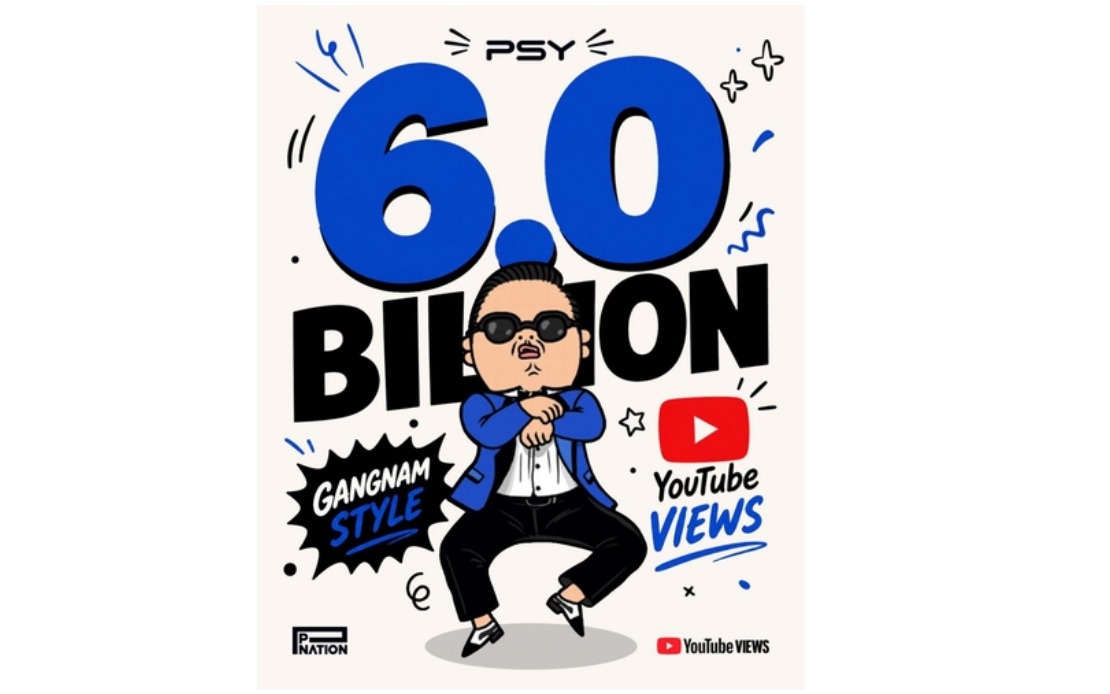
South Korean superstar Psy has achieved a landmark feat in music history as his global phenomenon "Gangnam Style" surpassed 6 billion views on YouTube, establishing itself as the most-watched Korean pop music video of all time. According to his agency P Nation, the music video crossed this historic threshold on Friday, marking yet another record for a track that has fundamentally shaped the landscape of K-pop's international presence over the past decade and a half.
The trajectory of "Gangnam Style" toward this remarkable figure began with its original release in July 2012, a timeframe that positions this achievement within a relatively mature phase of YouTube's evolution as a cultural platform. The video's ascent has been methodical yet unstoppable—it had already accumulated 5 billion views by December 2023, demonstrating the sustained appetite for content that refuses to fade from public consciousness despite the relentless churn of social media cycles and changing entertainment trends.
P Nation's statement regarding the achievement underscores the deeper significance of this milestone beyond mere numerical accumulation. The company characterized the 6 billion view mark not simply as a statistical victory, but as compelling evidence of how expertly crafted content possesses the capacity to transcend geographical and generational boundaries. In an era where digital metrics often appear arbitrary and fleeting, "Gangnam Style" stands as a testament to content whose appeal proves genuinely enduring and cross-cultural in nature.
Psy seized the opportunity to celebrate this achievement during a concert performance on Sunday, using the stage to express gratitude to his global fanbase while simultaneously building anticipation for future endeavors. His promise to upload new content to YouTube reflects an understanding of how the platform remains central to artist-fan relationships and how maintaining an active presence there continues to matter, regardless of an artist's level of established fame or historical significance.
The song's original composition succeeded through a trifecta of elements that proved magnetic to worldwide audiences. Its infectious, immediately memorable beat provided the foundation for widespread appeal, while the accompanying music video offered satirical commentary on the lifestyle and culture surrounding Seoul's upscale Gangnam district—affluence, aspiration, and social observation blended seamlessly. The performance's signature horse-riding dance move became instantly recognizable and endlessly reproducible, transforming the track into a participatory cultural phenomenon rather than merely passive entertainment.
This strategic combination of musical composition, clever social commentary, and memorable choreography distinguished "Gangnam Style" from countless other attempts at viral content. Where many songs achieve temporary prominence before fading into obscurity, this track established staying power rooted in genuine entertainment value rather than novelty alone. The dance became so iconic that it spawned countless imitations, flash mobs, and celebrations worldwide, from military bases to sporting events, embedding itself into the collective cultural memory.
Its performance on Billboard's Hot 100 chart, where it reached number two, validated its appeal beyond the YouTube ecosystem and demonstrated crossover success in the traditional music industry's most prestigious ranking system. This chart performance held particular significance given that K-pop was still establishing its foothold in mainstream Western markets during 2012, making Psy's achievement a watershed moment for the genre's international trajectory.
The designation of "Gangnam Style" as the first K-pop music video to surpass 1 billion YouTube views cannot be overstated in its historical importance. This achievement arrived at a critical juncture when K-pop was transitioning from niche fanbase status to mainstream cultural phenomenon, and Psy's video served as a powerful catalyst and proof-of-concept for the genre's international viability. Subsequent years would see BTS, BLACKPINK, and other artists build upon the foundation that Psy and "Gangnam Style" helped establish.
For Malaysian audiences and Southeast Asian observers more broadly, the enduring popularity of "Gangnam Style" carries particular relevance as a case study in how Asian entertainment content has gained unprecedented global reach. The region's own entertainment industries, including Malaysia's growing music and film sectors, can draw lessons from how authenticity, cultural specificity, and artistic excellence can converge to create genuinely transnational appeal rather than merely seeking to imitate Western models.
The continued relevance of "Gangnam Style" some twelve years after its initial viral peak also speaks to transformations in how digital culture operates, particularly the emergence of TikTok and other short-form video platforms that have become dominant forces in entertainment consumption. That a track from the pre-TikTok era maintains such visibility and viewership suggests the quality of the foundational content and its genuine resonance with diverse audiences worldwide.

