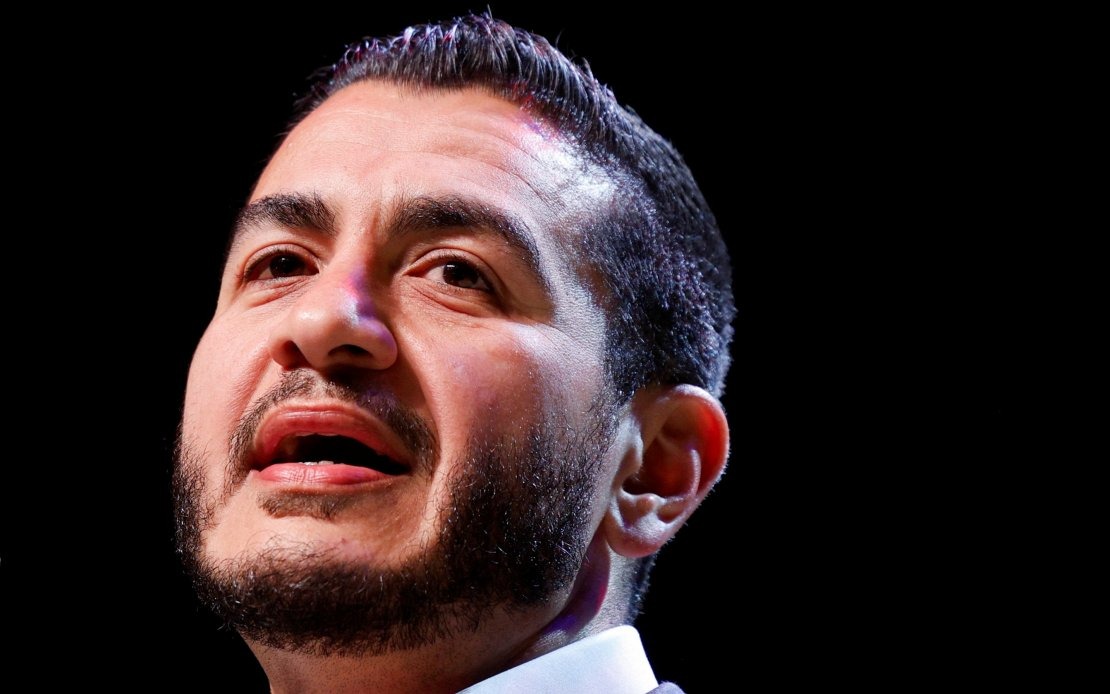
The race for Michigan's US Senate seat took a significant step forward on Wednesday as Abdul El-Sayed emerged with a slim advantage over establishment-backed US Representative Haley Stevens in the Democratic primary. With approximately nine-tenths of votes counted, El-Sayed maintained his lead, though the Associated Press had not yet formally called the contest. The winner of this closely watched race will eventually face Republican Mike Rogers in November's general election, competing to fill the seat being vacated by retiring Democratic Senator Gary Peters, who ran unopposed in his party's primary.
The Michigan Democratic primary revealed a stark ideological divide within the party, with the two leading contenders representing opposing wings of the Democratic coalition. Stevens drew support from prominent establishment figures, notably Senator Peters himself, who preferred a moderate, institutionalist approach to governance. El-Sayed, by contrast, galvanised progressive voters with backing from Senator Bernie Sanders and Representatives Alexandria Ocasio-Cortez and Rashida Tlaib, signalling a grassroots, left-wing orientation. This split reflected broader tensions within the national Democratic Party between its centrist leadership and increasingly vocal progressive membership demanding more radical policy shifts.
The Middle East conflict, particularly American support for Israel's military operations in Gaza and the humanitarian consequences for Palestinian civilians, emerged as a defining issue that separated the two candidates and energised different voter blocs. This issue resonated particularly strongly in Michigan, home to a substantial Arab-American community concentrated in areas like Dearborn. The primary dynamics suggest that questions surrounding US foreign policy in the Middle East have moved from the periphery to the centre of domestic electoral calculation, potentially reshaping coalition politics ahead of November's general election.
Beyond the high-profile Senate race, Michigan voters selected representatives for the House of Representatives. In the state's 1st Congressional District, Republican Jack Bergman secured his party's nomination with a commanding 74.3 per cent of the vote, easily outpacing two challengers with most ballots already counted. Similarly, Republican Bill Huizenga won renomination in the 4th District with an overwhelming 85 per cent victory over Philip Tanis, positioning him for a general election contest against Democrat Sean McCann, who had narrowly defeated Diop Harris II for his party's nomination in the same district.
Kansas primary results demonstrated the continued influence of former President Donald Trump within Republican circles, particularly in state-level contests. Republican Senator Roger Marshall defeated challenger Pond Naramore with nearly four-fifths of votes in a relatively uncompetitive race, clearing the way for his matchup against Democrat Adam Hamilton, who prevailed in a crowded Democratic primary field. The Kansas gubernatorial primary proved more contested, with Democrat Cindy Holscher securing her party's nomination against two rivals. Holscher will face Republican Ty Masterson, who claimed Trump's endorsement and converted a crowded primary field into a victory, setting up a race to succeed Governor Laura Kelly, whose eligibility for another term is constitutionally prohibited.
Missouri's primary elections took on heightened significance because they represented the first congressional contests conducted under a new electoral map drawn by Republican state lawmakers and explicitly designed to enhance the GOP's grip on House representation. This redistricting effort, which bore Trump's imprimatur, underscored how partisan mapping continues reshaping congressional demographics and electoral outcomes at the state level. In the fiercely competitive 1st Congressional District, Democratic Representative Wesley Bell prevailed against four challengers, notably defeating former Representative Cori Bush in a dramatic intraparty showdown that highlighted generational and strategic divisions within the Democratic caucus. Bell's victory positioned him for a November encounter with Republican Paul Berry III.
Virginia's primary elections proceeded along predictable lines, with Republican Bert Mizusawa emerging as the nominee to challenge Democratic Senator Mark Warner, who faced no opposition within his party. In the state's 1st Congressional District, Democrat Shannon Taylor narrowly secured her party's nomination with just over 53 per cent of the vote, edging into a general election matchup against Republican Representative Rob Wittman, a long-serving incumbent pursuing his tenth full term. Virginia's 2nd District saw former Representative Elaine Luria make a comeback bid, winning the Democratic nomination decisively with over 80 per cent support before facing incumbent Republican Representative Jen Kiggans.
The 7th District race in Virginia emerged as particularly noteworthy, with Republican Doug Ollivart narrowly winning his party's primary with approximately 57 per cent of votes to advance against first-term Democratic Representative Eugene Vindman. Vindman, who gained national prominence during impeachment proceedings, ran unchallenged for renomination but faces a potentially formidable Republican challenger in Ollivart, suggesting that Virginia districts previously considered Democratic strongholds may face genuine competitive pressure in coming elections.
Washington's electoral process differed markedly from other states, employing an all-party primary system that permits candidates from all political backgrounds to compete simultaneously before advancing top finishers to the general election. In the 1st Congressional District, both Democrat Suzan DelBene and Republican Mary Silva qualified for November's general election. Representative Marie Gluesenkamp Perez will defend her seat against Republican John Braun, who secured Trump's endorsement, a factor increasingly important in Republican electoral mathematics. Emily Randall, a first-term Democratic representative in the 6th District, advanced to face Republican Teresa Fox in November's showdown.
These primary elections across five geographically and demographically diverse states provided important signals about voter sentiment heading into the midterm general election. The results demonstrated persistent partisan polarisation, the continuing relevance of Trump's political influence within Republican circles, and the ongoing ideological contestation within the Democratic Party between establishment moderates and progressive activists. For Malaysian and Southeast Asian observers, these elections exemplify how internal democratic processes in large democracies like the United States can generate significant leadership transitions and policy reorientations, particularly regarding foreign relations and international commitments that may eventually affect broader geopolitical alignments and bilateral relationships.

