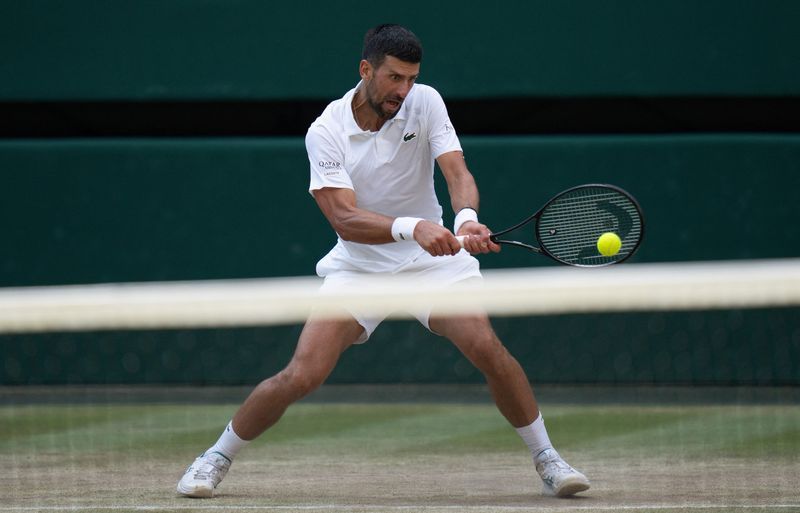
The Professional Tennis Players Association has sounded a stark warning about the mounting toll of professional tennis's demanding schedule, citing widespread withdrawals from the Canadian Open as fresh evidence that the sport's calendar expansion is pushing players toward injury and burnout. The players' advocacy group responded to the tournament's recent loss of several top competitors by reiterating long-standing concerns that the combination of more events and tighter spacing between tournaments is creating dangerous working conditions on the circuit.
The Canadian Open in Montreal suffered significant setbacks when world number one Jannik Sinner withdrew, alongside 24-times Grand Slam champion Novak Djokovic. Carlos Alcaraz was sidelined by a wrist injury, while Canadian hope Felix Auger-Aliassime pulled out before his opening match due to a back problem. The women's draw proved equally depleted, with defending champion Victoria Mboko, Wimbledon finalist Karolina Muchova, Emma Raducanu, and Jasmine Paolini all absent through injury. The scale of these absences during one of the season's marquee events underscored the PTPA's argument that the current structure of professional tennis has become unsustainable for player health.
What distinguishes the PTPA's latest intervention is the depth of empirical evidence it has amassed to support its position. The association conducted an extensive eight-year data analysis covering more than 30,000 professional matches across all competitive levels, a project initiated three years ago in collaboration with medical director Dr. Robby Sikka. The resulting figures paint a troubling picture: upper-body injuries surged 42 percent in the first quarter of 2026 compared with the same period the previous year, while arm injuries specifically jumped 112 percent compared with the 2025 average. These metrics suggest that injuries are not merely occurring more frequently but are also becoming more severe and appearing earlier in the competitive year.
The timing of the PTPA's warning coincides with a significant structural change in professional tennis. The ATP implemented its OneVision strategic plan by expanding seven of its nine Masters 1000 tournaments from traditional formats into 12-day events, with 2025 marking the inaugural season in which all nine tournaments adopted this longer schedule. While tournament organisers frame the expansion as an opportunity to enhance the fan experience and generate additional revenue, the PTPA argues that it has directly eroded the recovery window that players desperately require between competitions. The additional days required for longer events, combined with travel demands and training commitments, have compressed the already tight spacing between tournaments into something approaching crisis proportions.
The PTPA's position gains particular resonance for Southeast Asian readers given the region's growing presence in professional tennis. Malaysian representation and interest in tennis continues to expand, and the structural integrity of the sport affects aspiring regional players navigating the increasingly demanding professional circuit. The question of whether the sport prioritises commercial expansion over competitor welfare carries implications beyond the current elite players; it shapes the environment into which emerging talents must enter and the realistic career longevity they can expect.
The association explicitly rejected the narrative that players retain meaningful autonomy over their competitive schedules. While the ATP has previously maintained that competitors choose which tournaments to enter, the PTPA argues that the architecture of mandatory commitments and the tournament structure itself forces players into participation patterns that leave insufficient recovery time. This distinction matters considerably: it reframes the issue from individual player choice to systemic design. When the world's top players consistently withdraw from prestigious events, it suggests that the problem is not a lack of commitment or professionalism but rather an impossible demand being placed upon human physiology.
The injury data provided by the PTPA warrants particular scrutiny when considering the long-term trajectory of professional tennis. A 112 percent increase in arm injuries year-over-year is not merely a statistical fluctuation but signals potentially career-threatening harm being inflicted on competitors. For players already vulnerable to overuse injuries—a chronic occupational hazard in tennis—the compressed schedule compounds existing biomechanical stress. The PTPA frames this not as an abstract statistical problem but as a direct threat to the sport's future, arguing that unsustainable practices today will deplete the talent pool tomorrow.
The association has called for substantive structural reforms, including reversing the 12-day Masters 1000 format and reducing mandatory tournament commitments to restore adequate recovery periods. Critically, it has demanded that players hold a meaningful voice in calendar restructuring, positioning this as a matter of both fairness and practical efficacy. The premise is that those whose bodies bear the consequences of the schedule should participate in designing it, a principle with broader implications for labour relations in elite sports globally.
The ATP and WTA Tours have not yet formally responded to the PTPA's latest intervention. The ATP has previously stated that it actively works to incentivise appropriate participation levels rather than compel excessive playing, and that it recognises player welfare as a priority. However, the gap between stated commitment to player health and the structural incentives embedded in the expanded tournament calendar suggests that rhetorical support has not translated into material change. Tournament organisers face genuine commercial pressures to maximise event duration and frequency, creating a fundamental tension between revenue generation and competitor wellbeing.
For Malaysian and Southeast Asian audiences, this debate carries significance beyond professional tennis itself. The Canadian Open withdrawals and underlying injury crisis raise questions about how global sports industries balance commercial interests against the human costs of their operations. They illustrate how systemic pressures—whether generated by media rights deals, sponsorship obligations, or television scheduling—can accumulate into structures that harm the very athletes whose performances generate that commercial value. As the region's sports industries expand and professionalise, these tensions will become increasingly relevant to local sporting bodies and policymakers considering their own tournament calendars and player welfare frameworks.
The PTPA's data-driven approach and explicit call for player participation in calendar reform represent a shift toward more rigorous accountability in professional tennis governance. Whether tournament organisers and tour operators respond by implementing meaningful change, or whether current commercial incentives prove too powerful to resist, will likely determine whether professional tennis can sustain its current trajectory or whether injury crises become an endemic feature of the modern game.

