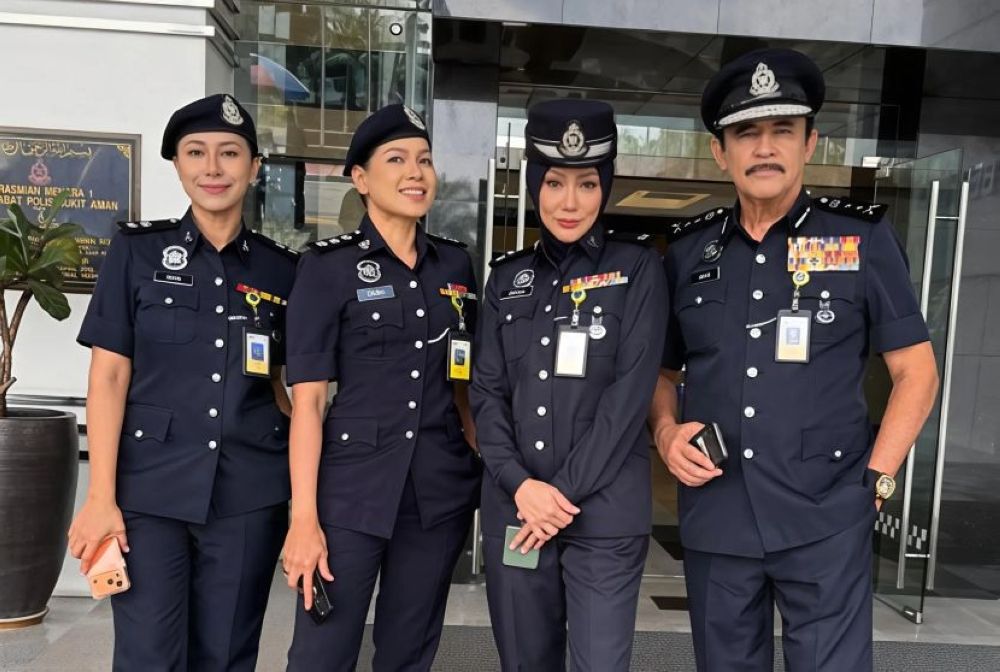
The upcoming Gerak Khas 2.0 drama series will feature one fewer cast member than originally planned after producer Datuk Yusof Haslam made the difficult decision to excise all remaining scenes involving an actress arrested on drug charges. The decision came swiftly after the actress tested positive for multiple controlled substances during a police raid conducted by the Dang Wangi district headquarters on July 7, marking a significant disruption to a production that was already nearing completion.
With 90 percent of filming already finished before the incident occurred, the production team faced a limited window for removing the actress's contributions to the 26-episode series. Yusof revealed that her character appeared in scenes scheduled for episodes 23 and 24, meaning the reshoots and edits required were manageable given the advanced stage of production. The decision to eliminate these later scenes entirely demonstrates how far along the drama had progressed before the controversy emerged, leaving minimal logistical hurdles for the removal process.
Yusof's explanation for the decisive action reflects both practical and principled considerations. He acknowledged that had the production known about the actress's personal circumstances beforehand, casting decisions would have been made differently. The producer emphasized that this was not a situation where the drama team had failed in its due diligence—the actress had previously worked on Skop Productions without incident, suggesting her troubles were recent and unforeseen. Yet once the arrest became public knowledge, the reputational stakes became too high to ignore, particularly given the drama's central focus on law enforcement.
The firm stance taken by Yusof extends beyond mere damage control. He explicitly rejected any attempts by the actress to appeal the decision or offer explanations, signaling that the production's position was final and non-negotiable. His comment that "it's too late" underscores the belief that once such a serious breach of conduct occurs in the public eye, particularly involving a performer portraying a police officer, rehabilitation of the drama's image depends on complete separation. This uncompromising approach sends a clear message about accountability within the entertainment industry.
Yusof has framed the incident as a cautionary lesson for the entire cast and crew involved in Gerak Khas 2.0. He revealed that from the project's inception, he had consistently emphasized the importance of personal conduct and the need to avoid activities that could compromise either the drama's standing or the image of the Royal Malaysia Police. These warnings were not generic reminders but specific, repeated directives aimed at ensuring everyone understood the sensitive nature of producing content that portrays the nation's police force.
The producer's perspective on personal responsibility and public conduct reflects deeper concerns about the entertainment industry's relationship with institutions like PDRM. Gerak Khas, the original police drama that spawned this revival, holds significant cultural weight in Malaysia, and any association with criminal behavior or drug use poses a threat to the franchise's credibility. By acting decisively, Yusof has sought to insulate the drama from suggestions that the production environment enabled or overlooked problematic behavior among its cast members.
Yusof also acknowledged the inherent limitations of trying to control the personal lives of actors and crew members. His analogy—that even a parent with ten children cannot always prevent one or two from encountering difficulties—reflects a pragmatic understanding that production management cannot extend into the private spheres of performers. However, this candor about the limits of oversight did not temper his response once the problem became public. The distinction between what producers can prevent and what they can address once it occurs became the operative principle.
The cast of Gerak Khas 2.0 includes established Malaysian entertainment figures such as Hans Isaac, Erra Fazira, C. Kumaresan, and Salina Saibi, suggesting a production aimed at attracting viewers through recognizable names and faces. The ensemble also features other actresses taking on the role of police inspectors, including Tisha Shamsir, Nabiha Aimi, and Emily Elizabeth. The removal of one cast member from this lineup, while significant, appears to be manageable given the show's extensive ensemble structure and the advanced completion rate of filming.
For Malaysian viewers and the broader entertainment industry, this incident raises questions about accountability and the standards expected of performers who take on roles in culturally significant productions. The decision to remove the actress entirely rather than seek alternative solutions—such as reshoots with a replacement or narrative explanations for the character's absence—demonstrates that Yusof has prioritized reputational preservation over production efficiency. This approach may reflect a broader understanding that audiences expect higher standards from those portraying public servants, particularly police officers.
The timing of the arrest, occurring just one week after the drama's premiere, means that audiences had already encountered the actress's performance and will notice her absence in later episodes. How the production addresses this narrative gap—whether through explanation, recasting, or simply allowing the character to fade from the story—will be watched closely by viewers and industry observers alike. The solution chosen will likely signal to other producers how the Malaysian entertainment industry handles similar crises.
Yusof's handling of this situation may also influence future casting decisions within the industry. Productions depicting law enforcement or other sensitive institutions may implement more rigorous background checks or contractual clauses that address the conduct expectations placed on cast members. The precedent set here—that involvement with drugs will result in immediate removal regardless of production stage—could become a standard principle for dramas operating within similar thematic territory.
Ultimately, the Gerak Khas 2.0 incident underscores the ongoing tension between artistic endeavor and institutional reputation. Yusof Haslam's decision to completely excise the actress from the remaining episodes prioritizes the drama's integrity and the image of PDRM over accommodating the performer's circumstances or minimizing production disruptions. Whether this approach fully achieves its goal of protecting the show's reputation remains to be seen when the series airs in its final form.

