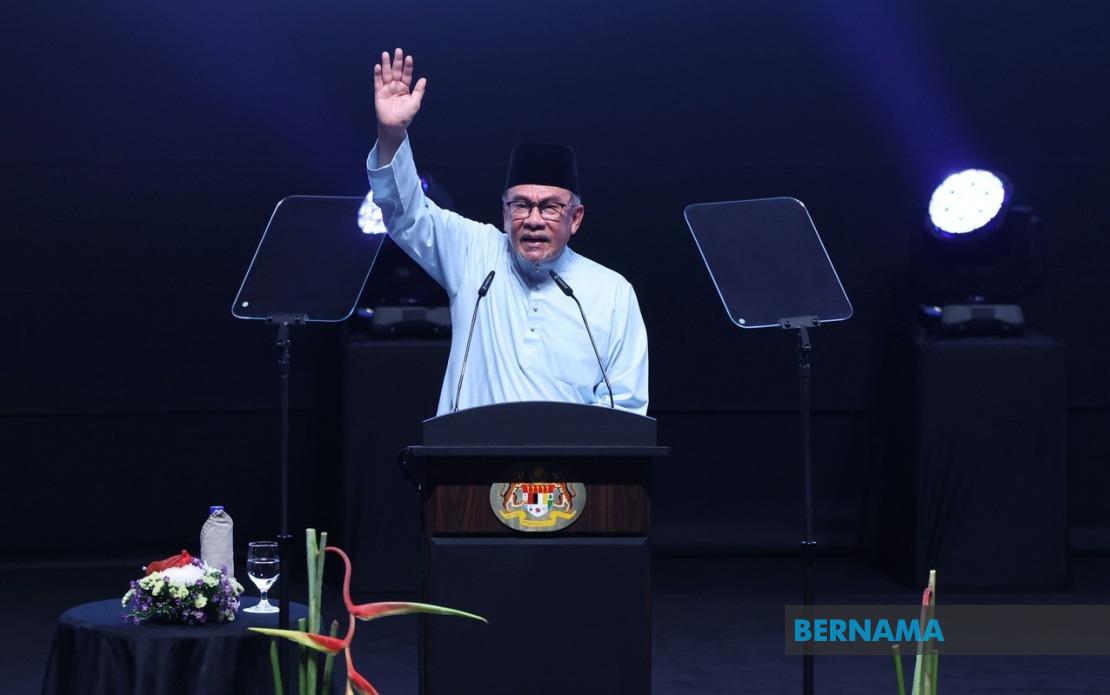
Malaysia's 2026 National Day Prime Minister's address ceremony will take place at 2 pm at the Putrajaya International Convention Centre (PICC), according to an announcement from the Ministry of National Unity. The timing represents a deliberate adjustment made to accommodate current atmospheric and environmental conditions affecting the country, particularly the widespread haze that has impacted air quality across multiple states in recent weeks.
The relocation of the event from its traditionally iconic venue at Dataran Merdeka in Kuala Lumpur reflects a pragmatic shift in planning by the National Day and Malaysia Day (HKHM) 2026 Celebration Working Committee under the Ministry of Communications. Meteorological forecasts had indicated that haze concentrations would persist across several major regions including Johor, Melaka, Negeri Sembilan, Selangor, Kuala Lumpur and Putrajaya through the final days of August, with Sabah also expected to experience hazy conditions. Such projections necessitated moving the ceremony indoors to a fully climate-controlled environment.
The Ministry of National Unity emphasised that the decision prioritised the wellbeing of attendees and the broader public. By choosing PICC, organisers can guarantee controlled indoor conditions that protect guests from hazardous air quality while maintaining dignified ceremony proceedings. The ministry stressed that this adjustment ensures adequate safety protocols, maintains health standards, and provides comfort for all participants without compromising the solemnity or significance of the occasion.
Beyond logistical considerations, the ministry framed the ceremony as a cornerstone platform for articulating the MADANI government's vision and aspirations. The event will serve as an opportunity to reinvigorate the spirit of independence and national pride among Malaysians, while underlining the administration's commitment to strengthening patriotism and fostering genuine civic responsibility. Such occasions carry symbolic weight in Malaysia's political calendar, allowing leadership to communicate directly with citizens about shared national values and developmental priorities.
The invitation extended to all Malaysians reflects the inclusive character the government seeks to project. By welcoming citizens to celebrate National Day at PICC, authorities aim to transform the ceremony into a broader gathering that transcends geographical boundaries within the capital region. This approach acknowledges that while haze constraints necessitate an indoor venue, the underlying purpose remains unchanged—creating an environment where Malaysians collectively reaffirm their commitment to national progress and social cohesion.
The emphasis on fostering mutual understanding, respect and acceptance of diversity indicates deliberate messaging around national unity. In a multi-ethnic democracy like Malaysia, such anniversaries provide platforms to celebrate the foundations upon which the nation was built. By centering these values in the ceremony's framing, the government signals that National Day transcends ceremonial formality, serving instead as a moment for substantive reflection on the principles enabling peaceful coexistence and shared prosperity across different communities.
For regional observers, Malaysia's adaptation of this high-profile ceremony underscores the tangible impacts of transboundary haze pollution on governance and public life. Air quality crises increasingly force governments across Southeast Asia to adjust major events and operations. The relocation to PICC demonstrates how environmental challenges necessitate flexible administrative responses, even for symbolically significant occasions that carry deep cultural meaning for citizens.
The timing at 2 pm represents a considered choice that balances ceremony duration, attendance accessibility, and organisational logistics. Afternoon scheduling typically accommodates broader participation from different demographic groups while allowing adequate time for comprehensive proceedings. Given that the ceremony includes a Prime Minister's address—likely to encompass substantive policy messaging alongside ceremonial remarks—the allocated timeframe suggests planners envision a substantial program rather than a brief formal event.
For Malaysian audiences, the ceremony offers an occasion to engage with national narratives during a period of significant atmospheric disruption. The contrast between celebrating independence indoors due to environmental constraints carries subtle irony—the capacity to maintain national traditions despite external challenges itself becomes a testament to institutional resilience and adaptive governance. Such pragmatism, when balanced with ceremonial dignity, can reinforce public confidence in governmental competence during difficult periods.
The working committee's decision reflects evolving standards for major state events in tropical regions increasingly affected by seasonal haze. PICC, as a modern purpose-built venue with international-standard facilities, provides the infrastructure necessary for broadcasting, media coverage, and accommodating official guests while maintaining controlled environmental conditions. This infrastructure consideration matters considerably given that National Day ceremonies function as televised national spectacles reaching millions of viewers beyond those physically attending.

