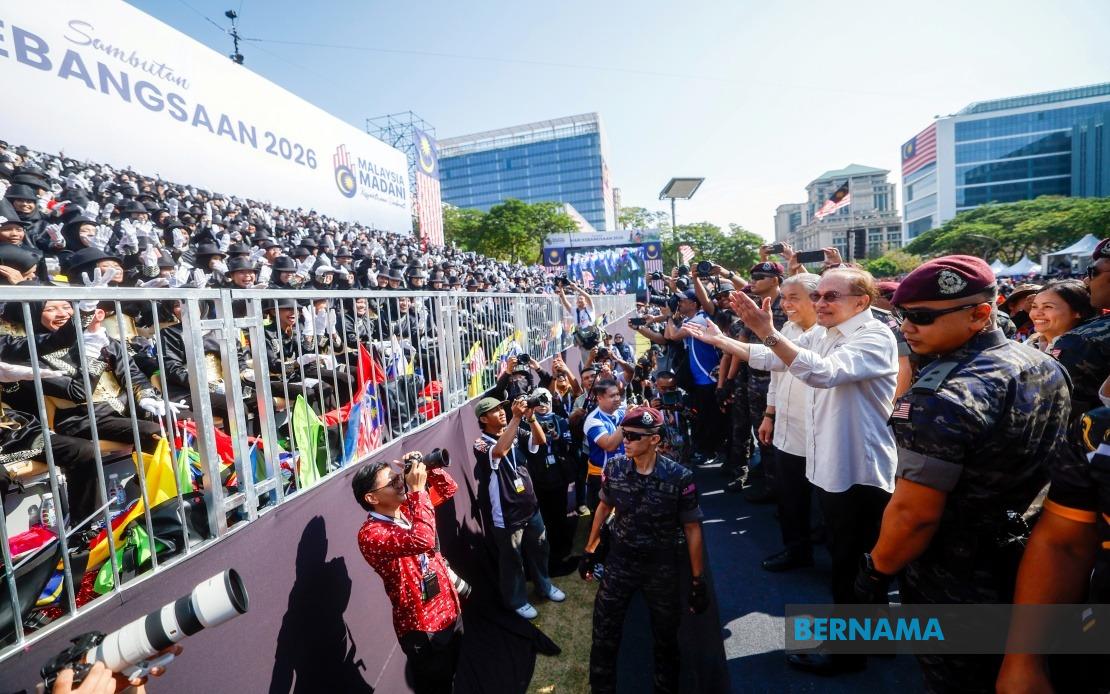
Prime Minister Datuk Seri Anwar Ibrahim expressed heartfelt appreciation for the enthusiastic participation of Malaysians at the nation's 69th National Day parade and festivities held at Dataran Putrajaya on August 31. Speaking to reporters following the elaborate morning ceremony, the Premier's remarks underscored the visible public engagement that characterised the celebration, describing it simply as a "great, great show" before offering his gratitude to everyone who contributed to making the event successful.
The commemoration commenced at 8 am and was graced by His Majesty Sultan Ibrahim and Her Majesty Raja Zarith Sofiah, Malaysia's reigning monarch and queen. Upon their arrival, they were formally received by Anwar alongside his wife, Datuk Seri Dr Wan Azizah Wan Ismail, and Communications Minister Datuk Seri Fahmi Fadzil, who chairs the National Day and Malaysia Day Main Committee. The royal presence highlighted the ceremonial importance of the occasion within the nation's calendar of observances.
Demonstrating his approachability and commitment to direct engagement, the Prime Minister spent considerable time circulating among the assembled crowds following the formal proceedings. He walked more than 500 metres through Dataran Putrajaya, stopping to interact with citizens and accommodating numerous requests for photographs. This grassroots engagement reflected a political strategy that emphasises connection with ordinary Malaysians, allowing him to understand public sentiment directly while building rapport across different segments of the population.
The parade itself represented a massive logistical undertaking, involving 10,819 participants organised across 76 contingents and 22 marching bands. The procession incorporated 11 specially decorated vehicles, 328 military and civilian assets spanning land, sea, and air components, 112 service animals, and notably, 22 electric vehicles that underscored the government's environmental consciousness. A human graphics performance displayed across the terraces added an innovative visual dimension to traditional National Day pageantry.
Curiously, the immediate response from at least one citizen focused on a bread-and-butter policy announcement rather than patriotic symbolism. A member of the crowd approached Anwar to express gratitude for the restoration of the monthly basic fuel subsidy quota under the BUDI MADANI RON95 programme, which had been increased from 200 litres to 300 litres. This spontaneous acknowledgement illustrates how government welfare decisions directly affect public perception and satisfaction, with citizens recognising tangible improvements in their purchasing power.
The scale of public attendance underscored genuine interest in the national celebration. More than 100,000 people converged on Dataran Putrajaya, with some demonstrating remarkable commitment by camping at the venue since the previous evening, while the majority arrived progressively from early morning onwards. This substantial turnout suggests the National Day parade retains significant cultural resonance and capacity to mobilise public participation across the nation's diverse communities.
The 2026 National Day celebration carried the theme "Malaysia MADANI: Kesejahteraan Dinikmati"—roughly translating to "Malaysia Prosperity Shared"—which encapsulates the government's policy emphasis on inclusivity and shared well-being. The ceremony commenced with formal military protocols before transitioning to stage performances and the colourful parade designed to showcase this vision of a nation prioritising citizens' welfare while respecting Malaysia's pluralistic character. This thematic framing attempts to position contemporary governance around tangible improvements in living standards rather than abstract national pride.
In his National Day Address delivered the preceding day, Anwar had unveiled six significant government initiatives targeting public well-being. Beyond the RON95 quota restoration benefiting more than 16 million subsidised fuel users, the government committed to providing diesel-powered pickup truck and jeep owners—numbering over half a million eligible vehicles—with up to 400 litres of BUDI Diesel monthly, effective from September 1. These fuel subsidy adjustments represent substantial budgetary commitments aimed at alleviating transportation and livelihood costs for working-class Malaysians.
The significance of these welfare announcements during the National Day period reflects strategic political communication. By introducing major policy improvements immediately preceding or during patriotic celebrations, the government associates its economic stewardship with national pride and citizen benefit simultaneously. For Malaysian observers, particularly those dependent on fuel subsidies for commercial operations or daily transportation, these announcements carry material weight that transcends ceremonial significance.
From a regional perspective, Malaysia's National Day presentation and the government's emphasis on welfare-centric governance offer a contrast to austerity-focused approaches in some neighbouring economies. The deliberate expansion of fuel assistance programmes suggests confidence in fiscal capacity and a policy orientation that prioritises cost-of-living relief as a governance priority. This stands as a notable positioning within Southeast Asian economic contexts where subsidy policy remains contentious and politically sensitive.
The participation of over 100,000 citizens and the extensive organisational effort required to orchestrate the parade indicate that National Day celebrations retain institutional importance within Malaysia's political calendar. Prime ministerial attendance and visible engagement serve ceremonial functions while simultaneously providing opportunities for direct public interaction and policy communication. The enthusiasm captured in public response and media coverage suggests these events continue serving their intended purpose of reinforcing national unity and providing platforms for government messaging.
Looking forward, the scale and quality of the 2026 celebration may set expectations for future National Day observances. The incorporation of electric vehicles within the parade, emphasis on environmental consciousness, and expanded welfare announcements indicate evolving priorities within national ceremonial discourse. For observers monitoring Malaysian governance trends, these annual celebrations provide valuable insights into how the government frames its achievements and positions future policy directions before the broader citizenry.

