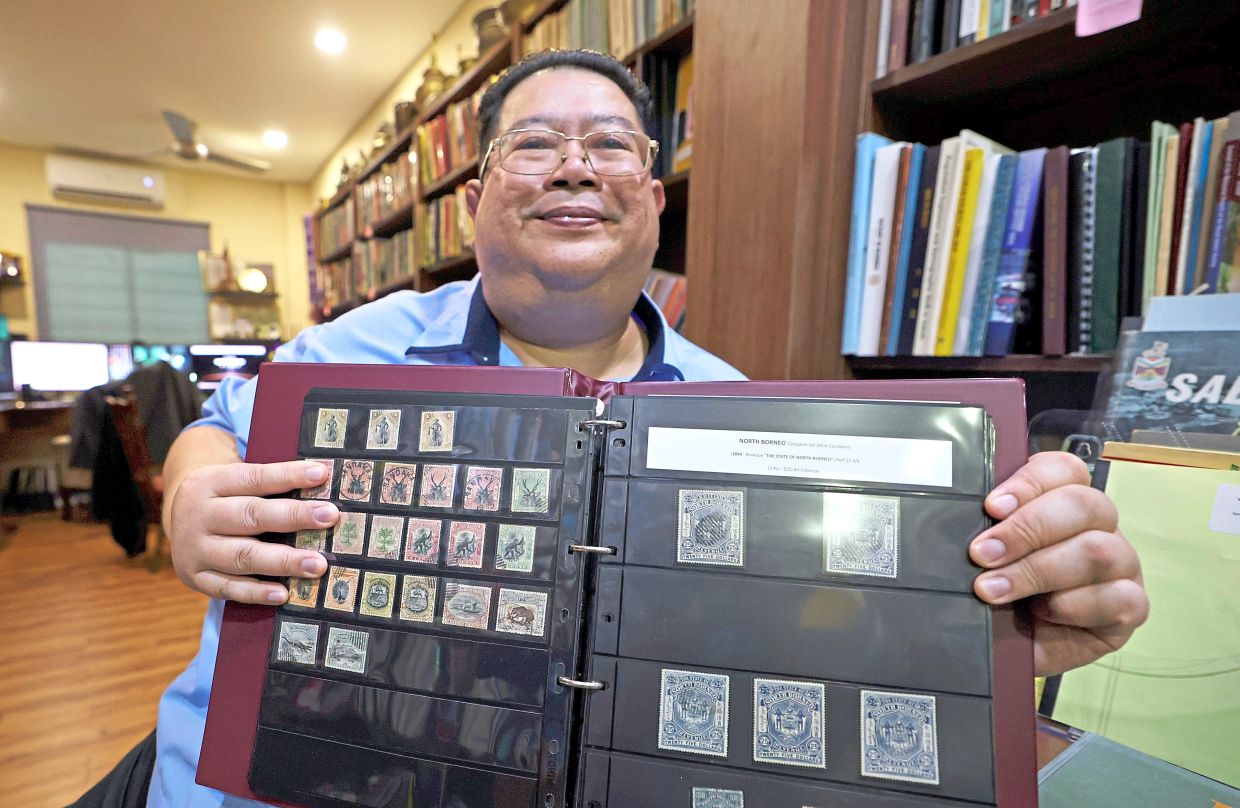
The disappearing world of stamp collecting in Malaysia has made the preservation of North Borneo's 140-year-old postal heritage increasingly urgent. These stamps, issued continuously from 1883 until 1963, represent far more than ordinary mail postage—they form a tangible historical record of territorial development, cultural identity, and international connectivity during a transformative period in Sabah's past. As fewer people engage with philately and antique dealers report dwindling stocks, conservationists warn that without deliberate intervention, an irreplaceable archive could be lost to future generations.
Dr Shari Jeffri, a 56-year-old philatelic scholar and founder of the Borneo History Association, has become a prominent voice in advocacy for these artefacts. He characterises the stamp collection spanning from 1883 to 1963 as a "living archive"—a phrase that encapsulates how each individual stamp functions simultaneously as historical evidence and artistic expression. His conviction that these objects warrant institutional and familial preservation reflects broader concerns across Southeast Asia about the erosion of material culture in the digital age. The challenge intensifies as the generation that grew up with correspondence and stamp albums ages, while younger Malaysians have never known a world without instant electronic communication.
The erosion of collecting interest creates economic and cultural repercussions. A Bernama market survey of antique establishments in Kota Kinabalu painted a sobering picture: North Borneo stamps have become progressively harder to locate, with valuations fluctuating based on issuance year, physical condition, and scarcity ratings. Collectors scouring the market occasionally unearth remarkable specimens, such as a six-cent denomination from the 1954-1961 period depicting Queen Elizabeth II alongside a Dusun woman, or a ten-cent issue documenting logging operations—images that crystallise moments in Sabah's economic and social landscape.
Shari's personal journey into stamp scholarship mirrors a broader narrative of heritage transmission and intellectual curiosity. His grandfather, employed at the Recreation Club Jesselton during the 1920s, accumulated stamps after observing British officers engaging in the hobby, subsequently hoping to cultivate equivalent enthusiasm among his descendants. Though Shari encountered philately at age seven through inherited collections, genuine scholarly engagement materialised during secondary school, catalysing decades of meticulous preservation work and historical investigation. His family's accumulated collection, particularly two pristine two-cent stamps from the inaugural 1883 printing bearing the image of a brown sailing boat with complete postal markings, exemplifies the material treasures at risk of dispersal or deterioration.
The historical significance of North Borneo stamps lies substantially in their design evolution and symbolic content. The British North Borneo Chartered Company initiated postal issue in 1883, maintaining circulation for approximately five decades until territorial administration transitioned. Designs underwent considerable transformation across this period, with the 1935 series marking a watershed moment in visual representation. Those later issues displayed denominations ranging from two cents to one dollar and increasingly emphasised Sabah's distinct identity rather than generic imperial symbolism. The earliest stamps featured European iconography—lions, sailing vessels, and tigers—accompanied by the Latin motto Pergo et Perago ("I undertake and I achieve"), functioning as territorial introduction to international audiences.
From the 1890s onward, design philosophy shifted toward foregrounding Borneo's indigenous environmental character. Native vegetation, fauna, and regional wildlife progressively replaced generic symbols, reflecting evolving understandings of territorial identity and emerging ethnographic awareness among British administrators. This transition in visual representation provides philatelic scholars with a documentary record of changing imperial attitudes toward colonial territories and their populations. Shari emphasises that each stamp transcends its function as postage proof, instead narrating particular moments in regional history and administrative priorities.
Authenticity verification and preservation methodology constitute critical challenges for contemporary custodians. The specific papers and adhesives employed in nineteenth and twentieth-century stamp manufacture serve as diagnostic indicators of genuineness and monetary value. Stamps bearing complete postal cancellations command premium valuation among serious collectors because the ink markings—recording mailing dates, originating post offices, temporal details, and geographic locations—provide documentary evidence of historical circulation patterns and infrastructure development. Shari highlights preservation in acid-free albums as essential to preventing chromatic degradation and physical deterioration of these fragile artefacts.
Shari's scholarly credentials extend beyond familial inheritance, encompassing formal instruction under prominent Southeast Asian philatelic specialists. He completed advanced studies under Singaporean experts Voon Kyam Foh and Tan Chun Lim, while thoroughly consulting specialised reference materials including the Commonwealth & British Empire Stamps catalogue. This professional development enabled systematic analysis of design variations, printing technologies, and historical contexts informing stamp issue decisions throughout North Borneo's postal history. His nearly four-decade engagement with collecting and scholarship positions him as a recognised authority on this specialised field.
The contemporary decline in stamp collecting enthusiasm reflects broader cultural transformations affecting how societies engage with historical artefacts and tangible heritage. Digital communication has rendered handwritten correspondence and postal infrastructure largely obsolete among younger demographics, simultaneously diminishing the practical and aesthetic reasons for stamp collection engagement. This generational shift creates particular urgency for institutional preservation programmes and public education initiatives designed to communicate the historical and cultural significance of North Borneo's postal legacy to audiences lacking personal connection with letter-writing practices.
The implications for Malaysian and broader Southeast Asian heritage preservation extend beyond philately alone. North Borneo stamps exemplify how seemingly quotidian objects—items designed for functional use and intended for destruction through postal cancellation—acquire profound historical importance when considered collectively. They document territorial administration, economic activities, cultural representation, and international relationships across a century-long period encompassing colonial governance, Japanese occupation, and eventual independence. Systematic preservation and scholarly interpretation transform fragmentary physical remnants into coherent historical narratives.
Malaysia's archival institutions and cultural agencies face mounting pressure to develop comprehensive preservation strategies for vulnerable material collections before knowledge and specimens vanish irretrievably. The Borneo History Association's advocacy efforts represent preliminary institutional response, yet substantive progress requires coordinated investment in climate-controlled storage, professional conservation services, and digitisation programmes enabling broader scholarly access. Regional collaboration across Southeast Asia could establish best-practice standards for philatelic preservation while fostering cross-border research communities.
The enduring significance of North Borneo stamps ultimately transcends their monetary valuation or collector appeal. These objects function as material witnesses to Sabah's past, preserving visual and tactile evidence of historical processes that text-based documentation alone cannot fully convey. As letter-writing fades into nostalgic memory and collecting communities contract, deliberate preservation and scholarly interpretation become indispensable mechanisms for ensuring future Malaysians can encounter and comprehend the material culture of their ancestors' lived experiences.

