President Prabowo Subianto's marquee free nutritious meals initiative has been dealt yet another blow following the abrupt resignation of National Nutrition Agency (BGN) chief Nanik Sudaryati Deyang, continuing a troubling pattern of institutional instability that has undermined one of his signature campaign commitments since its launch early this year.
Nanik announced her departure through a Facebook statement on Wednesday, explaining that she had formally requested the President grant her leave from her position to pursue overseas medical treatment for a serious heart condition. The decision came merely six weeks after Prabowo had appointed her to steer the embattled agency, reflecting mounting strain on leadership as the programme grapples with persistent operational and governance crises. Her departure represented a particularly acute embarrassment given that she had been specifically selected to restore institutional credibility following a corruption scandal that had engulfed her predecessor.
In the days preceding her resignation announcement, Nanik had disclosed that medical examinations revealed a blockage in one of her coronary arteries, a condition she candidly attributed partly to the extraordinary stress accompanying her stewardship of the agency. She characterised the challenge of safeguarding the programme's multitrillion-rupiah budget as psychologically overwhelming, comparing the psychological burden to standing precariously atop a steep precipice where any miscalculation might prove catastrophic. Her anxiety over financial stewardship had been so pronounced that she had declined to independently authorise expenditures, instead subjecting every policy decision to repeated scrutiny before implementation. The cumulative pressure of these responsibilities had created what she termed "acute trauma," ultimately compelling her to prioritise her physical wellbeing.
Nanik's exit followed the June arrest of her predecessor, Dadan Hindayana, who had been detained alongside two subordinates as part of a corruption investigation centring on irregularities within the free meals scheme. Prabowo had dismissed Dadan early that month, but the subsequent criminal charges underscored the systemic governance deficiencies plaguing the initiative. Nanik had previously served as Dadan's deputy, positioning her as an apparent continuity candidate capable of implementing corrective measures while possessing institutional knowledge of the agency's operations and challenges.
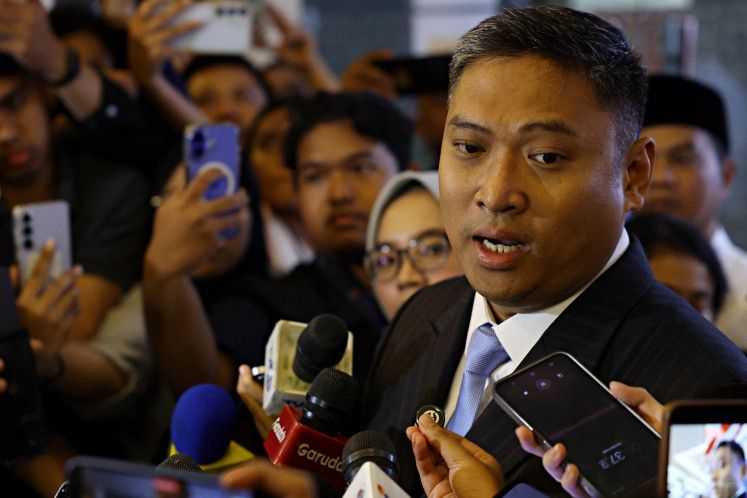
Within hours of accepting Nanik's resignation, Prabowo moved swiftly to fill the vacant leadership position by appointing Sudaryono, the Deputy Agriculture Minister, to assume the BGN helm. Sudaryono, a member of Prabowo's Gerindra Party who had served as a presidential aide during the 2010s, was formally inaugurated at a State Palace ceremony in Jakarta on Wednesday. His elevation from the Agriculture Ministry reflected an administrative reshuffle aimed at introducing fresh personnel perceived as capable of implementing meaningful reforms within the troubled institution. During his inauguration, Sudaryono acknowledged the agency's transparency deficiencies and committed to comprehensive modernisation efforts, pledging to convert manual administrative systems to digital platforms that would create comprehensive institutional records and eliminate opportunities for unaccountable decision-making behind closed doors.
State Secretary Prasetyo Hadi characterised the leadership transition as regrettable but necessary, telling reporters that Prabowo had explicitly instructed his administration to undertake sweeping institutional reforms at the BGN following the corruption investigation's findings. Prasetyo justified Sudaryono's appointment by noting his involvement in the programme's conceptual development stages, suggesting his familiarity with foundational design principles would facilitate remedial efforts. The emphasis on Sudaryono's previous engagement with the initiative indicated that Prabowo intended to leverage continuity of vision rather than introduce entirely external perspectives to the reform process.
The free meals programme has endured a succession of operational disruptions since its initial deployment in early 2025, with controversies extending far beyond governance and corruption concerns. Recurring food quality issues and multiple mass poisoning incidents across numerous localities have generated substantial public alarm and media scrutiny. These health and safety challenges prompted Nanik to impose a moratorium on establishing new kitchen facilities while existing operations nationwide underwent comprehensive evaluation. The review process, however, sparked considerable friction with thousands of prospective kitchen entrepreneurs who had invested substantially in facility construction and equipment, leading to organized protests against the expanded pause.
The accumulating difficulties have forced the government to substantially scale back programme ambitions and budgetary allocations. On Tuesday, the BGN announced a significant reduction in the provisional 2026 budget from the initially planned Rp268 trillion to Rp229 trillion (approximately US$12.8 billion), representing a major contraction in allocated resources. The agency simultaneously lowered its beneficiary target for the coming year to 62.7 million people, a considerable retreat from the original objective of providing meals to 82.9 million beneficiaries encompassing schoolchildren, toddlers, and pregnant women. BGN deputy chief Agustina Arumsari explained that the revised approach prioritised service quality improvement over ambitious expansion, effectively abandoning fixed participation targets in favour of focused operational enhancement.
These retrenchments represent a pragmatic acknowledgement that the programme had expanded excessively relative to available institutional capacity and quality control mechanisms. The original 2026 budget of Rp335 trillion would have supported the vastly larger beneficiary population, but the successive crises exposed the dangers of expanding faster than management systems could accommodate. The shift toward emphasising quality metrics rather than sheer participation numbers suggests government acceptance that a smaller, better-administered programme serves the public interest more effectively than an expanded scheme susceptible to recurring operational failures and health emergencies.
Political analyst Wasisto Raharjo Jati attributed the programme's recurring difficulties to fundamental deficiencies in initial planning and institutional architecture. While acknowledging the political importance Prabowo attaches to the initiative, Wasisto observed that the manifest problems reflected an organisation fundamentally driven by political ambitions to deliver visible campaign commitments rather than grounded in rigorous technocratic preparation and phased implementation strategies. This diagnostic assessment suggests the underlying dysfunction stems not from individual leadership failings but from systemic misalignment between political timelines and administrative capacity. The succession of crises involving the programme's second chief executive in as many months underscores these deeper organisational fragilities that leadership appointments alone cannot remediate without more comprehensive institutional reconstruction.

