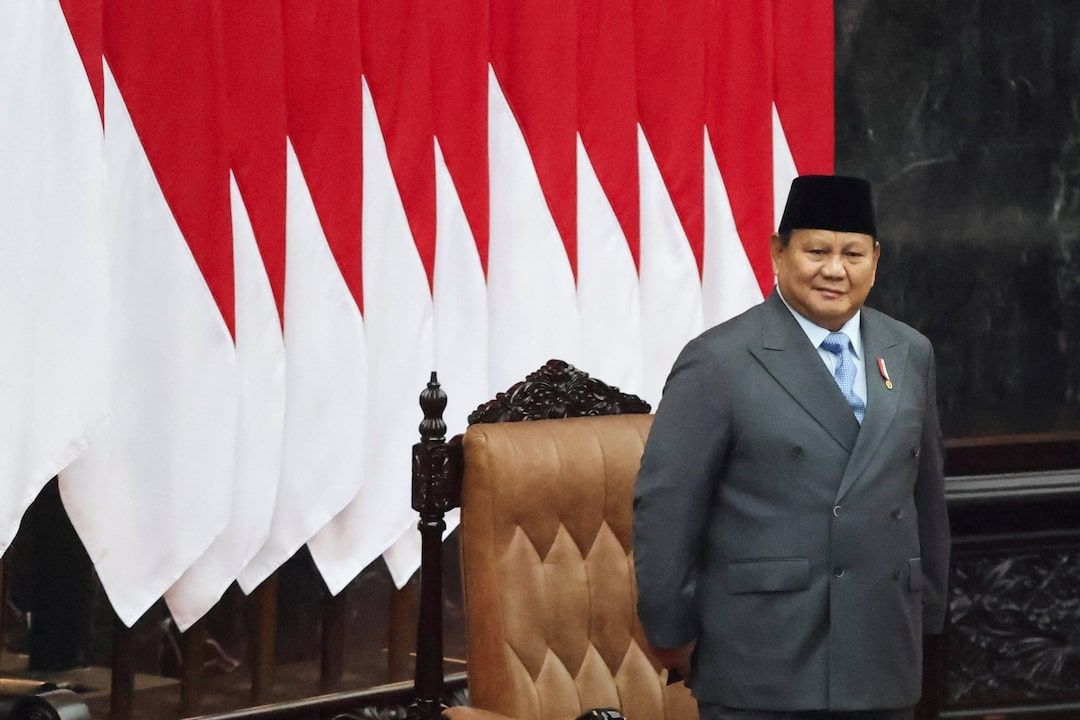
Indonesian President Prabowo Subianto will lay out his 2027 budget plans on Friday, confronting a mounting credibility crisis as public backing deteriorates and the international investment community grows increasingly wary of his administration's economic direction. The presentation arrives amid broader struggles that have undermined confidence in the government's ability to deliver on its initial reform agenda, making this budget address a pivotal test of whether the former military commander can restore faith in his economic stewardship.
When Prabowo took the helm in October 2024 following a decisive electoral mandate, he arrived with an ambitious economic vision. His platform centred on three pillars: eliminating corruption within the state apparatus, accelerating growth from 5% annually to 8%, and implementing a universal free meal scheme for schoolchildren. These pledges resonated with voters seeking tangible improvement in governance and living standards, propelling him to a commanding victory at the ballot box.
Yet the intervening months have exposed significant gaps between campaign rhetoric and operational reality. The Indonesian rupiah has weakened considerably against major currencies, reflecting investor unease about macroeconomic fundamentals. The Jakarta stock exchange has underperformed expectations, signalling that market participants question the sustainability of current policy settings. Simultaneously, concerns about excessive government spending have intensified scrutiny of fiscal management, while broader anxieties about central bank autonomy—essential for monetary credibility—have surfaced among economists and financial observers.
The marquee free meals initiative, intended as a signature programme demonstrating the government's commitment to social welfare, has encountered serious obstacles. Budget reallocations have constrained its scope, whilst allegations of administrative inefficiency and misuse of resources have invited public scepticism about implementation capacity. This stumble on a highly visible policy has compounded doubts about the administration's competence in executing complex programmes.
Analysts view the 2027 budget announcement as far more than a routine fiscal exercise. According to Irman Faiz, an economist at Bank Danamon, this budget represents perhaps the most consequential moment for investor confidence in recent years. Global markets have endured consecutive years of policy surprises emanating from Jakarta, testing the patience of institutional investors accustomed to predictability. The window for tolerating further economic uncertainty has narrowed markedly, leaving little room for error in Friday's presentation.
Indonesia's fiscal position adds urgency to the presentation. The government's deficit stands at approximately 2.8% of gross domestic product for 2025, moving dangerously close to the constitutional limit of 3%. This trajectory indicates that policymakers face genuine constraints on spending flexibility in the coming year, requiring difficult choices about budget allocation and revenue generation. Failure to convincingly address fiscal discipline risks triggering downgrades from credit rating agencies and widening funding costs for the state.
The greatest source of market uncertainty stems from the government's May announcement regarding commodity exports. Prabowo unveiled plans to concentrate trading in critical natural resources—including minerals and agricultural products—under a new state enterprise called Danantara Sumberdaya Indonesia. The proposal ignited alarm among international traders, who feared this would create bottlenecks, disrupt supply chains, and potentially violate trade commitments. The ambiguity surrounding the entity's actual authority has only deepened investor anxiety; while some officials have since suggested it would exercise merely supervisory functions rather than direct control, no clarification has been formally issued. Yose Rizal Damuri of the Center for Strategic and International Studies notes that investors are keenly awaiting presidential guidance on this critical point. Commodity traders, particularly those operating in palm oil and minerals sectors, will scrutinise every word Prabowo utters regarding Danantara Sumberdaya Indonesia's operational mandate.
The erosion of public confidence presents a parallel challenge. Recent polling indicates Prabowo's approval rating has collapsed by 30 percentage points in just eight months, sliding to 51%. The deterioration reflects public frustration with slowing economic momentum and perceived inadequacies in law enforcement performance. These sentiment shifts suggest the initial electoral honeymoon has evaporated, replaced by widespread disappointment with tangible outcomes. The president must therefore address not only investor concerns but also restore domestic political space in which to pursue longer-term reforms.
Arya Fernandes, head of politics and social change at CSIS, emphasises that Prabowo must tackle twin anxieties: doubts about economic direction and concerns about whether signature priority programmes can function effectively given resource constraints. Reconciling these contradictory pressures represents a genuine political test. The president cannot simply promise larger budgets for social programmes whilst simultaneously reassuring investors about fiscal prudence; he must chart a middle course that acknowledges trade-offs and articulates a coherent vision.
The budget announcement unfolds as part of a larger Independence Day observance on Friday. Prabowo will deliver a morning address covering broader national priorities, then pivot to specific budget details in an afternoon session. This dual presentation offers an opportunity to frame fiscal decisions within a larger narrative about national direction, potentially softening market reactions to specific spending or revenue choices.
For regional observers including Malaysian policymakers and investors, Indonesia's fiscal and commodity export decisions carry spillover implications. Supply chain disruptions emanating from Jakarta would reverberate across Southeast Asia's trading networks. Similarly, Indonesia's macroeconomic stability influences regional financial conditions, making the credibility of this budget announcement relevant far beyond Jakarta's borders.
The timing could hardly be more consequential. Prabowo's government sits at an inflection point where restoring investor confidence requires demonstrable commitment to fiscal discipline, transparency about commodity export frameworks, and realistic expectations about economic growth achievable through existing policy settings. How the president navigates these competing demands will determine whether his administration can rebuild credibility or whether the erosion of support becomes self-reinforcing.

