President Prabowo Subianto is undertaking a significant reassessment of two centrepiece government programmes that have become symbols of both his administration's ambitions and its vulnerabilities. The free nutritious meal initiative and the Red and White cooperative scheme, conceived as transformative social policies, now face systematic review following sustained public backlash, operational difficulties, and growing questions about their enormous budgetary implications. The presidential directive, delivered during a four-hour closed-door session at the Palace on Wednesday, July 15, with relevant cabinet ministers, represents a tacit acknowledgement that these programmes require fundamental restructuring rather than incremental adjustments.
The meals initiative has proven particularly contentious in recent months, emerging as a credibility flashpoint for Prabowo's still-fledgling administration. Budgeted at a staggering Rp 268 trillion (US$19.5 billion) for 2026 alone, the scheme aims to distribute free food to approximately 83 million beneficiaries spanning schoolchildren, pregnant women, and other vulnerable populations. While the underlying objective—combating childhood malnutrition and stunting, persistent challenges across Indonesia's diverse regions—enjoys broad support, the programme's execution has unravelled amid food poisoning incidents, corruption allegations involving senior National Police and Indonesian Military officials, and visible street protests demanding its suspension last month.
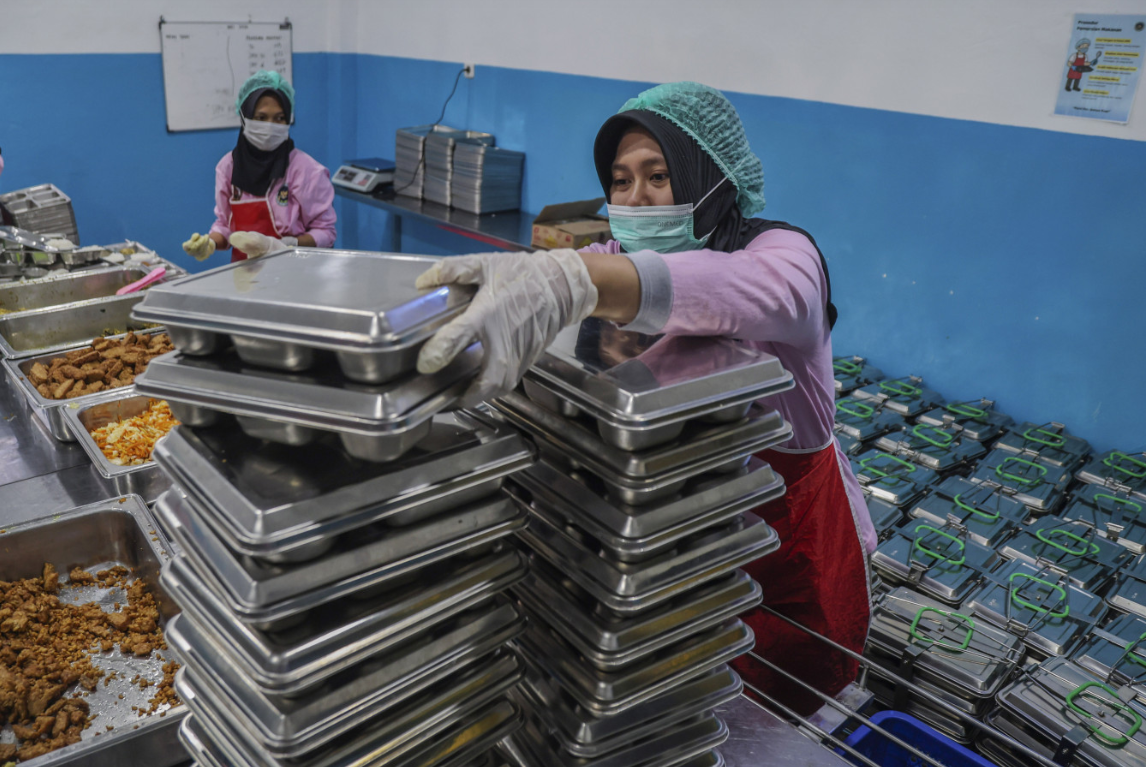
Agustina Arumsari, deputy chief of the National Nutrition Agency (BGN) responsible for managing the meals programme, disclosed that the President has mandated a comprehensive, meticulous evaluation of current implementation methods across school systems, with completion required within one month. Her comments following the meeting revealed that Prabowo's concern extends beyond operational efficiency to encompass broader pedagogical and social considerations. The administration now intends to scrutinise the fundamental architecture of how meals reach students, potentially departing from the current kitchens-based model toward alternative delivery mechanisms, including leveraging existing school canteen infrastructure.
The eligibility framework itself appears destined for substantial recalibration. Government officials are actively considering whether to exclude higher-income households from receiving free meals, fundamentally reorienting the programme toward Indonesia's poorest segments. This shift toward means-testing represents a philosophical pivot from the original universal provision model. However, Arumsari highlighted a nuanced concern that often eludes top-level policymakers: the psychological and social consequences of creating visible disparities within mixed-income classrooms. The prospect of some students receiving meals whilst their peers do not, she suggested, requires careful consideration of emotional and developmental impacts before implementation proceeds.
This sensitivity to ground-level complications reflects a maturation in how Prabowo's administration contemplates large-scale social intervention. Rather than imposing changes hastily, the President has explicitly directed his agencies to conduct thorough analysis, suggesting an openness to evidence-based adjustments over ideological rigidity. The one-month timeline, whilst compressed, nonetheless allows for stakeholder consultations and preliminary assessment of how targeting mechanisms might function within Indonesia's heterogeneous school environments, particularly in urban centres where income inequality within single institutions creates implementation complexities.
The parallel review of the Red and White cooperative programme signals similarly profound reconsideration. Coordinating Food Minister Zulhas Hasan announced that these cooperatives will assume expanded roles as primary government distribution channels for various assistance programmes and subsidised commodities. The scheme envisions cooperatives functioning as agricultural price stabilisers, purchasing rice, corn, and other staples from farmers when market prices dip below government-determined floors. This intervention mechanism targets rural income support whilst ostensibly protecting food supply stability.
Yet the cooperative initiative carries its own reputational damage. Mandatory military-style training programmes for cooperative managers have resulted in at least four deaths, generating headlines across Indonesian media and international news organisations. These fatalities transformed what should have been an administrative training exercise into a symbol of governance excess and poor risk management. The deaths created pressure for fundamental programme redesign, with officials now forced to address whether militarised approaches remain appropriate for civilian economic initiatives aimed at helping rural communities.
For Malaysian and regional observers, these Indonesian policy adjustments offer instructive lessons in managing ambitious welfare initiatives at massive scale. Indonesia's 270 million population means that social programmes acquire magnitudes of complexity absent in smaller nations. The free meals scheme alone demonstrates how even well-intentioned universal policies encounter implementation bottlenecks, corruption vulnerabilities, and unintended social consequences that domestic designers may initially underestimate. The willingness to conduct systematic review rather than doubling down on established approaches suggests institutional learning, even if painful public crises triggered the course correction.
The broader Southeast Asian context matters considerably here. Multiple countries across the region have experimented with large-scale nutrition and agricultural support programmes, with varying success rates. Thailand's rice pledging scheme, for instance, incurred substantial fiscal costs and accumulated massive stocks whilst failing to stabilise rural incomes as intended. Indonesia's experience with free meals represents another data point in the region's ongoing negotiation with how to balance social ambitions against fiscal sustainability and implementation realities. The Malaysian government, contemplating its own social programmes and their scale, may find Indonesian policymakers' acknowledgement of complications relevant to its own deliberations.
The political implications merit attention as well. Prabowo's willingness to acknowledge shortcomings in high-profile initiatives, whilst potentially exposing him to opposition criticism about poor planning, simultaneously demonstrates responsive governance. Rather than defending programmes that manifestly encountered problems, he has chosen recalibration. This approach contrasts with administrations that entrench failing policies through denialism. Whether the resulting modifications genuinely address root causes or merely provide cosmetic adjustments will become apparent only as implementation unfolds across the coming months.
The Resource implications deserve consideration too. A Rp 268 trillion commitment represents a substantial portion of Indonesia's discretionary spending capacity. If the government genuinely narrows beneficiary eligibility or shifts delivery mechanisms toward more efficient models, potential fiscal savings could redirect resources toward other priorities or reduce deficit pressures. Conversely, if the review process extends timelines and creates administrative complications, implementation gaps might undermine the nutritional benefits the scheme seeks to provide. The coming month will prove crucial in determining whether presidential direction translates into coherent revised policy.

