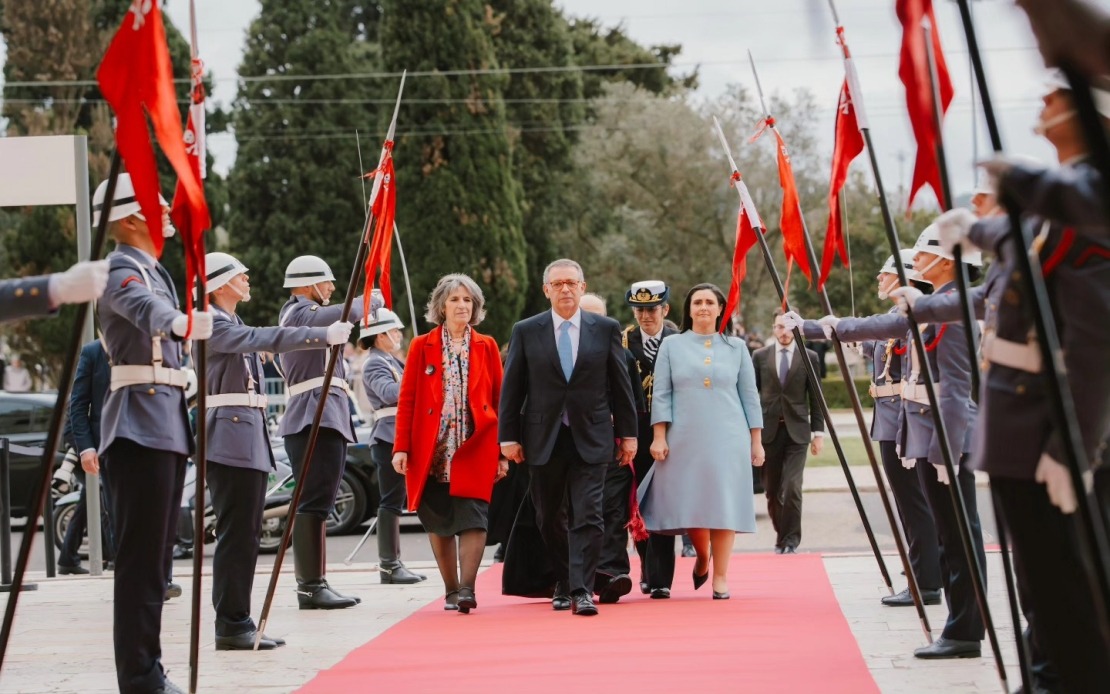
Portugal has officially joined the growing list of European democracies to introduce restrictions on face coverings in public areas, following President Antonio Jose Seguro's approval of the legislation on Tuesday. The move came after the right-wing Chega party originally proposed the ban, which subsequently underwent parliamentary amendments before receiving presidential endorsement. The Belem Palace, Portugal's seat of presidential authority in Lisbon, released a statement explaining the reasoning behind Seguro's decision to sign the measure into law.
In justifying the decision, Seguro framed the legislation around several interconnected policy objectives that extend beyond simple public conduct regulations. The President cited concerns about social integration, non-discrimination principles, and public security considerations as factors supporting the ban's implementation. His endorsement also referenced relevant European Court of Human Rights precedents dealing with face covering restrictions, suggesting the Portuguese government had carefully reviewed international jurisprudence before proceeding with the law.
The presidential statement articulated a particular vision of Portuguese society that emphasizes visible identity and mutual recognition as fundamental to social cohesion. According to the palace's explanation, Seguro conceptualized the uncovered face as a "structuring dimension of social trust," arguing that daily interaction within Portuguese communities depends on the ability of citizens to recognize one another and establish direct relationships. This framing reflects a philosophy that intertwines national identity with specific conduct requirements in shared public environments.
A significant element of the government's rationale focused on gender equality considerations. The statement explicitly addressed what it characterized as an asymmetry in expectations regarding face coverings, noting that if such coverings were required disproportionately of women, this would contradict the principles of gender parity and equal dignity that ostensibly underpin European democratic societies. This argument represents the administration's attempt to position the ban as advancing rather than restricting women's rights—a framing that remains contested by civil liberties organizations.
The Portuguese position invoked a delicate balance between individual liberty and collective social norms. According to the presidential statement, citizens in a free society should retain the capacity to live according to their personal identity and beliefs, but within a framework of shared rules that enable common experience. The government cited European Court of Human Rights jurisprudence as supporting this conception of how individual freedoms operate within democratic constraints, suggesting the law reflects established international standards rather than departing from them.
However, Amnesty International Portugal has mounted a substantial challenge to this interpretation, characterizing the ban as fundamentally discriminatory and inimical to the rights of Muslim women who voluntarily choose to wear face coverings for religious or personal reasons. The human rights organization's critique suggests the law, regardless of its stated intentions, will have disproportionate impacts on specific religious communities and will constrain genuine personal choice in matters of religious expression and bodily autonomy.
Portugal's adoption of this legislation places it within a broader European pattern of face covering restrictions that has developed over recent decades. France was among the earliest nations to implement a comprehensive ban, followed by Belgium, Austria, Denmark, and the Netherlands, each of which has established either complete prohibitions or partial restrictions on face coverings in designated public spaces. This convergence across multiple European jurisdictions suggests a shared policy concern, though the timing and scope of restrictions vary considerably across different national contexts.
The geographic concentration of such bans within Western Europe raises important questions about the relationship between immigration policy, religious diversity, and public conduct regulation across the continent. These laws emerged during periods of heightened debate about integration, secularism, and the relationship between religious expression and state authority. Malaysia and other Southeast Asian nations, which host diverse Muslim populations and maintain different constitutional frameworks governing religious freedom, may observe these European developments with particular interest as they navigate their own questions about religious accommodation in plural societies.
For Malaysian readers, Portugal's decision offers a case study in how democratic societies balance security concerns, social cohesion narratives, and individual freedoms. The Portuguese example illustrates how legislation nominally concerned with public safety or social integration can generate significant controversy regarding minority rights and religious expression. It also demonstrates how appeals to gender equality can become entangled with restrictions affecting specific religious communities, a dynamic relevant to ongoing discussions about multiculturalism and religious accommodation across Asia.
The international dimension of this issue warrants attention as well. European human rights bodies, including the European Court of Human Rights, have engaged with face covering restrictions through established legal frameworks, creating precedents that other democracies may reference. This development underscores how constitutional and human rights jurisprudence developed in one region can influence policy debates globally, particularly where international treaties and institutional arrangements create binding or persuasive legal authority.
Looking forward, Portugal's new legislation will likely generate continued litigation and policy debate, particularly as implementation mechanisms develop and specific cases test the law's application. The tension between the government's stated objectives around social integration and security, and civil society organizations' concerns about minority rights and religious freedom, reflects deeper questions about how pluralistic democracies navigate competing values in an era of significant demographic change and heightened security awareness.
For policymakers across Southeast Asia observing these developments, Portugal's experience demonstrates both the political appeal and the civil liberties complications that accompany such restrictions. As societies throughout the region continue managing questions about religious accommodation, public security, and social cohesion in increasingly diverse populations, the Portuguese precedent—along with earlier European examples—may inform domestic policy discussions while also serving as a cautionary example of how security-focused legislation can intersect with religious and gender-related concerns in complex ways.

