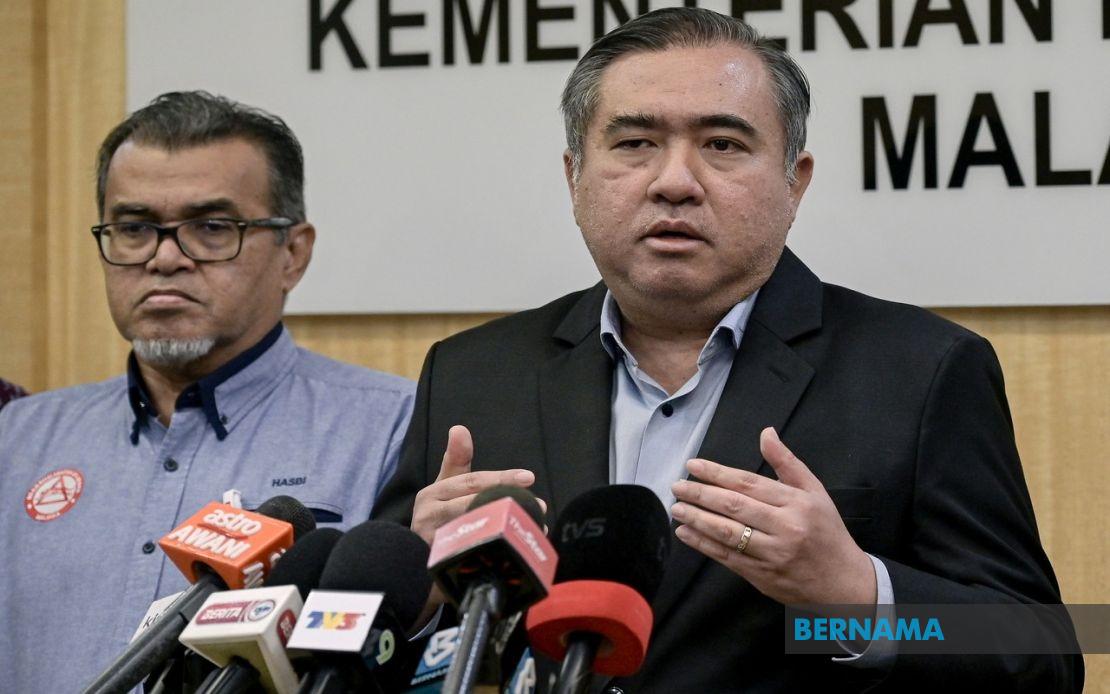
Transport Minister Anthony Loke has drawn a clear distinction between government oversight of port ownership and corporate governance, stating that Malaysia's regulatory framework focuses exclusively on ensuring domestic majority shareholding rather than dictating internal management decisions. Speaking at a press conference in Putrajaya on July 17, Loke addressed mounting international media attention surrounding recent personnel changes at MMC Ports Holdings Bhd, emphasizing that such appointments represent internal corporate matters beyond the scope of government intervention.
The minister's comments were prompted by reports of Sultan Ahmed Sulayem, the former chairman and chief executive officer of logistics giant DP World, assuming the position of executive chairman at MMC Ports Holdings Bhd following the immediate resignation of group chief executive officer Azman Shah Mohd Yusof. This leadership transition had sparked questions about whether foreign involvement in senior management positions at strategically important national port operators raised regulatory concerns for the government.
Loke articulated Malaysia's ownership framework with precision, explaining that government policy mandates any company operating port concessions or holding strategic national assets must maintain Malaysian ownership at a minimum threshold of 51 per cent. This regulatory approach reflects the government's intention to preserve domestic control over critical infrastructure whilst allowing operational flexibility and international expertise to flow into management structures. The distinction reveals a pragmatic philosophy: ownership and decision-making authority remain fundamentally Malaysian, whilst day-to-day operational leadership can benefit from global experience and networks.
The transport minister pointed to existing precedent within Malaysia's port sector to illustrate this principle in practice. The Port of Tanjung Pelepas, he noted, currently operates under the leadership of a foreign national chief executive officer, demonstrating that the government has long maintained a hands-off approach toward management appointments regardless of the executive's nationality. This historical example underscores that Loke's position represents established policy rather than a recent shift in regulatory approach toward port operators.
Crucially, Loke distinguished between passive acceptance of internal corporate decisions and active government oversight of structural changes. Whilst the ministry does not preapprove or meddle in appointment processes, any modifications to shareholding patterns trigger notification requirements. Companies or concessionaires must inform the government through formal channels, including the Public-Private Partnership Unit (UKAS), whenever ownership stakes shift. This creates a dual-track system: transparency regarding ownership changes balanced against autonomy in selecting personnel to execute operational strategy.
Regarding the specific situation at MMC Ports Holdings Bhd, Loke stated that the Transport Ministry had not received formal notification of any shareholding alterations as of his July 17 statement. The ministry's lack of awareness about potential ownership changes suggested that if any such modifications were contemplated, they had not yet been officially communicated through proper governmental channels. This distinction between international media reporting and official government notification reflects the often-fragmented information environment surrounding large corporate transactions, where news coverage may precede formal regulatory disclosures.
The minister's clarification carries significance for regional port operators and international investors evaluating Malaysia's investment climate. By explicitly confirming that foreign expertise can be welcomed into senior management positions, Loke signaled that Malaysia seeks to attract world-class operational talent whilst maintaining domestic ownership anchors. This balancing act acknowledges that port competitiveness increasingly depends on global best practices, sophisticated logistics networks, and international market knowledge—resources that foreign executives often bring to the table.
For Malaysia's port sector specifically, the messaging matters considerably. Container terminal operators, general cargo handlers, and specialized port service providers across the region increasingly feature multinational management teams. Loke's confirmation that such arrangements encounter no government resistance potentially makes Malaysian port concessions more attractive to international operators seeking to deploy experienced leaders across their regional portfolios. Port of Tanjung Pelepas, which competes aggressively with Singapore's port for transhipment cargo, exemplifies how foreign expertise can enhance operational efficiency and competitiveness.
The broader context involves tension between strategic asset protection and operational pragmatism that many Southeast Asian governments navigate. Malaysia's approach—firm on ownership thresholds whilst permitting management autonomy—reflects a middle path between complete foreign control and protectionist restrictions that might limit operational excellence. This framework acknowledges that infrastructure assets require sustained domestic investment and long-term commitment from local shareholders, whilst recognizing that day-to-day execution benefits from global talent markets and international best practices.
Loke's remarks also implicitly address concerns about diluted Malaysian authority over port operations. By confirming that shareholding requirements remain firmly at 51 per cent, he reassured stakeholders that strategic direction ultimately remains domestically controlled. Major investment decisions, dividend policies, long-term capital allocation, and concession strategy would necessarily reflect Malaysian shareholder interests. Foreign executives, regardless of title, function within governance structures ultimately accountable to Malaysian owners holding majority stakes.
The appointment of Sultan Ahmed Sulayem specifically underscores the caliber of international talent potentially available to Malaysian port operators. His background heading DP World, one of the world's largest port operators with operations spanning continents, brings decade-spanning experience managing complex, high-volume terminals competing in fiercely competitive global markets. Such appointments signal that Malaysian port operators can access the same talent pools as international competitors, potentially enhancing their competitive positioning.
Moving forward, Loke's clarification provides important guidance for other Malaysian port operators and investors considering management restructuring. The framework permits considerable operational flexibility provided ownership fundamentals remain rooted in Malaysian hands. Companies need not seek government approval for appointment decisions, though they must maintain transparency regarding ownership changes. This regime balances regulatory certainty with operational autonomy in ways that accommodate both domestic stakeholder interests and international operational competence.

