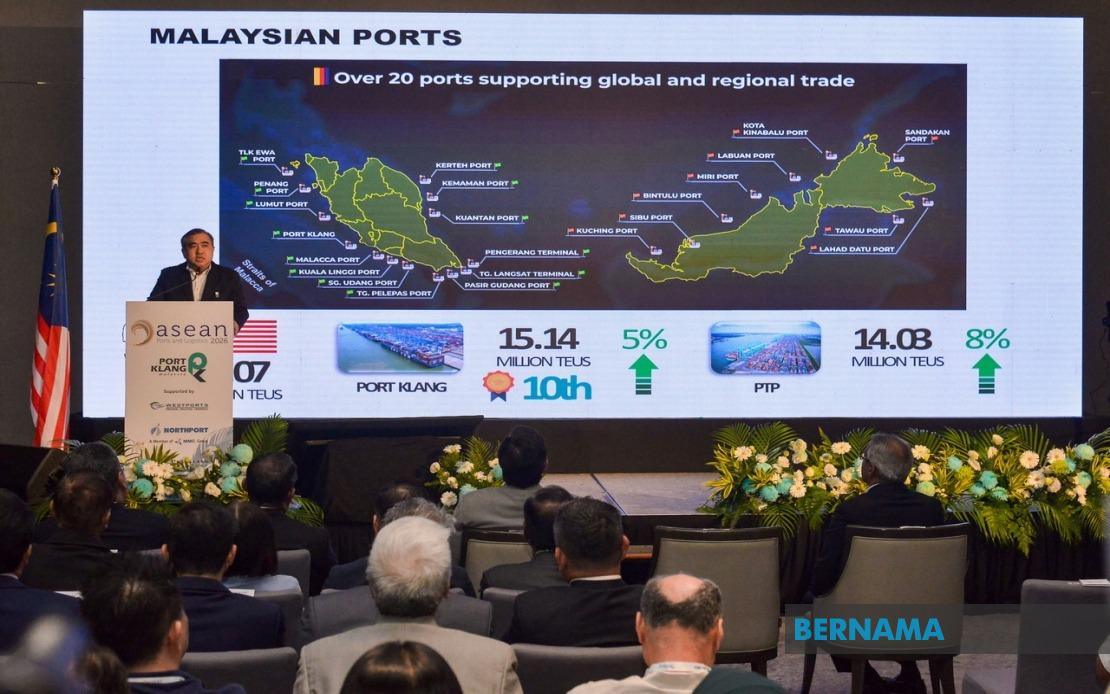
Malaysia is moving forward with ambitious plans to establish itself as a premier maritime hub in Southeast Asia through the development of Port Klang's Third Terminal on Carey Island, according to Transport Minister Anthony Loke. The multi-phase megaproject is expected to span nearly two decades before reaching full operational capacity, representing a strategic investment in the nation's long-term competitiveness within global shipping corridors. Loke made the announcement at the ASEAN Ports and Logistics Conference and Exhibition in Kuala Lumpur, emphasising that this initiative is fundamental to maintaining Malaysia's maritime relevance over the next 20 to 30 years as regional competition intensifies.
The scale of the undertaking becomes apparent when comparing existing capacity with regional competitors. Port Klang currently processes approximately 20 million twenty-foot equivalent units annually, a figure that pales in comparison to Singapore's Tuas Port, which boasts a handling capacity of up to 60 million TEUs yearly. This threefold capacity gap highlights the substantial infrastructure deficit Malaysia must overcome to compete effectively within the region's crowded port landscape. The proposed terminal aims to fundamentally transform Port Klang's operational capabilities, transitioning it from a mid-sized facility to a mega-port capable of accommodating significantly higher cargo volumes and positioning Malaysia more competitively against established regional powerhouses.
Progress on the Carey Island development has advanced considerably, with feasibility studies that commenced in 2018 now complete. The Cabinet has already granted in-principle approval for the project to proceed under a public-private partnership arrangement, a structural approach increasingly favoured by the Malaysian government for major infrastructure initiatives. This PPP model enables the government to leverage private sector expertise and capital while maintaining strategic oversight of this nationally significant asset. However, the project's immediate advancement hinges on resolving outstanding land acquisition and administrative matters with the Selangor state government, a process that Loke indicated was nearing resolution.
The timing of Port Klang's expansion takes on added significance given recent geopolitical developments affecting maritime trade corridors. Tensions in West Asia have created unexpected opportunities for Malaysian ports, as shipping companies increasingly redirect routes and consolidate transshipment activities through safer regional alternatives. Rather than suffering from global instability, Port Klang and the Port of Tanjung Pelepas have both experienced positive cargo volume growth during the first quarter of 2024, suggesting that Malaysia's geographical positioning offers inherent strategic advantages in an uncertain global environment.
This strategic advantage stems from Malaysia's location along critical international trade routes, particularly the Strait of Melaka, one of the world's most important shipping passages. During periods of elevated geopolitical risk in other regions, Malaysian ports benefit from the perception of relative safety and stability, attracting additional transshipment business from operators seeking to mitigate exposure to conflict-affected areas. The government recognises this opportunity and is actively promoting Malaysia's role as a secure haven for maritime commerce, positioning the nation as a reliable alternative for global shipping networks requiring greater certainty and lower geopolitical risk.
Loke has called upon fellow ASEAN member states to collectively strengthen their commitment to maintaining the Strait of Melaka as a neutral, conflict-free international trade route. This diplomatic initiative reflects broader regional interests in preserving freedom of navigation and ensuring that one of the world's most critical maritime corridors remains secure and open to international commerce. The Strait, through which approximately 25 percent of global maritime trade passes annually, constitutes essential infrastructure for not only Southeast Asian economies but the entire global trading system. Any disruption to shipping through this passage would carry severe economic consequences extending far beyond the region.
The Third Terminal project aligns with Malaysia's broader economic strategy to leverage its natural geographic advantages in global logistics networks. Unlike other infrastructure investments that require lengthy periods to generate returns, maritime port development produces relatively immediate payback through increased handling fees, cargo-related services, and employment generation. The multiplier effects of expanded port capacity ripple through connected industries including warehousing, transportation, customs brokerage, and trading companies, creating substantial economic stimulus across the broader logistics ecosystem.
The Cabinet's decision to move forward with the PPP model reflects recognition that the scale and technical complexity of this project exceed the capacity of government funding alone. Private sector participation introduces operational expertise, efficiency pressures, and capital mobilisation that have proven effective in comparable projects across Asia. International port operators with experience managing mega-terminals in Hamburg, Rotterdam, and Singapore can bring sophisticated operational systems, workforce development, and cargo-handling innovations to Port Klang, potentially elevating service standards across Malaysian maritime operations.
Implementation challenges extend beyond simply securing land approvals. Port construction in Malaysia must navigate environmental considerations, Indigenous land rights, coastal zone management regulations, and coordination across multiple regulatory agencies. The Selangor state government's involvement underscores federalism complexities, as port development technically falls under federal jurisdiction but requires state land cooperation. Successful resolution of these administrative hurdles will demonstrate whether Malaysia can efficiently coordinate cross-governmental action on projects of national economic importance, a capability increasingly critical as infrastructure projects become more complex.
The competitive pressure driving this initiative reflects shifting patterns in global supply chains. The past two years have witnessed companies increasingly diversifying sourcing and logistics networks away from exclusive reliance on Singapore, seeking alternative regional hubs with lower costs, expanding capacity, and competitive service offerings. Port Klang, with appropriate investment and capacity enhancement, represents an attractive alternative for companies seeking to reduce Singapore exposure or establish redundancy in their regional logistics networks. Success in capturing a meaningful share of diverted traffic could position Malaysia as a genuine alternative pole within Southeast Asian maritime commerce.
Looking ahead, the Third Terminal's development timeline creates both opportunities and risks. A 20-year construction horizon positions the facility to serve shipping patterns extending into the 2040s, a period likely characterised by continued globalisation, larger vessel sizes, and potentially different supply chain architectures than today's configurations. Malaysian planners must therefore design flexibility into the terminal's infrastructure, ensuring that the facility can accommodate technological changes, vessel size evolution, and shifting cargo type distributions. Building outdated infrastructure for a future that never arrives would represent a significant waste of national resources and private capital investment.
Beyond the terminal itself, successful maritime hub development requires ecosystem support including competitive bunkering services, repair and maintenance facilities, efficient customs processing, reliable road and rail connections, and competitive labour pools with appropriate maritime expertise. Port Klang's transformation into a mega-facility therefore cannot succeed in isolation but requires coordinated investment across complementary infrastructure and service sectors. The government's role extends beyond approving individual projects to orchestrating coherent maritime ecosystem development that positions Malaysian ports as genuinely attractive alternatives to established regional competitors.
The Third Terminal initiative represents Malaysia's most ambitious response yet to regional maritime competition, signalling that policymakers understand the stakes involved in remaining competitive within global logistics networks. Success requires not merely constructing new facilities but embedding Malaysia within transformed international supply chains seeking alternatives to congested, expensive, or geopolitically uncertain alternatives. If executed effectively, the Carey Island development could catalyse broader transformation of Malaysia's maritime sector, establishing the nation as a destination for transshipment, container processing, and value-added logistics services that generate employment and government revenue extending well into the next generation.

