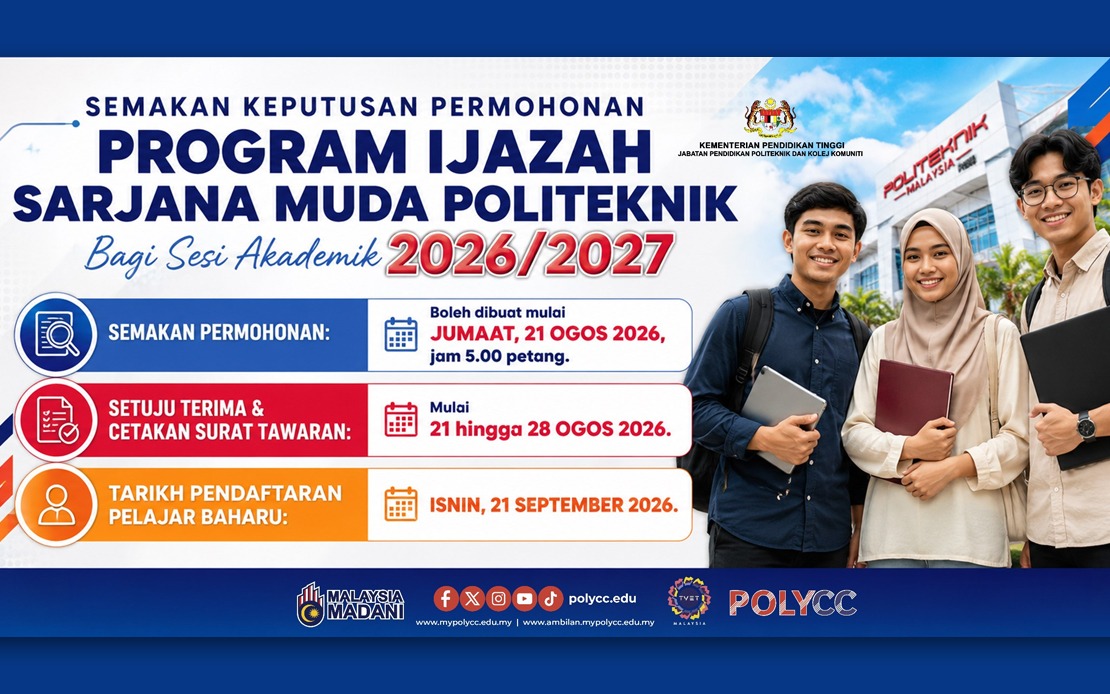
Prospective students pursuing higher education at Malaysia's polytechnics can now access their Bachelor's Degree application outcomes as the Department of Polytechnic Education and Community Colleges opens the results portal from today. The announcement marks a critical juncture for thousands of secondary school leavers and college graduates who applied for the 12 different degree specialisations now being offered across a network of four strategic polytechnic campuses nationwide.
The four institutions participating in this intake cycle represent a geographical spread across Malaysia's most industrialised regions. Politeknik Ungku Omar in Ipoh, Perak, and Politeknik Sultan Azlan Shah in Behrang, Perak, anchor the northern corridor, while Politeknik Sultan Salahuddin Abdul Aziz Shah in Shah Alam, Selangor, serves the Klang Valley and central region. Politeknik Ibrahim Sultan in Pasir Gudang, Johor, extends provision to the southern industrial zone. This distribution reflects Malaysia's push to decentralise higher education access beyond Kuala Lumpur and Selangor.
The variety of programmes on offer underscores the government's commitment to addressing workforce demands in critical technical and creative sectors. Mechanical Engineering Technology, Civil Engineering Technology and Built Environment, and Electrical and Electronic Engineering Technology programmes align with Malaysia's industrial needs, particularly for infrastructure development and manufacturing. The inclusion of Visual Communication and Design reflects the emerging digital economy, while Tourism and Hospitality programmes support the services sector that remains vital to Malaysia's GDP and employment landscape.
With 534 places available across these programmes, the intake represents a modest but meaningful expansion of polytechnic degree pathways. For Malaysian students, polytechnic Bachelor's degrees offer a valuable alternative to university education, often with closer alignment to industry requirements and stronger practical components. The polytechnic route has gained credibility over the past decade as employers increasingly recognise the quality and relevance of graduates from these institutions, particularly in technical fields where hands-on skills are paramount.
Successful candidates face a tight confirmation window. From today through August 28, applicants must formally accept their offers through the portal. This seven-day window is relatively compressed, reflecting the tight scheduling of the academic calendar. Students and parents should prioritise this step, as failure to confirm within the deadline may result in forfeiture of the place, particularly given the limited number of vacancies available across all programmes.
For those who have not received an offer, the pathway remains open through the appeals process. The department has introduced a follow-up offer mechanism allowing unsuccessful applicants to submit online appeals until September 4. Results of the first follow-up offer round will be announced on September 8, providing a second opportunity for candidates to secure placement. This appeals framework acknowledges that initial placement decisions may not reflect all candidates' qualifications or circumstances, and it demonstrates the department's commitment to inclusive access to polytechnic education.
New student registration is scheduled for September 21, providing approximately three weeks between confirmation deadlines and the formal commencement of administrative processes. This timeframe allows accepted students to complete outstanding documentation, arrange accommodation if studying away from home, and prepare financially and psychologically for the transition to tertiary education. Many students will be experiencing structured higher education for the first time, and the phased timeline permits adequate adjustment.
The expansion of polytechnic Bachelor's programmes reflects broader shifts in Malaysia's technical education strategy. Historically, polytechnics were viewed primarily as post-secondary institutions offering two-year diplomas. The introduction of degree-level qualifications has elevated their status and expanded their reach into the talent pool that might previously have sought university education exclusively. This democratisation of degree access is particularly important for students from lower-income backgrounds who may find polytechnic fees more manageable than university tuition.
For the broader Southeast Asian context, Malaysia's polytechnic development offers instructive lessons. As regional economies increasingly compete for skilled workers and face labour market mismatches between university graduates and industry needs, the polytechnic model demonstrates how intermediate institutions can bridge the gap. The focus on applied disciplines rather than purely theoretical education addresses a persistent complaint from employers across the region that graduates lack practical competencies.
Students and families seeking additional information can contact the Student Intake and Development Division within the Department of Polytechnic Education and Community Colleges. Given the importance of meeting deadlines and the technical nature of the online portal, accessing official support channels directly rather than through unofficial advisors is strongly recommended. Clarity on programme content, career prospects, and campus facilities should be sought before confirming acceptance, as the decision made in the next week will shape the next three years of a student's educational journey.
The availability of these Bachelor's programmes represents an investment in Malaysia's human capital development at a critical moment when the economy is undergoing digital and green transitions. Graduates from these four institutions will enter a workforce grappling with Industry 4.0 imperatives, climate adaptation, and the servicing of a growing tourism sector. The practical, industry-responsive curricula of polytechnic degree programmes position graduates well to contribute meaningfully to these evolving demands.

