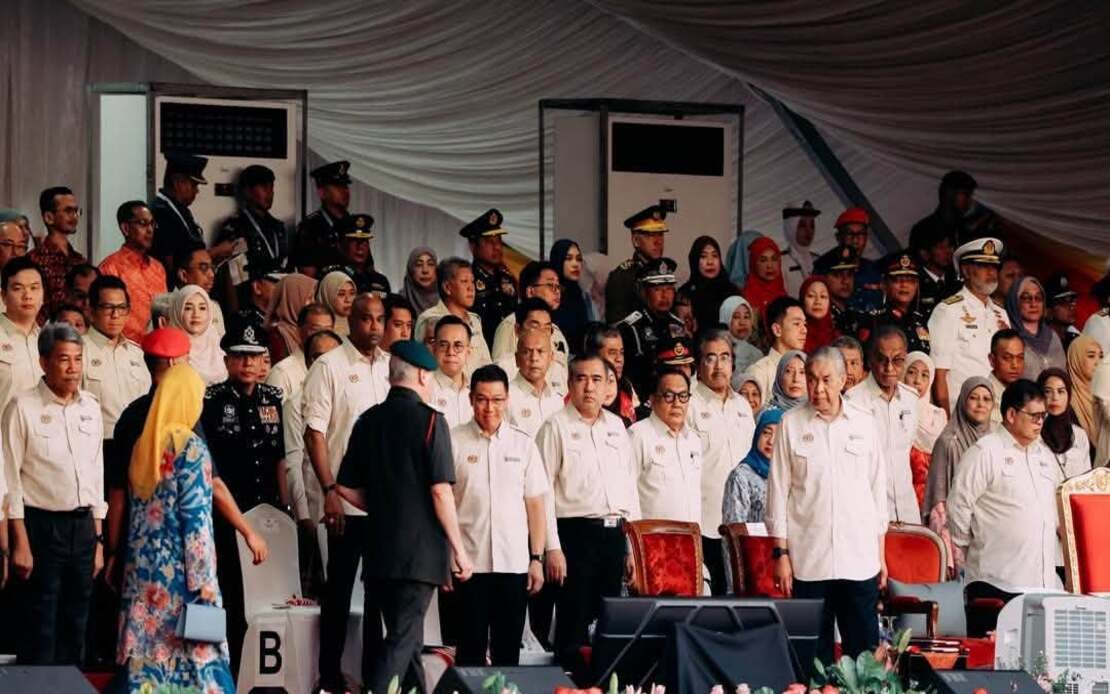
Malaysia's coalition government must cultivate a culture of political maturity to ensure its longevity and effectiveness, Domestic Trade and Cost of Living Minister Datuk Armizan Mohd Ali argued on National Day, reflecting growing concerns about sustaining the multi-party alliance that has governed since the 15th General Election. Speaking in a Facebook post marking the national commemoration, Armizan framed political maturity not merely as an ideal but as a practical necessity for navigating the country's transformed political landscape following the end of decades of single-party dominance.
The minister's remarks come at a pivotal moment for the Unity Government, which comprises parties from historically opposing political camps brought together in an unprecedented bid for stable governance. Armizan's emphasis on accepting Malaysia's new political reality underscores the coalition's underlying fragility—a coalition born not from shared ideology but from pragmatic recognition that electoral dynamics have fundamentally altered the nation's political calculus. His call for maturity acknowledges the existential challenge facing any multi-party administration: maintaining internal cohesion while respecting the distinct identities and electoral interests of its constituent members.
The minister drew an explicit cautionary lesson from the turbulent 2018-2022 period, when Malaysia cycled through three prime ministers and three complete Cabinet reconstitutions within a single parliamentary term. That era, punctuated by defections, power struggles, and institutional instability, demonstrated the dangers of prioritising factional advantage over institutional continuity. By invoking this recent history, Armizan implicitly warned that such chaos is not merely a historical anomaly but a recurring risk for coalitions lacking internal discipline and shared commitment to governance over partisan gain.
Crucially, Armizan articulated a framework for reconciling competing demands within coalition governments: the imperative to balance political rights and party autonomy with the collective responsibility to advance national development and public welfare. This formulation acknowledges a fundamental tension that coalition partners perpetually navigate. Parties within any alliance naturally seek to advance their own political interests, yet unconstrained pursuit of such interests threatens the coalition's ability to deliver stable, effective governance. Political maturity, in his construction, requires recognising that these impulses must be subordinated to broader institutional interests.
The minister revealed a striking observation about Cabinet dynamics that deserves deeper scrutiny. Despite visible friction between party activists and organisations at lower levels, senior Cabinet members have maintained what he described as harmonious, constructive, and professional relationships during formal government meetings. This distinction between frontline party politics and elite-level governance suggests that Malaysia's coalition leadership has succeeded in compartmentalising partisan rivalry—a crucial achievement often overlooked in assessments of coalition stability. However, this compartmentalisation carries inherent risks; tensions suppressed at the top levels may eventually rupture if lower-level grievances accumulate.
Armizan's invocation of National Day as the appropriate context for these remarks reflects a deliberate rhetorical strategy. By anchoring his message to national unity and shared patriotic commitment, he attempted to elevate the discussion beyond partisan calculation to a higher civic purpose. The celebration becomes, in this framing, not merely a commemoration of independence but a reminder that all Malaysians—political leaders included—hold membership in a broader national community transcending party affiliation. This appeal to transcendent national interest carries particular weight in Malaysian political discourse, where references to national unity and shared destiny retain considerable symbolic power.
The minister also broadened the coalition's responsibility to encompass multiple social constituencies: civil servants, business leaders, civil society activists, and ordinary citizens. This expansive formulation suggests that coalition stability depends not merely on elite negotiations but on cultivating broader societal acceptance of the new political arrangement. It implicitly recognises that the Unity Government's legitimacy rests partly on demonstrating that coalition governance can deliver tangible benefits to diverse constituencies, thereby securing buy-in from stakeholders beyond the political establishment.
For Malaysian observers, Armizan's emphasis on learning from the 2018-2022 experience carries particular resonance. That period exposed the vulnerabilities of governance structures dependent on shifting alliances and individual ambitions rather than institutional cohesion. The fragmentation that characterised that era not only disrupted policy implementation but undermined public confidence in governmental capacity and democratic institutions generally. The Unity Government faces the challenge of demonstrating that it has genuinely absorbed these lessons rather than merely reversed previous factional arrangements.
From a regional perspective, Malaysia's governance trajectory carries implications for other Southeast Asian democracies grappling with fragmented electoral outcomes and coalition politics. Countries including Thailand and Indonesia have confronted comparable pressures arising from multi-party systems and increasingly assertive electoral bases. Malaysia's experience with coalition governance—both the recent instability and current attempts at stabilisation—offers instructive lessons about institutional design, elite coordination, and the challenge of sustaining democratic governance under conditions of political pluralism.
The underlying question haunting Armizan's remarks remains unresolved: whether political maturity can be cultivated through rhetoric and senior leadership example, or whether it requires institutional reforms ensuring that coalition partners' long-term interests align with governmental stability. The present administration has relied substantially on the former approach, hoping that elite commitment and professional conduct might cascade throughout party organisations. Yet without addressing the structural incentives pushing parties toward defection or conflict—including electoral competition within coalition ranks—sustained maturity may prove elusive.

