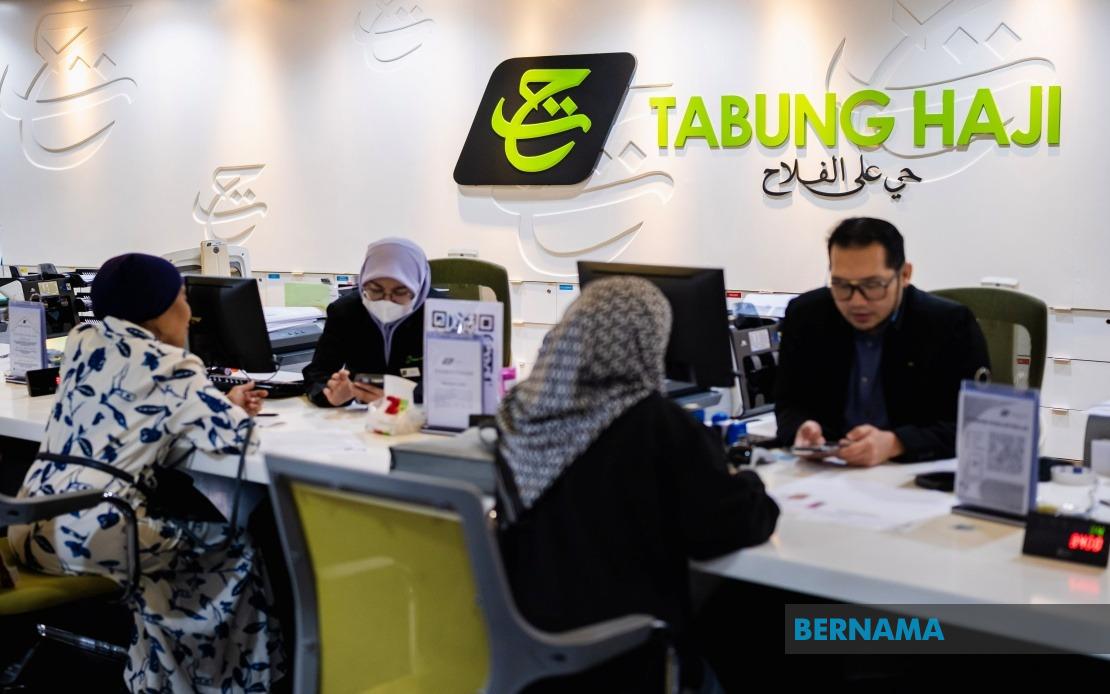
The recovery of Lembaga Tabung Haji (TH) hinges fundamentally on insulating the institution from political interference, according to multiple analysts responding to the implementation of more than three-quarters of the Royal Commission of Inquiry's governance recommendations. The consensus among scholars and economists points to a single overarching lesson from the crisis that nearly decimated the hajj savings body: the corrosive effects of partisan politics on institutional integrity and professional standards within a financial organization entrusted with the savings of Malaysia's Muslim community.
Across academic institutions and research bodies, the diagnosis is remarkably consistent. Political appointments to leadership positions and the constant insertion of political considerations into investment and operational decisions have fundamentally undermined TH's capacity to function as a professional, independent financial institution. The damage extends beyond balance sheets to the institution's credibility as a custodian of community resources dedicated to one of Islam's five pillars. This credibility gap, analysts warn, will prove difficult to close without demonstrable structural separation between the organization and the political process.
Prof Dr Azmi Hassan, a senior fellow at the Nusantara Academy for Strategic Research (NASR), articulated the central challenge facing TH's leadership. The institution remains deeply entangled with political interests, to the extent that virtually every significant decision—from investment approvals to the timing of parliamentary disclosure—becomes filtered through political lenses rather than evaluated on financial and operational merit. Hassan emphasized that restoring depositor confidence and reassuring the broader Muslim community requires the government to demonstrate through concrete action that TH operates under professional stewardship entirely independent of political pressure. This demands not merely rhetorical commitment but the appointment of board leadership and senior management personnel whose qualifications rest on expertise and independence rather than political affiliation.
Dr Mohd Amim Othman from Universiti Putra Malaysia's Faculty of Human Ecology directed attention to Malaysian institutions that have successfully maintained autonomy from political interference. The Employees Provident Fund (EPF) and Permodalan Nasional Berhad (PNB) both serve as functional models of how large-scale financial institutions managing billions in public resources can operate with professional integrity and governance standards sufficiently robust to weather political transitions. The difference, he suggested, reflects political willingness to respect institutional boundaries—a willingness that has been conspicuously absent in TH's case. Malaysia possesses no shortage of qualified professionals capable of leading TH competently; the obstacle lies in politicians' reluctance to relinquish control, demonstrating that the problem is fundamentally one of power rather than capability.
The implementation pathway forward, according to Othman, requires more than symbolic gestures. The RCI's formal recommendations should be operationalized through legal and structural amendments that constrain ministerial power, redefine board prerogatives, and establish substantive regulatory oversight mechanisms with enforcement capability. Simultaneously, TH must adopt a forward-looking posture to rebuild participation, particularly among younger Malaysians who represent the institution's future constituency. The crisis has already triggered declining contributions from existing members, creating a funding risk that compounds the reputational damage. Modernizing product offerings—including real estate investment vehicles and diversified savings options—alongside transparent communication about governance reforms could prove instrumental in attracting the next generation of members.
Dr Saizal Pinjaman from Universiti Malaysia Sabah's Centre for Economic and Policy Development connected the governance problem directly to investment risk management failures. The Al-Rawda property investment in Saudi Arabia, which precipitated TH's largest documented loss, proceeded despite incomplete due diligence processes—a pattern that becomes explicable when political imperatives override professional judgment. When decision-makers face pressure to approve investments for reasons disconnected from financial analysis, the normal guardrails against excessive risk-taking malfunction. Management autonomy and professional independence thus serve not as abstract administrative ideals but as essential mechanisms for preventing capital destruction and protecting stakeholder interests.
Yet independence cannot exist without accountability. Pinjaman cautioned against interpreting managerial freedom as freedom from scrutiny. Rather, the framework should establish clear operational space for professional decision-making while simultaneously strengthening external oversight mechanisms, audit functions, and transparency requirements that allow stakeholders to evaluate management performance against objective criteria. This balance—autonomy coupled with robust accountability—characterizes well-functioning financial institutions globally and represents the governance standard TH must aspire toward.
Dr Noor Nirwandy Mat Noordin, a security and political analyst at Universiti Teknologi MARA's Centre for Media and Information Warfare Studies, reframed the stakes in civilizational terms. TH occupies a unique institutional position within Malaysia's Muslim community, representing not merely a savings mechanism but a dimension of collective identity and pride in Islamic governance structures. The crisis diminished that symbolic standing, creating opportunity cost that extends beyond financial metrics. Restoring TH's standing requires demonstrable commitment to institutional reform that convinces stakeholders the organization genuinely prioritizes community welfare over factional interests. Transparency in management operations—particularly around investment decisions, risk assessment protocols, and how political pressures (if they arise) are managed and resisted—represents an indispensable element of this restoration process.
Nirwandy further suggested that TH could leverage external expertise to strengthen competitive positioning and investment acumen. Engaging independent economic consultants, international investment advisors, and institutional governance specialists would signal commitment to professional standards while introducing perspectives unconstrained by local political considerations. These external voices could provide valuable assessment of incentive structures, investment opportunities, and market positioning—dimensions where TH's decision-making processes require enhancement to sustain long-term financial viability.
The analytical consensus ultimately converges on a straightforward proposition: TH's future viability depends on transforming institutional culture from one where political appointment and political decision-making are normalized to one where professional competence and fiduciary responsibility form the organizing principle. This transformation cannot be managed through cosmetic changes or declarations of intent; it requires structural reform touching board composition, management appointment procedures, investment authorization protocols, and regulatory oversight frameworks. The RCI recommendations provide the technical blueprint; political leadership's willingness to implement that blueprint represents the critical variable determining whether TH truly escapes its recent travails or merely enters a prolonged period of recovery without genuine institutional transformation.

