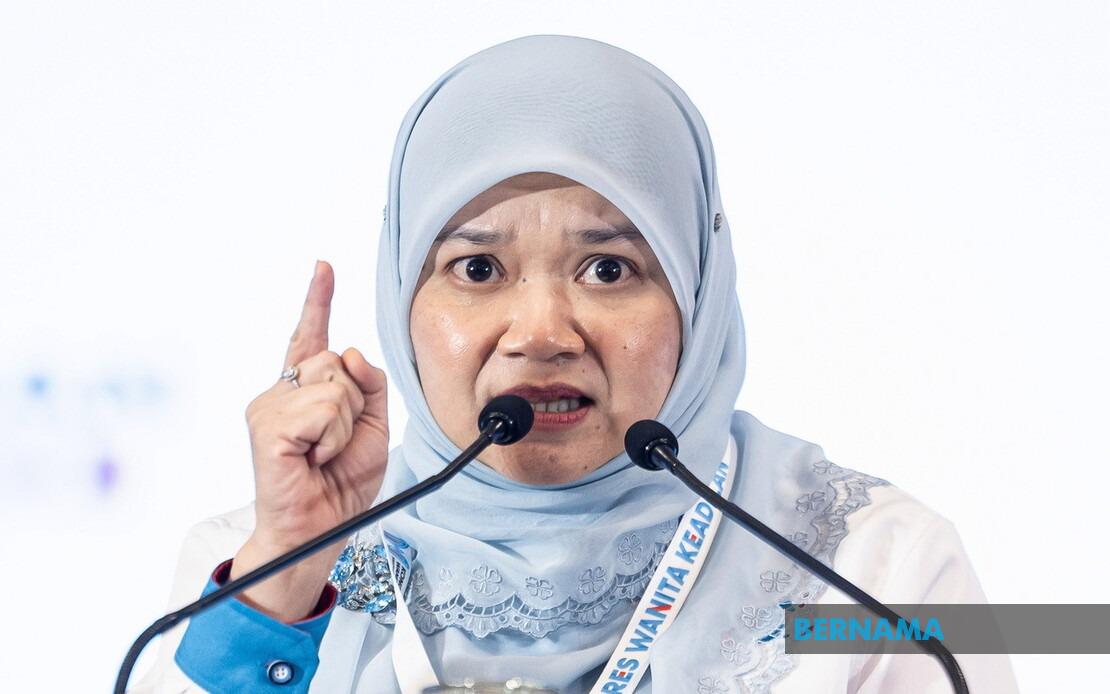
The chief of PKR's women wing delivered a pointed message to Malaysia's political establishment this week: electoral contests ought to revolve around competing visions and practical solutions, not the instrumentalisation of religious conviction. Speaking at the 2026 Wanita PKR National Congress in Melaka, Fadhlina Sidek emphasised that faith-based matters warrant careful respect and should remain insulated from the partisan calculations that typically dominate campaign season.
Fadhlina's intervention arrives at a moment when Malaysian politics has grown increasingly fractured along religious and communal lines. Her assertion that political actors should refrain from inciting voters through matters of faith reflects growing concern among moderate voices within Malaysia's coalition governments about the divisive trajectory of national discourse. The Wanita PKR chief acknowledged that the political space, far from being zero-sum, actually contains abundant room for substantive competition—parties can differentiate themselves through the calibre of their ideas, the originality of their concepts, and the convincingness of their proposed remedies to pressing social challenges.
In framing the problem this way, Fadhlina implicitly critiques a campaign model built on mutual denigration and character assassination. She suggested that the alternative—a competition centred on which political force can genuinely improve citizens' lives—ought to define Malaysia's electoral culture. Such a reorientation would require discipline from party structures and a willingness among politicians to forgo short-term tactical gains achieved through sectarian appeals. For PKR members in particular, the message was unambiguous: the party's appeal must rest on its capacity to diagnose social problems accurately and propose credible solutions, not on its willingness to weaponise the religious commitments of voters.
Beyond the plea for principled competition, Fadhlina outlined a parallel imperative: party leaders and rank-and-file members must deepen their connection to grassroots communities. She urged PKR cadres to move beyond the ceremonial aspects of political organisation and engage in genuine, sustained dialogue with ordinary Malaysians. This grassroots reconnection forms part of a strategic recalibration—the notion that durable political strength cannot be manufactured through publicity campaigns alone but must instead be cultivated through understanding and responding to the concrete needs of neighbourhoods and families.
Her call for sensitivity to local circumstances carries particular weight in Malaysia's diverse context, where communities face overlapping challenges spanning economic hardship, infrastructure deficits, educational disparities, and healthcare access. Fadhlina suggested that party members should undertake a form of systematic neighbourhood scanning, identifying households and individuals requiring material assistance. This approach treats community service not as an occasional gesture timed to electoral cycles but as an ongoing foundation of political legitimacy. In doing so, she positioned grassroots service as a corrective to the abstract posturing that often characterises political discourse at national level.
The emphasis on party loyalty and internal cohesion formed another significant element of her address. Fadhlina acknowledged that PKR, like all political organisations operating within Malaysia's turbulent landscape, has encountered substantial trials and obstacles. She called on members to maintain steadfast commitment to the party's broader mission despite these setbacks. This exhortation appears designed to counteract two simultaneous pressures: defections to rival coalitions and internal dissension born of frustration with electoral performance or policy direction. By framing party loyalty as compatible with realistic acknowledgment of challenges, she attempted to preserve morale without encouraging denial about the party's current standing.
Fadhlina stressed that institutional strength flows from systematic labour rather than sporadic mobilisation. The party machinery at all hierarchical levels must function as an integrated apparatus capable of translating the party's collaboration with communities into tangible outcomes. This mechanistic language underscores a pragmatic assessment: electoral success in Malaysia requires not merely ideological coherence or charismatic leadership but rather robust organisational infrastructure operating with discipline and coordination from national headquarters through to village-level branches.
The Wanita PKR chief's remarks must be situated within broader dynamics affecting Malaysia's current political settlement. The coalition government comprising PKR, Amanah, DAP, and PAS alongside Umno and Barisan Nasional components has struggled with coordination and faces mounting criticism from opposition forces. PKR itself, as the coalition's largest component party led by Anwar Ibrahim, carries expectations of forward momentum that competing electoral results have not consistently delivered. Fadhlina's injection of moral language—emphasising ideas over religious exploitation, grassroots connection over abstraction, and persistent labour over episodic campaigning—represents an attempt to recalibrate the party's pitch during a period of consolidation before the next general election cycle accelerates.
For Malaysian voters and observers of regional politics, Fadhlina's message carries broader implications beyond party politics. Her insistence that faith and electoral competition ought to occupy separate spheres reflects a particular vision of democratic propriety, one emphasising the secular grounds of political legitimacy even within a Muslim-majority nation. This position situates her within Malaysia's long-standing liberal-democratic tradition, the one articulated in the Federal Constitution and championed by figures across the political spectrum who worry that confessionalisation of politics ultimately corrodes democratic institutions and social cohesion.
The challenge facing PKR and other centrist political forces lies in translating such rhetorical commitments into altered campaign practices and party culture. In a competitive environment where rival parties actively exploit religious sentiment and identity-based grievances, modelling restraint requires considerable organisational discipline and electoral confidence. Fadhlina's call for such restraint suggests that at least some PKR strategists believe the party's long-term interests lie in distinguishing itself through policy competence and community rootedness rather than engaging in the identity politics arms race that increasingly characterises Malaysian electoral contests.

