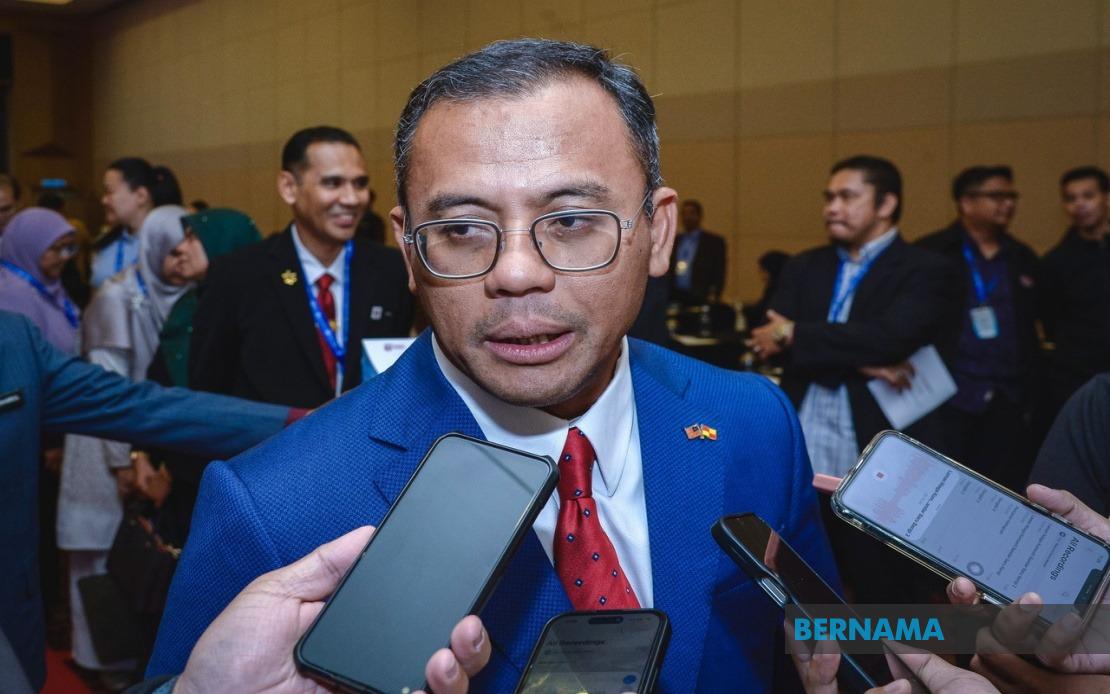
Selangor Menteri Besar Datuk Seri Amirudin Shari has called for a fundamental rethinking of how governments approach policymaking, arguing that isolated interventions fail to address the complex realities facing Malaysian families and communities. Speaking at the Human Ecology International Conference II 2026 in Bangi, Amirudin contended that effective governance requires policies designed around interconnected environments rather than treating healthcare, childcare, transport, employment and cost of living as separate administrative concerns.
The menteri besar's remarks highlight a growing recognition among Malaysian policymakers that traditional siloed approaches to governance often overlook how citizens navigate overlapping challenges in their daily lives. Rather than designing healthcare policies without considering their interaction with employment patterns or family caregiving responsibilities, Amirudin suggested that government must take a holistic view of the structural pressures confronting households. This perspective challenges the conventional compartmentalisation of policy areas within different government ministries and departments, each operating according to their own mandate and budgetary constraints.
Amirudin identified several interconnected pressures that contemporary families face, including escalating living costs, extended commutes that consume productive time, caregiving demands that often fall disproportionately on women, evolving patterns of work including gig economy participation, housing affordability crises, and the disruptive pace of technological change. For Malaysian households struggling with the rising cost of living, these factors compound one another—a family managing childcare expenses whilst navigating expensive public transport and uncertain employment faces compounding stressors that no single policy intervention can adequately address. His framing suggests that policymakers must evaluate not merely whether families are surviving difficult circumstances, but whether the broader policy environment enables them to build stable, prosperous futures.
This holistic approach carries significant implications for how Malaysia designs its social safety net and economic development strategies. Currently, housing policy operates separately from transport infrastructure planning, whilst childcare subsidies are handled distinctly from employment programmes. Amirudin's intervention suggests that integrated planning—where transport corridors are developed alongside affordable housing, childcare facilities are located near employment centres, and work flexibility is encouraged—could yield more meaningful improvements in family welfare. For a middle-income country like Malaysia facing middle-income trap challenges, such integrated thinking could enhance human capital development and productivity simultaneously.
The menteri besar also advocated for universities to assume a more active role throughout the policy cycle, from initial problem definition and intervention design through to rigorous evaluation of what actually produces results. This prescription reflects international trends toward evidence-based policymaking and the professionalisation of governance. Malaysian universities possess substantial research capacity and knowledge of local conditions that could strengthen policy formulation, yet collaboration between academic institutions and government agencies remains uneven across different states and policy domains. Embedding researchers and practitioners within policy development processes, rather than consulting them retrospectively, could improve both the quality of policy design and public confidence in government decision-making.
During the conference, Amirudin witnessed the signing of a Memorandum of Understanding between Universiti Putra Malaysia and the University of the Philippines Los Baños, formalising academic cooperation between the institutions. This bilateral partnership forms part of a broader regional initiative to establish the ASEAN Human Ecology Consortium, an institutional platform designed to facilitate coordinated research, student and faculty exchanges, joint publications, policy discussions, and community-engaged projects among human ecology programmes across Southeast Asia. The consortium represents recognition that challenges facing families and communities—rising costs, employment insecurity, housing constraints—transcend national borders and merit collaborative regional responses.
The ASEAN Human Ecology Consortium addresses a genuine gap in regional knowledge-sharing and capacity-building. Malaysia, Indonesia, the Philippines and other Southeast Asian nations face similar pressures of rapid urbanisation, changing family structures, and economic transformation, yet policy responses often develop in relative isolation. A formalised consortium creates infrastructure for Malaysian policymakers to learn from Indonesian or Philippine approaches to childcare support, transport integration or housing affordability. Student mobility programmes embedded within the consortium allow future leaders to develop regional networks and comparative understanding of policy options, potentially fostering more innovative thinking when they advance into government or academic positions.
The Human Ecology International Conference II 2026, held under the overarching theme "Sustaining Human Well-being," brought together a diverse coalition of academics, researchers, practitioners, policymakers, institutional leaders, students and community representatives from Malaysia, Indonesia, the Philippines and beyond. This inclusive composition reflects recognition that addressing human well-being requires contributions from multiple perspectives and sectors, not merely government directives or academic theory. For Malaysian participants, the conference provided exposure to international research on human ecology—a field examining relationships between people, societies and their environments—and comparative perspectives on how different countries approach interconnected social challenges.
Amirudin's intervention at the conference represents a significant statement on behalf of Selangor state government regarding policy philosophy and governance approach. Selangor, as Malaysia's most industrialised and urbanised state, confronts acute versions of the challenges he described: housing affordability crises in areas surrounding Kuala Lumpur, employment volatility as manufacturing industries transform, high transport costs as workers commute from peripheral housing to employment centres, and intense caregiving demands as families adapt to dual-income necessity. By articulating a vision of integrated, evidence-informed policymaking, Amirudin signals that Selangor's government intends to move beyond incremental adjustments toward more substantial redesign of how public resources address interconnected family welfare.
The implications extend beyond Selangor to Malaysia's broader governance trajectory. As the federal government and other state administrations consider how to strengthen social protection, improve housing accessibility, and support workforce development during a period of economic uncertainty, Amirudin's framework offers a different conceptual foundation. Rather than expanding isolated programmes—another childcare initiative here, another transport subsidy there—his approach suggests that transformative improvements in family welfare require integrated policy design that acknowledges how citizens experience and navigate multiple challenges simultaneously. Such thinking demands coordination across government agencies accustomed to operating independently, and willingness among policymakers to design interventions around human realities rather than administrative convenience.

