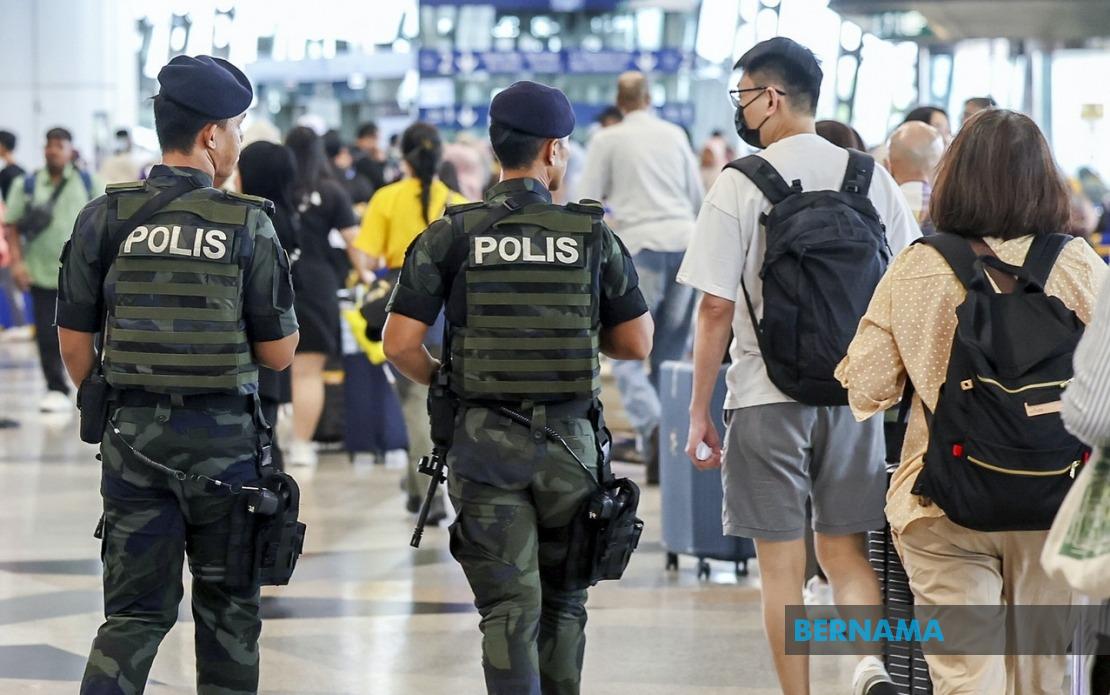
The Malaysian government has announced a comprehensive overhaul of airport security protocols in response to the arrest of a 39-year-old Malaysian pilot in Indonesia for alleged drug smuggling. Communications Minister Datuk Seri Fahmi Fadzil revealed that Cabinet has approved the deployment of Royal Malaysia Police (PDRM) personnel to the Aviation Security (AVSEC) unit at airports nationwide, marking a significant shift in how Malaysia manages its aviation security infrastructure.
The decision came after both the Home Ministry and Transport Ministry presented security improvement proposals during today's Cabinet meeting. The timing is particularly significant given the escalating concerns about potential vulnerabilities within Malaysia's aviation sector. According to media reports, Indonesian authorities arrested the Malaysian pilot at Terminal 3 of Soekarno-Hatta International Airport, where inspectors discovered packages containing approximately 70,114 ecstasy and methamphetamine capsules valued at an estimated RM45 million based on Indonesian street prices. The incident has raised serious questions about how such a substantial quantity of drugs could potentially have been smuggled through aviation channels.
Currently, Malaysia's Aviation Security unit operates under auxiliary police personnel, a staffing arrangement that has drawn scrutiny. The government's decision to replace auxiliary personnel with full-fledged PDRM officers reflects recognition that aviation security demands the highest professional standards and accountability. This transition addresses a critical gap in Malaysia's security apparatus, particularly at airports serving as international hubs where the movement of contraband and illicit materials poses significant risks not only to national security but also to regional aviation safety standards.
Beyond the immediate police deployment, the Cabinet has instructed Malaysia Aviation Group (MAG) to undertake a thorough review of its background screening and health assessment procedures for all pilots and co-pilots. This directive stems from cumulative concerns about personnel vetting processes following several incidents that have compromised aviation integrity. The review aims to establish more robust mechanisms for identifying individuals who might pose risks to aviation operations and national security, ensuring that psychological, medical, and criminal background assessments meet contemporary standards.
Fahmi emphasized that the Royal Malaysia Police and the Malaysian Border Control and Protection Agency (AKPS) have been tasked with conducting a comprehensive audit of existing security systems to identify potential weaknesses. This multi-agency examination represents a coordinated approach to understanding how security breaches occur and where gaps exist. By involving both border control specialists and police investigators, the government seeks to create a more layered security framework that addresses vulnerabilities at multiple points within airport operations, from passenger processing to cargo handling.
The minister noted that the government is proceeding cautiously regarding a special investigation team, pending receipt and review of complete details from both the Home and Transport Ministries. Since the Indonesian case remains under active investigation with POLRI, Malaysian authorities face the challenge of coordinating with their Indonesian counterparts while simultaneously strengthening domestic safeguards. Fahmi stressed that officials must determine the full extent of any potential network involved, ensuring that all responsible parties are prosecuted and that systemic loopholes are sealed promptly.
For Malaysian and Southeast Asian observers, this incident underscores the vulnerability of regional aviation infrastructure to drug trafficking networks. The alleged involvement of a commercial airline pilot demonstrates how trusted insiders can become vectors for illicit operations, a pattern observed across the region. Malaysia's response, though reactive, signals a recognition that aviation security cannot rest on outdated or insufficiently staffed mechanisms, particularly as organized crime networks continuously adapt their methods to exploit perceived vulnerabilities.
The implications extend beyond immediate security concerns. Malaysia's status as a major regional aviation hub means that lapses in its security protocols can have cascading effects across Southeast Asian networks. Airlines operating through Malaysian airports, along with partner nations sharing regional airspace, have vested interests in ensuring robust controls. The government's willingness to deploy dedicated police resources suggests acknowledgment that aviation security represents a national priority requiring permanent, professional oversight rather than auxiliary arrangements.
This development also reflects broader governmental philosophy regarding critical infrastructure protection under the MADANI framework. By centralizing aviation security under sworn law enforcement rather than contracted auxiliary personnel, Malaysia aligns itself with international best practices. Many developed nations employ similar structures, recognizing that aviation security's sensitive nature demands accountability mechanisms only available through official police or military structures.
Fahmi's emphasis on examining the "full report" and determining "who else may have been involved" suggests authorities anticipate uncovering a potentially larger conspiracy. Drug smuggling operations of this magnitude rarely involve isolated individuals; networks typically involve multiple participants across ground handling, airline operations, customs, and logistics. The breadth of required improvements indicates that officials perceive systemic rather than merely individual failures.
As investigations proceed, Malaysian authorities face pressure to demonstrate swift, decisive action while maintaining investigative integrity. The pilot's fate now rests with Indonesian judicial processes, but Malaysia's domestic response will shape public confidence in aviation security. For business travelers, cargo operators, and regional airlines, the announced measures provide assurance that the government recognizes critical vulnerabilities and is implementing corrective measures.
The unfolding situation highlights persistent challenges facing Southeast Asian nations in combating drug trafficking through aviation channels. Intelligence coordination between Malaysia and Indonesia, coupled with Malaysia's internal security reorganization, represents a constructive regional approach to addressing transnational criminal networks. As implementation of these measures progresses, their effectiveness will depend on resource allocation, training standards for PDRM aviation security personnel, and sustained interagency cooperation throughout the region.

