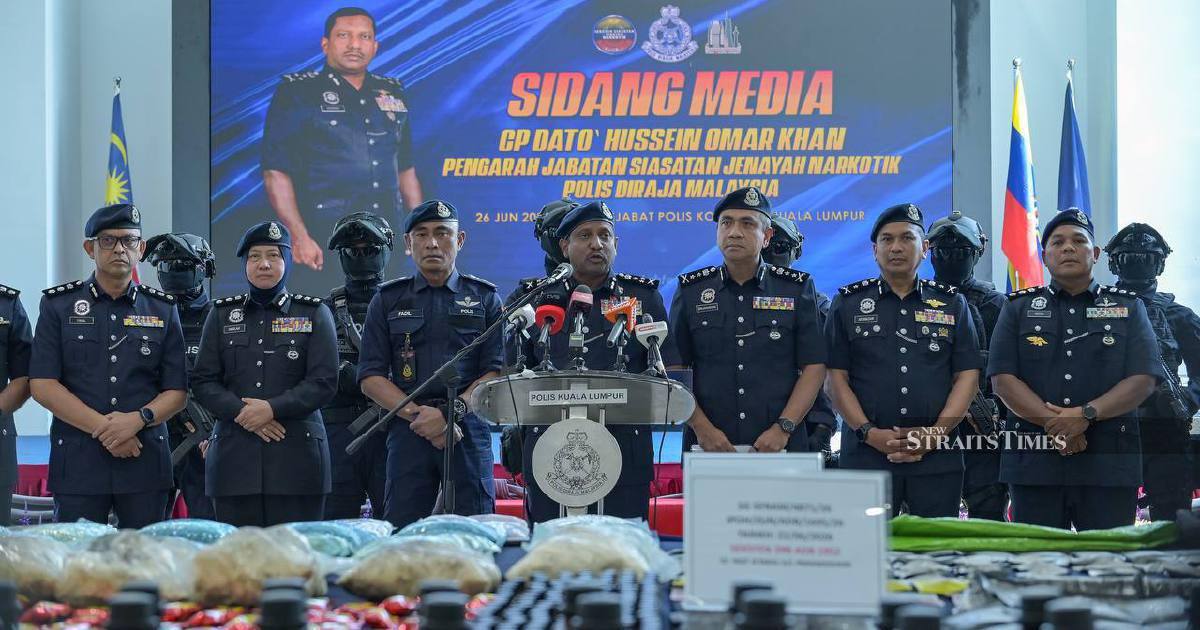
Malaysian law enforcement has dealt a substantial blow to organized drug trafficking networks operating in the Klang Valley, announcing the seizure of narcotics estimated at RM135.63 million following a series of carefully coordinated raids in the Cheras district of Kuala Lumpur. The operation, which unfolded on June 20, culminated in the arrest of seven individuals suspected of playing roles in a sophisticated supply chain designed to distribute controlled substances across Malaysia's domestic market. The scale of the interception suggests authorities have successfully dismantled a significant node within networks that feed addiction and crime across the region.
The three simultaneous raids represent the outcome of intelligence-gathering efforts by police narcotics units, who identified patterns of unusual activity and movement consistent with large-scale trafficking operations. Such multi-pronged approaches have become increasingly common as the Royal Malaysia Police refines its tactical response to evolving criminal networks that frequently relocate operations or fragment their holdings across multiple locations to minimize risk of comprehensive seizure. By striking at three separate locations within the same timeframe, investigators prevented suspects from alerting downstream operations or moving stock to alternative safe houses. This coordination between units demonstrates the institutional capacity that law enforcement has developed to combat organized drug syndicates.
The specific composition of the seized drugs remains critical information in understanding the nature of the operation disrupted. Malaysia faces persistent challenges from trafficking in synthetic drugs, particularly methamphetamine and its derivatives, which dominate the illicit market and command significant street value. International smuggling routes channeling precursor chemicals through regional transit hubs have enabled local manufacturers to produce massive quantities, making interdiction efforts increasingly complex. The estimated value of RM135.63 million represents not street-level pricing but wholesale valuations, indicating the seizure likely consisted of large quantities intended for further distribution and retail markup, potentially generating several times that amount once processed and sold through criminal networks.
The detention of seven suspects provides investigators with potential intelligence sources regarding upstream suppliers and downstream distribution networks. Major drug cases in Malaysia frequently involve transnational dimensions, with manufacturing or import operations connected to international criminal organizations based in Myanmar, China, or other regional sources. Interrogation of the arrested individuals may yield information about financing arrangements, transportation methods, and wholesale customer networks across Malaysian states. Such leads often generate secondary investigations that extend far beyond the initial operation, potentially creating cascading effects throughout trafficking hierarchies.
The Cheras locale carries particular significance in Malaysia's narcotics landscape. The sprawling urban and semi-urban district has historically served as a concentration point for criminal activities, including drug trafficking, due to its dense population, mixed-use development patterns, and proximity to major transportation corridors connecting Kuala Lumpur to surrounding regions. The area's geographic position and accessibility from multiple directions make it an attractive operational base for traffickers seeking to balance discreet operations with convenient distribution capabilities. Police presence in such hotspot areas has intensified over recent years as authorities recognize that sustained enforcement in specific locations generates measurable public safety improvements.
The disruption of a plot to flood the local market represents a core objective of Malaysia's national drug control strategy. Rather than preventing occasional seizures of small quantities, authorities prioritize intercepting wholesale operations before drugs enter the distribution system, where they fragment into thousands of smaller transactions difficult to track. A successful market flooding operation could have infected multiple communities with addiction, overwhelming healthcare and social services while generating revenue streams supporting broader criminal enterprises. By preventing such distribution before it commenced, this operation avoids downstream consequences that would extend far beyond the Cheras district, potentially affecting treatment facilities, law enforcement resources, and family disruption across multiple states.
The economic dimensions of drug trafficking demand recognition when assessing the significance of large-scale seizures. The RM135.63 million valuation represents capital that criminal organizations would invest in manufacturing, transportation, security, and distribution infrastructure. This capital derives ultimately from drug-dependent consumers across Malaysia and the region, whose addiction fuels a cycle of crime and social deterioration. Each major seizure creates financial pressure on trafficking organizations, forcing them to rebuild inventory and absorb losses—outcomes that constrain their ability to expand operations or maintain market presence. Sustained enforcement pressure gradually makes trafficking less profitable, though elimination of the problem remains implausible without addressing underlying demand-side factors through treatment and prevention.
Regional implications extend beyond Malaysian borders, as local trafficking networks interface with international supply chains. The seizure of such large quantities sends signals to trafficking organizations that routes through Malaysia face elevated enforcement scrutiny, potentially triggering rerouting to alternative transit corridors through Thailand, Indonesia, or Cambodia. Intelligence sharing agreements between ASEAN countries become increasingly valuable in this context, as traffickers displaced from one jurisdiction migrate to others within the region. The effectiveness of Malaysia's approach depends partly on corresponding enforcement capabilities and commitment from neighboring countries, making regional cooperation essential for sustained progress.
The success of this operation reflects substantial police resources dedicated to narcotics enforcement, including specialized investigation units, intelligence analysts, and surveillance capabilities. Maintaining such capacity requires sustained governmental commitment and budgetary allocation, particularly as criminal organizations continuously adapt their methods in response to enforcement pressure. Training and equipment standards must remain current with evolving trafficking tactics, ensuring investigators can navigate increasingly sophisticated criminal enterprises. The visibility of major seizures helps justify continued investment in narcotics enforcement but should not overshadow the reality that addressing drug problems comprehensively requires parallel investment in treatment infrastructure, community prevention programs, and economic alternatives for populations vulnerable to recruitment into trafficking organizations.

