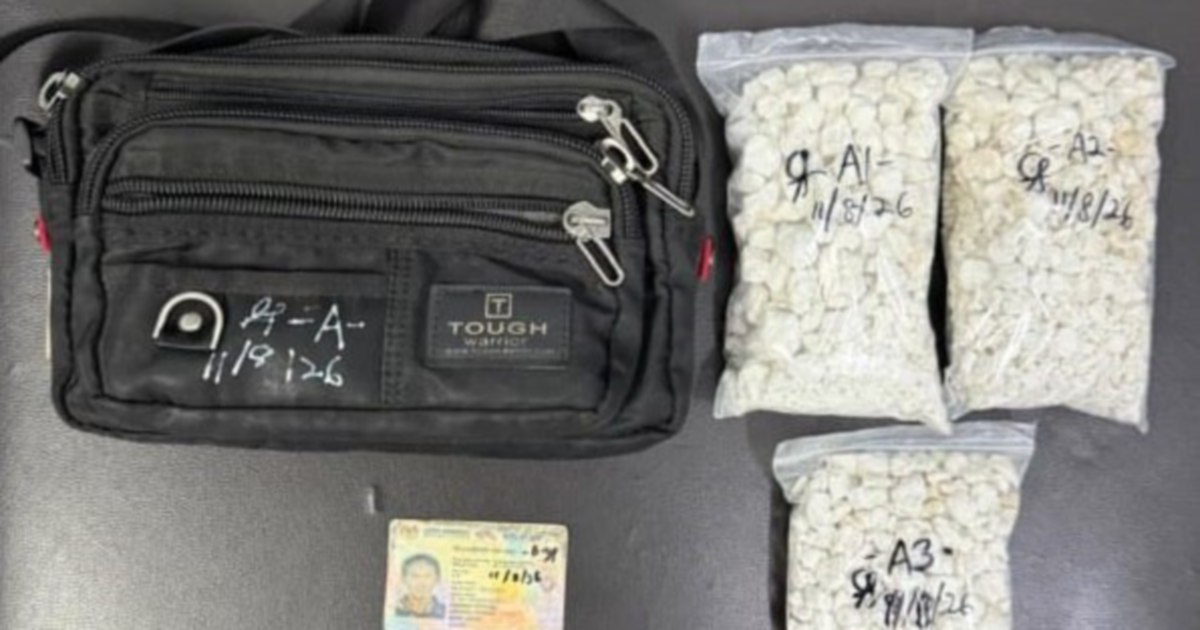
Authorities in Kluang have announced a significant seizure of narcotics following an early-morning enforcement operation targeting drug trafficking in the Simpang Renggam area. The raid resulted in the confiscation of 1.055 kilograms of heroin, with an estimated street value of RM10,128, and the arrest of a 42-year-old male suspect believed to be involved in the distribution network.
The operation represents part of ongoing regional efforts to combat the persistent drug problem in Johor, one of Malaysia's most strategically important states due to its proximity to Singapore and major transport corridors. The Simpang Renggam vicinity, nestled between major population centres, has historically featured in drug enforcement reports, making it a focal point for narcotics control initiatives. Law enforcement agencies have intensified surveillance and intelligence-gathering operations in such locations to intercept supplies before they enter secondary distribution networks.
The seized heroin quantity is substantial enough to serve multiple users over an extended period, indicating that the suspect may have been operating as a mid-level distributor rather than a street-level peddler. The valuation of RM10,128 reflects both the quantity and purity of the substance, though street prices vary considerably depending on where the drug would ultimately be sold and the degree of adulteration applied by downstream dealers. The scale of this seizure underscores the persistent demand for heroin in peninsular Malaysia despite enforcement efforts and public health awareness campaigns.
Drug trafficking remains a complex enforcement challenge in Malaysia, with heroin continuing to be among the most seized substances by the authorities. The country's geographic position along major trafficking routes between the Golden Triangle and markets in East Asia and the Middle East creates persistent pressure on border agencies and domestic police forces. Simpang Renggam's location on major road networks makes it vulnerable to transit trafficking, where supplies are briefly stored before onward movement to other states or neighbouring countries.
The arrest demonstrates the importance of sustained narcotics operations and intelligence work by law enforcement. Police across Malaysian states regularly conduct such raids, often resulting in seizures ranging from small quantities held by users to kilogram-scale amounts typical of distribution operations. The timing of this early-morning operation suggests that investigative work preceded the raid, with authorities identifying the suspect's location and activity patterns before moving in to execute the enforcement action.
For the suspect facing potential charges, the implications are severe. Malaysia's drug laws impose mandatory minimum sentences for trafficking offences, with quantities exceeding one gram of heroin typically attracting sentences of five to twenty years imprisonment and caning. The severity of penalties reflects the government's zero-tolerance stance on narcotics, though critics argue that supply-side enforcement alone has proven insufficient to address the underlying demand and addiction issues fuelling the market.
The seizure also highlights the resource-intensive nature of drug enforcement in Malaysia. Police units dedicated to narcotics work operate across all states, conducting intelligence gathering, surveillance, and raids. The coordination between federal and state police forces, customs agencies, and border control authorities requires sustained investment in training, equipment, and personnel. Despite these efforts, drugs continue to flow through Malaysian territory, suggesting that supply interdiction must be complemented by demand reduction through treatment and rehabilitation programmes.
The Simpang Renggam case reflects broader patterns in Malaysian drug enforcement, where heroin seizures occur regularly in Johor and other states. The emergence of synthetic drugs alongside traditional narcotics has complicated the enforcement landscape, requiring police to adapt tactics and detection methods. Intelligence-led operations, like the one that resulted in this arrest, have become increasingly central to enforcement strategy as agencies attempt to focus limited resources on high-impact targets.
Community impact represents another dimension of such enforcement actions. Residents in areas experiencing drug activity often welcome police operations that target traffickers and distribution networks. However, scholars studying drug enforcement effectiveness have noted that removing one distributor frequently leads to market adjustment rather than sustained reduction in availability, particularly when underlying supply chains remain intact. Sustainable solutions require addressing root causes of drug production and consumption alongside enforcement measures.
The detained suspect will likely undergo questioning to determine his role within any broader distribution network, the source of his supply, and downstream distribution connections. Such intelligence can inform subsequent operations targeting higher-level traffickers or alternative supply routes. The police investigation will proceed through established legal channels, with evidence presented to courts under Malaysia's anti-narcotics legislation.
For Malaysian policymakers and enforcement agencies, narcotics control remains a priority despite competing security challenges. The heroin seized in Simpang Renggam represents drugs prevented from reaching consumers, yet the persistent nature of such seizures underscores that enforcement alone cannot resolve the fundamental supply and demand dynamics driving the illicit drug market. A comprehensive approach incorporating treatment access, prevention education, and international cooperation on trafficking routes remains essential for more substantial progress.

