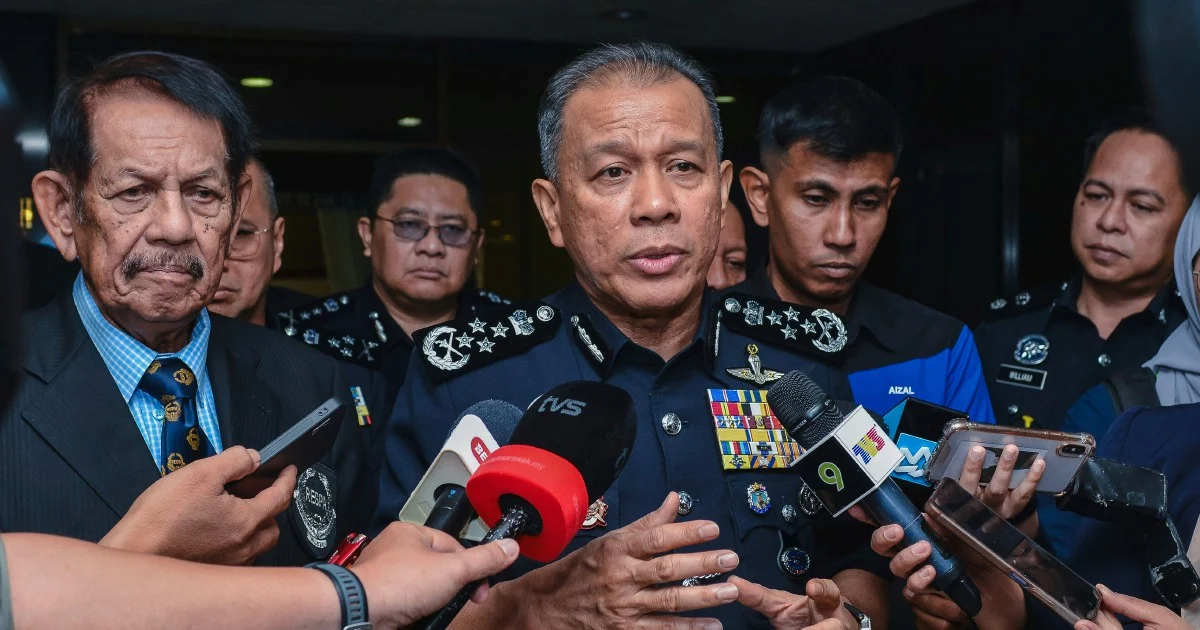
The Royal Malaysian Police have launched a formal disciplinary investigation into one of their officers following a viral video incident that has drawn considerable public attention and scrutiny. The officer in question stands accused of making insulting remarks directed at local residents during a recent trip to China, behaviour that prompted widespread online commentary and reactions across Malaysian social media platforms.
The revelation comes amid growing concerns about police conduct overseas and the impact such incidents have on Malaysia's international reputation. Officials have indicated that the investigation will examine the full circumstances surrounding the officer's conduct, including the context in which the alleged remarks were made and the accuracy of claims circulating in the viral content. The incident highlights the delicate intersection between individual officer behaviour and institutional responsibility in the modern age of digital media.
Viral videos involving public officials have become increasingly consequential in Malaysia, where social media platforms rapidly amplify incidents involving government representatives. The speed at which such footage spreads across borders, particularly in the ASEAN region and beyond, demonstrates how individual actions can swiftly escalate into diplomatic or reputational matters. In this case, the China connection adds another layer of sensitivity, given the importance of Malaysian-China bilateral relations across trade, tourism, and diplomatic channels.
The police force faces mounting pressure to maintain professional standards among its personnel, particularly those representing Malaysia in international settings. Overseas travel by officers, whether for training, official business, or personal reasons, carries an implicit responsibility to conduct oneself in a manner befitting a law enforcement representative. The investigation signals that the force takes such concerns seriously and is prepared to hold its members accountable when their behaviour falls short of expected standards.
Disiplinary proceedings within the police force typically examine whether conduct violates the Force's Code of Ethics and Professional Standards. Such investigations can result in various outcomes, ranging from counselling and retraining to formal warnings or, in more serious cases, suspension or dismissal. The specific nature of the alleged insults, how they were expressed, and their potential impact on community relations or the force's reputation will likely feature prominently in the investigation's scope.
The timing of this investigation underscores a broader challenge facing law enforcement agencies in Southeast Asia, where officers increasingly travel and work in cross-border contexts. Training programmes and institutional guidelines around overseas conduct have become more necessary as police forces engage more extensively with international counterparts and participate in regional security arrangements. Malaysia's position as a regional hub means its officers frequently engage with other nations, making standards of professional behaviour increasingly critical.
Social media has fundamentally altered the consequences of individual indiscretions. Content that might previously have remained localised or been forgotten quickly now circulates globally within hours, reaching audiences far beyond the original context. This reality has forced police and other government agencies to be more attentive to the conduct of their personnel, recognising that viral moments can affect public confidence in institutions and government credibility on the international stage.
The investigation also reflects Malaysia's commitment to addressing internal governance issues transparently, at least in principle. By publicly announcing a probe into one of its members rather than attempting to minimise or obscure the matter, the police force demonstrates a willingness to engage with accountability mechanisms. However, the ultimate credibility of such investigations often depends on their transparency, the fairness of the process, and whether findings are acted upon meaningfully.
For Malaysian expatriates and officials working abroad, such incidents carry cautionary implications. They underscore the necessity of maintaining professional deportment in all contexts, particularly when representing Malaysia or engaging with local communities in foreign countries. Cultural sensitivity and respect for local customs take on heightened importance when individuals are away from home, and violations of basic courtesy can have outsized consequences in our hyperconnected world.
The broader context of this investigation touches on questions about police culture, training in cross-cultural communication, and institutional values. Beyond the immediate disciplinary matter, the police force may need to consider whether additional guidance or training would help personnel navigate complex international scenarios more effectively. Building greater awareness among officers about the implications of their conduct overseas could serve as a preventive measure against similar incidents.
For Malaysian audiences, the incident serves as a reminder of how individual actions can ripple outward, affecting not just personal careers but also national image and international relationships. As Malaysia continues to enhance its global standing and regional influence, the professional conduct of all government representatives, including police officers, becomes an increasingly important element of the nation's soft power and international standing.