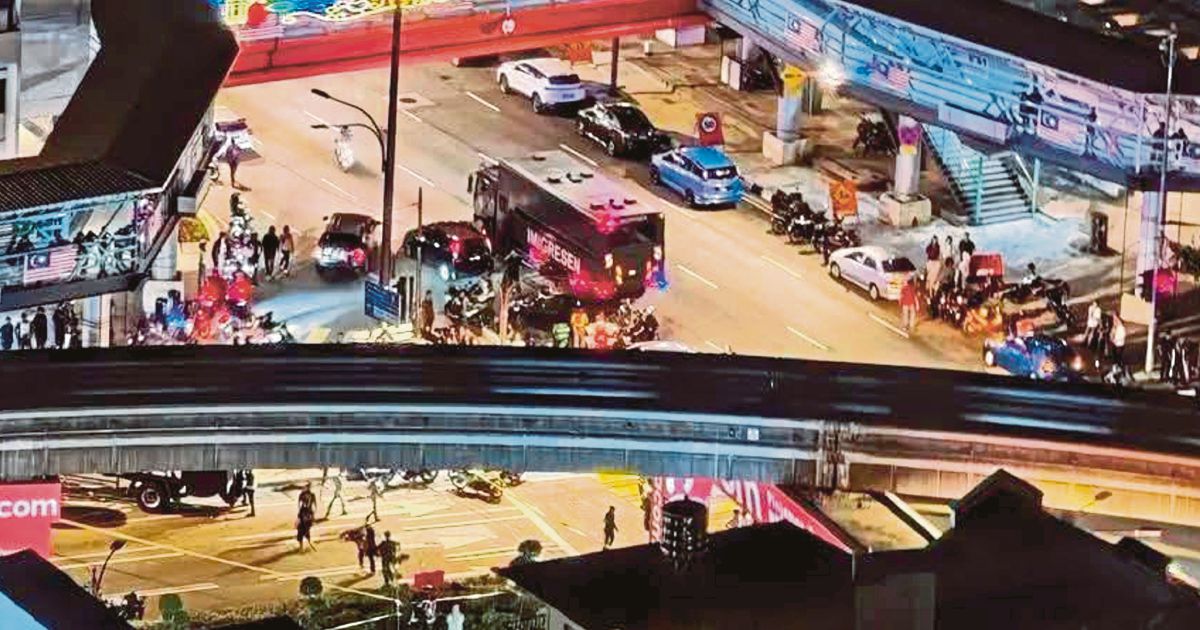
Investigators in Kuala Lumpur have launched a comprehensive examination of dashcam and closed-circuit television footage as they probe the circumstances surrounding a Department of Immigration lorry collision that claimed the lives of a father and his two daughters in the early hours of yesterday morning along Jalan Sultan Ismail.
The incident has prompted a full-scale police response, with officers prioritising video evidence as a crucial element in reconstructing the sequence of events that preceded the fatal crash. Both dashcam recordings from vehicles present at the scene and fixed CCTV installations positioned along the busy thoroughfare are being scrutinised to establish contributing factors and determine fault.
The tragedy unfolded on one of Kuala Lumpur's main arterial roads, a location typically characterised by substantial traffic volumes and complex vehicular movement patterns. Jalan Sultan Ismail serves as a critical corridor connecting multiple districts within the federal capital, making it a focal point for both commuter traffic and commercial operations. The early morning timing suggests conditions may have involved reduced visibility or fatigue-related factors, elements that investigators are likely examining.
Transportation incidents involving government vehicles often draw heightened scrutiny from the public and media due to accountability concerns and the perceived responsibility placed on state-operated or state-owned assets. The Department of Immigration operates a fleet of vehicles across the country for enforcement operations, border management, and administrative purposes. An accident of this magnitude involving such vehicles represents a significant event that warrants thorough investigation to prevent recurrence and ensure public confidence in institutional processes.
For Malaysian road safety advocates, this incident underscores the persistent vulnerability of motorists, particularly families travelling on urban arterial roads. The loss of three family members in a single collision represents an acute human tragedy with ripple effects extending through extended family networks, communities, and broader society. Such fatalities serve as recurring reminders of the precarious nature of road transportation, despite ongoing efforts to improve infrastructure safety standards and driver accountability.
The involvement of multiple forms of visual evidence—both vehicle-mounted recording devices and stationary surveillance systems—provides investigators with complementary perspectives on the collision dynamics. Dashcam footage typically captures the perspective of individual drivers in real-time, while CCTV systems offer fixed, often overhead angles that can clarify spatial relationships and vehicle positions at critical moments. The convergence of these sources allows forensic analysts to construct detailed chronologies of the sequence of movements immediately preceding impact.
Regional concerns about heavy vehicle operation standards and driver conduct remain relevant to this investigation. Commercial and government lorries operate under specific regulatory frameworks in Malaysia, including vehicle maintenance requirements, driver rest periods, and maximum permissible hours of operation. Authorities will likely examine whether the Immigration Department vehicle was compliant with these standards and whether the driver was operating within prescribed parameters when the collision occurred.
The investigation's focus on video evidence suggests that establishing clear visual documentation of the events will be central to the police's conclusions regarding causation and liability. Whether the footage reveals mechanical failure, driver error, visibility obstruction, or some combination of these factors will fundamentally shape the investigation's direction and any subsequent recommendations for policy adjustments or operational changes within the relevant department.
For families using Jalan Sultan Ismail as a regular route, this incident may prompt renewed consideration of safety practices and heightened awareness during morning commutes. The road's designation as a site of this magnitude of tragedy could influence public perception of its relative safety, particularly for parents transporting children during peak travel periods. Local authorities may face pressure to enhance safety measures, including improved signage, traffic calming measures, or adjusted vehicle regulations for heavy goods vehicles operating in busy urban corridors.
The police investigation represents a formal institutional response designed to establish facts, protect public interest, and potentially inform policy adjustments to prevent similar tragedies. The examination of video footage, combined with traditional investigative techniques such as witness interviews, vehicle inspection, and scene analysis, will constitute a comprehensive approach to understanding how three lives were lost in what commenced as an ordinary commute. The findings may ultimately influence how the Department of Immigration and other agencies manage their vehicle operations within congested urban environments throughout Malaysia.

