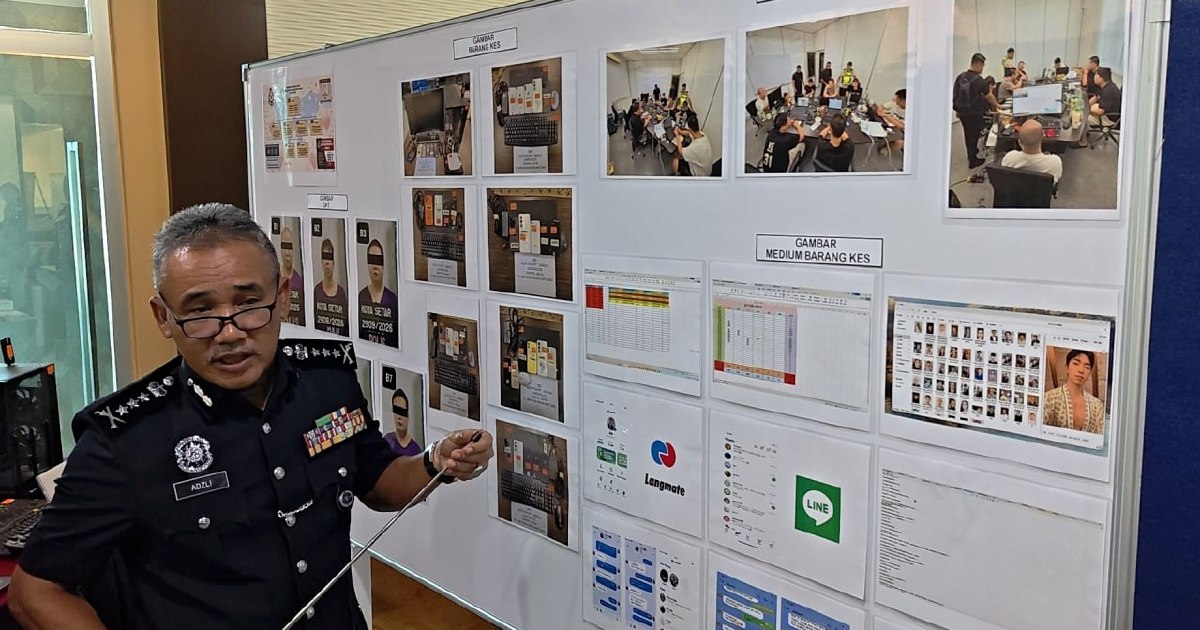
Malaysian police have successfully disrupted a sophisticated online romance fraud network that had been systematically defrauding Japanese nationals of substantial sums through fabricated romantic relationships. The breakthrough came following an enforcement operation at a commercial establishment in Kristal Light Industrial Park in Alor Star, which resulted in the apprehension of seven Chinese nationals allegedly operating the scam. The takedown represents a significant victory against transnational cybercrime, highlighting the region's continued vulnerabilities to organised digital fraud schemes that exploit emotional vulnerabilities across borders.
Romance scams have emerged as one of the most insidious forms of financial crime, leveraging psychological manipulation and cultural distance to extract money from unsuspecting targets. Perpetrators typically establish fake identities on social media platforms and dating websites, investing considerable time in building trust with victims before engineering scenarios requiring financial assistance—medical emergencies, business troubles, or travel complications that necessitate urgent cash transfers. The targeting of Japanese nationals specifically suggests the syndicate had refined its operational methods to exploit language proficiency, cultural familiarity, and psychological patterns specific to their victim demographic. This degree of specialisation indicates a mature criminal enterprise rather than opportunistic scammers, with clear operational hierarchies and division of labour.
The Kristal Light Industrial Park location in Alor Star represents a strategic base for cybercriminals, offering relatively affordable commercial space, reliable internet infrastructure, and sufficient anonymity to operate undetected for extended periods. Industrial parks across Malaysia have increasingly become focal points for organised crime syndicates engaged in online fraud, money laundering, and cyber extortion. The choice of such locations allows criminal networks to maintain a veneer of legitimacy while operating multiple accounts simultaneously, with staff specialising in different aspects of the scam operation—from profile creation and victim engagement through to financial account management and money movement.
The operational mechanics of such syndicates typically involve coordinated teams managing hundreds of fake social media profiles simultaneously. Romance scammers maintain meticulous records tracking individual victim relationships, rehearsing personalised stories to maintain credibility over weeks or months of interaction. Once sufficient emotional investment has been established, scammers manufacture plausible scenarios requiring money transfers, often positioning themselves as unable to directly access banking systems due to claimed travel situations or employment complications. Victims, emotionally invested and psychologically compromised by the perceived intimacy of the relationship, frequently comply with financial requests without rigorous verification.
Japanese nationals have become increasingly targeted by such operations, reflecting both the nation's demographic wealth and particular cultural attitudes toward romantic relationships. Japanese society maintains relatively high levels of digital engagement among mature demographics, and cultural communication patterns emphasise politeness and reluctance to question potential partners directly. Additionally, the language barrier between Japanese victims and Malaysian-based operators creates investigative complexity, as victims may not immediately recognise linguistic inconsistencies that would otherwise signal fraud. The syndicate's focus on this victim profile demonstrates sophisticated market analysis by criminal enterprises that understand which populations yield highest conversion rates and average transaction values.
The arrest of seven Chinese nationals raises important questions about regional trafficking patterns for cybercriminal talent. Chinese nationals have become increasingly prominent in transnational fraud operations throughout Southeast Asia, suggesting established criminal networks that recruit, train, and deploy personnel across multiple countries. These individuals often operate on visa arrangements or illegal entry, exploiting weak border controls and limited information-sharing between regional law enforcement agencies. The existence of such international criminal supply chains requires coordinated responses from multiple governments and enhanced intelligence-sharing protocols.
Malaysian authorities have intensified efforts targeting online fraud syndicates following rising public complaints and international pressure. The Royal Malaysian Police, in collaboration with the Malaysian Communications and Multimedia Authority, have developed specialised cybercrime units capable of tracking digital evidence, tracing financial flows, and identifying operational locations. However, the transnational nature of such crimes presents persistent challenges—victims in Japan, money movement through multiple banking jurisdictions, and operational bases in Malaysia create jurisdictional complications requiring diplomatic coordination and formal legal assistance requests.
The financial impact of romance scams extends beyond direct victim losses, destabilising bilateral relationships and encouraging stricter visa policies toward Southeast Asia by concerned governments. Japanese authorities have issued multiple warnings to citizens regarding online dating risks, effectively damaging regional tourism and business relationships. Each successful prosecution and syndicate dismantling sends important signals to both criminals and potential victims, potentially shifting cost-benefit calculations for perpetrators considering Malaysian operations. The publicity surrounding high-profile arrests may also prompt some victims to come forward with information about scams previously unreported due to embarrassment or shame.
Investigators will now face the complex process of identifying victims, quantifying financial losses, and tracing money trails that often wind through cryptocurrency exchanges, hawala networks, and informal value transfer systems deliberately designed to obscure origins and destinations. The seven detainees will likely face charges under Malaysia's Computer Crimes Act and anti-fraud legislation, potentially resulting in substantial prison sentences and asset seizure. However, prosecution represents only one component of comprehensive responses needed—victim support services, public education campaigns, and platform accountability measures all contribute to reducing such crimes' attractiveness.
The case underscores broader regional vulnerabilities to cybercrime that transcend individual nations' enforcement capabilities. As Malaysia positions itself as a regional technology hub, addressing organised digital fraud becomes critical to maintaining international business confidence and protecting citizens from victimisation. Sustained coordination among ASEAN nations regarding cybercrime investigation protocols, mutual legal assistance, and intelligence sharing will prove essential to disrupting international criminal networks effectively operating across multiple jurisdictions and victim populations throughout the region.

