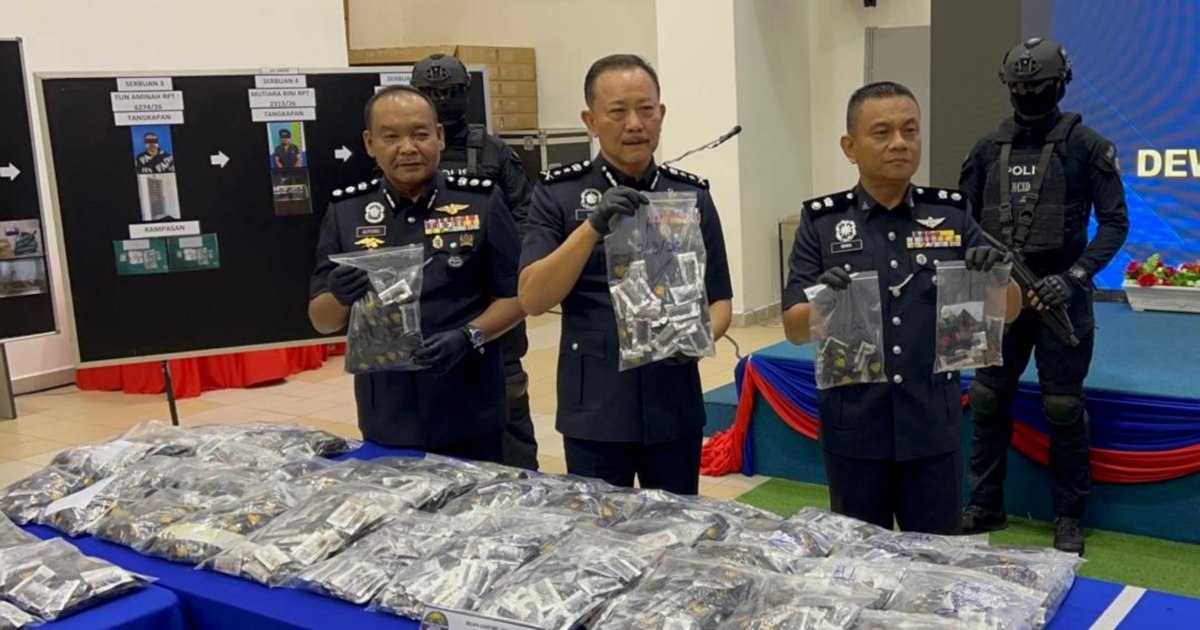
Johor's narcotics enforcement division has successfully disrupted a significant criminal operation specialising in the production and sale of vape cartridges infused with controlled substances. The coordinated enforcement action, executed across five separate locations throughout the state on Sunday, resulted in the arrest of seven individuals suspected of involvement in the syndicate. Police seized products and materials valued at RM10.68 million, marking a substantial breakthrough in efforts to combat drug trafficking through emerging consumption methods.
The simultaneous raids represent a carefully coordinated effort drawing on intelligence gathered over an extended investigation period. The strategic timing and multi-location approach minimised the syndicate's ability to relocate operations or destroy evidence. By striking at multiple points simultaneously, police prevented senior operatives from alerting associates and disrupting communications within the network. This tactical methodology has become increasingly prevalent in major drug enforcement operations throughout Malaysia, reflecting lessons learned from previous operations and enhanced inter-agency coordination.
The decision to target vape-based drug distribution reflects evolving patterns in narcotic consumption and trafficking across Southeast Asia. Vaping devices have emerged as a preferred delivery mechanism for various controlled substances, partly due to their relative inconspicuousness compared to traditional methods. The vape industry's rapid expansion and limited regulatory oversight in certain jurisdictions has created vulnerabilities that criminal syndicates have readily exploited. This particular operation demonstrates how traditional drug trafficking networks have adapted their strategies to align with contemporary consumer preferences and technology.
The arrested individuals are now undergoing interrogation to establish the full scope of the operation, including supply chains, customer networks, and potential connections to larger regional trafficking organisations. Authorities will likely seek to identify the sources of raw materials, production facilities, and distribution channels. Understanding the complete structure of the syndicate remains crucial for preventing the reconstitution of the network or the emergence of successor organisations operating similar models.
Johor has emerged as a significant flashpoint in Malaysia's ongoing drug enforcement challenges, partly due to its geographic proximity to Singapore and its role as a major transit hub. The state's strategic location and economic significance make it an attractive operational base for traffickers seeking to supply markets throughout the region. Previous enforcement actions have consistently revealed the presence of sophisticated criminal networks operating across state boundaries, highlighting the transnational dimensions of drug crime in Southeast Asia.
The monetary value attributed to the seized materials reflects both the volume of product involved and the significant profit margins associated with narcotic distribution. The RM10.68 million valuation likely encompasses raw materials, finished cartridges, and production equipment. These financial figures underscore the scale of resources available to criminal organisations and their willingness to invest substantially in operations designed to circumvent law enforcement. The profitability of drug trafficking continues to attract individuals to participate despite substantial legal penalties.
Vape-based narcotics present particular challenges for regulatory and enforcement authorities. Traditional detection methods may prove less effective with vaping devices, and the rapid evolution of vaping technology can outpace regulatory frameworks. Consumer perception of vaping as relatively low-risk compared to other consumption methods has further complicated public health messaging. Malaysian authorities have increasingly recognised the need for targeted public awareness campaigns and enhanced training for enforcement personnel to address this emerging threat vector.
The successful operation adds to a growing record of major drug enforcement actions throughout Malaysia in recent months. These sequential successes suggest improving intelligence capabilities and inter-agency cooperation among law enforcement bodies. However, experts caution that individual seizures, regardless of scale, represent only temporary disruptions to broader trafficking networks. The underlying economic incentives driving drug trade participation remain substantially unchanged, suggesting that sustained enforcement pressure and complementary demand-reduction initiatives will prove necessary for meaningful long-term impact.
The implications extend beyond Johor's borders, as supply chains serving Malaysian markets typically span multiple states and may connect to production facilities in neighbouring countries. Intelligence gathered during this investigation and the interrogation of arrested suspects will likely inform broader regional enforcement strategies. International cooperation through mechanisms such as ASEAN's drug enforcement coordination and bilateral agreements with Singapore and Thailand remains essential for addressing trafficking patterns that inherently transcend national boundaries.
The case underscores the importance of sustained investment in specialised narcotics enforcement units equipped with modern investigative tools and training. Vape-related drug trafficking represents a distinct expertise area requiring specific knowledge of both pharmaceutical substances and vaping device mechanics. As criminal enterprises continue evolving their methods, law enforcement agencies must likewise adapt their capabilities to maintain enforcement effectiveness. This particular operation suggests that Johor's enforcement capacity in this domain has reached a level capable of delivering substantial operational results.
Moving forward, authorities will focus on determining whether the dismantled syndicate operated independently or maintained connections to larger regional trafficking organisations. The geographic distribution of the five raid locations may reveal operational patterns and customer concentration areas. Such analysis will inform future preventative strategies and help identify additional individuals involved in related activities who may not have been present during the Sunday operations.

