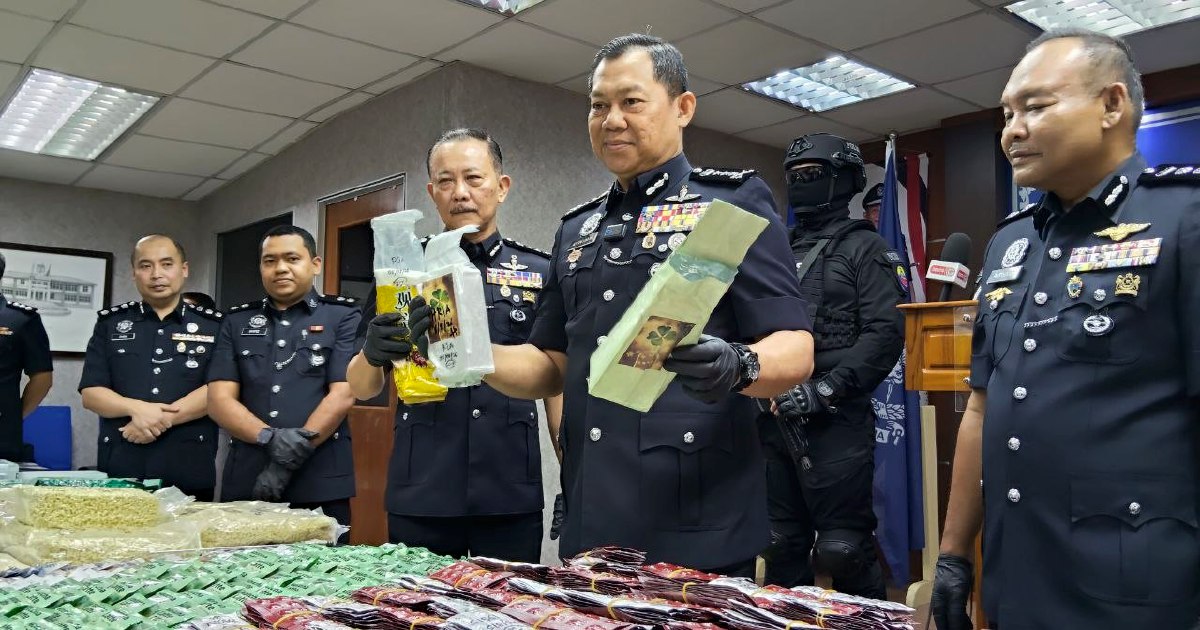
Police in Johor Baru have successfully disrupted a major drug trafficking network through a raid on a residential apartment in Persiaran Senibong, Masai, resulting in the seizure of 96.76 kilograms of assorted narcotics estimated to be worth RM8.49 million. The operation, which led to two arrests, represents a significant blow against organised drug distribution activities in the southern region of Peninsular Malaysia.
The apartment targeted in the operation had reportedly been leased by members of the syndicate specifically for the purpose of storing and redistributing controlled substances. This particular modus operandi—utilising residential properties as clandestine warehouses—has become increasingly common among organised trafficking groups seeking to avoid detection whilst maintaining proximity to their distribution networks. The decision to use an ordinary apartment rather than a dedicated facility reflects the sophistication with which criminal organisations attempt to mask their operations within urban environments where such activities might easily go unnoticed.
The scale of the seizure underscores the magnitude of drug trafficking operations that continue to flourish within Malaysia's major urban centres. Nearly 97 kilograms of narcotics represents a substantial quantity that would have circulated through local markets had police intervention not occurred. The monetary value attributed to the haul—exceeding RM8 million—demonstrates the considerable profit margins involved in the illegal drug trade, providing powerful financial incentives for criminal syndicates to maintain and expand their operations.
The arrest of two individuals connected to the operation initiates what will likely be extensive investigations into the broader structure and membership of the syndicate. Such investigations typically aim to identify supply chain connections upstream and distributors downstream, with the ultimate objective being to dismantle the entire network rather than merely removing a single storage facility. The cooperation between various law enforcement agencies, both at state and federal levels, proves essential in connecting disparate pieces of intelligence to build comprehensive cases against organised trafficking groups.
For Malaysian readers, this operation highlights the persistent challenges authorities face in combating the drug trade, despite increasing sophistication in enforcement techniques. Johor, as one of the nation's most populous states and a major economic hub, remains vulnerable to trafficking activities given its strategic location and robust transportation infrastructure. The proximity of Johor to Singapore, another major market for illicit substances, creates particular challenges for law enforcement attempting to intercept drugs moving across regional borders.
The use of residential apartments as distribution hubs represents a particularly insidious adaptation by traffickers seeking to evade detection. Unlike manufacturing facilities that might require specialised equipment or distinctive chemical signatures detectable by surveillance, storage operations in ordinary apartments blend seamlessly into residential neighbourhoods. This makes community vigilance and intelligence-sharing between residents and police departments increasingly important as investigative tools.
The two arrested individuals will now face prosecution under Malaysia's comprehensive drug laws, which carry severe penalties including lengthy custodial sentences for involvement in trafficking significant quantities of controlled substances. Conviction on charges related to trafficking nearly 97 kilograms could result in sentences substantially exceeding a decade, with the possibility of capital punishment depending on the specific substances involved and their classifications under the Dangerous Drugs Act.
This seizure contributes to a broader pattern of law enforcement successes against trafficking networks throughout Malaysia and Southeast Asia more broadly. However, drug enforcement experts caution that such operations, while symbolically important and genuinely impactful, address symptoms rather than underlying factors driving the drug trade. The enormous profit margins, persistent demand from users, and porous border controls across Southeast Asia continue to incentivise supply-side operations despite the genuine risks of apprehension and severe punishment.
The implications for Malaysian society extend beyond the immediate disruption of this particular syndicate. Drug trafficking and its associated social harms—addiction, family breakdown, petty crime, and violence—impose substantial costs on communities and healthcare systems. Every kilogram of narcotics successfully interdicted represents potential users protected from immediate access and represents resources that would have supported criminal organisations now unavailable for expansion or consolidation of their activities.
Moving forward, this operation may serve as a catalyst for enhanced community reporting and neighbourhood watch initiatives focusing on suspicious activities within residential complexes. The Persiaran Senibong area and surrounding Masai district will likely see increased police presence and monitoring as authorities consolidate their gains from this bust whilst investigating broader networks potentially connected to the dismantled operation.
The investigation into this syndicate's origins, international connections, and downstream distribution networks will continue for months, potentially uncovering additional criminal associates and leading to supplementary arrests. Such operations demonstrate that Malaysian law enforcement agencies possess both the determination and capability to pursue major organised crime groups, though sustained investment in intelligence gathering, border security, and international cooperation remains essential for long-term success in reducing drug trafficking's corrosive impact on Malaysian society.

