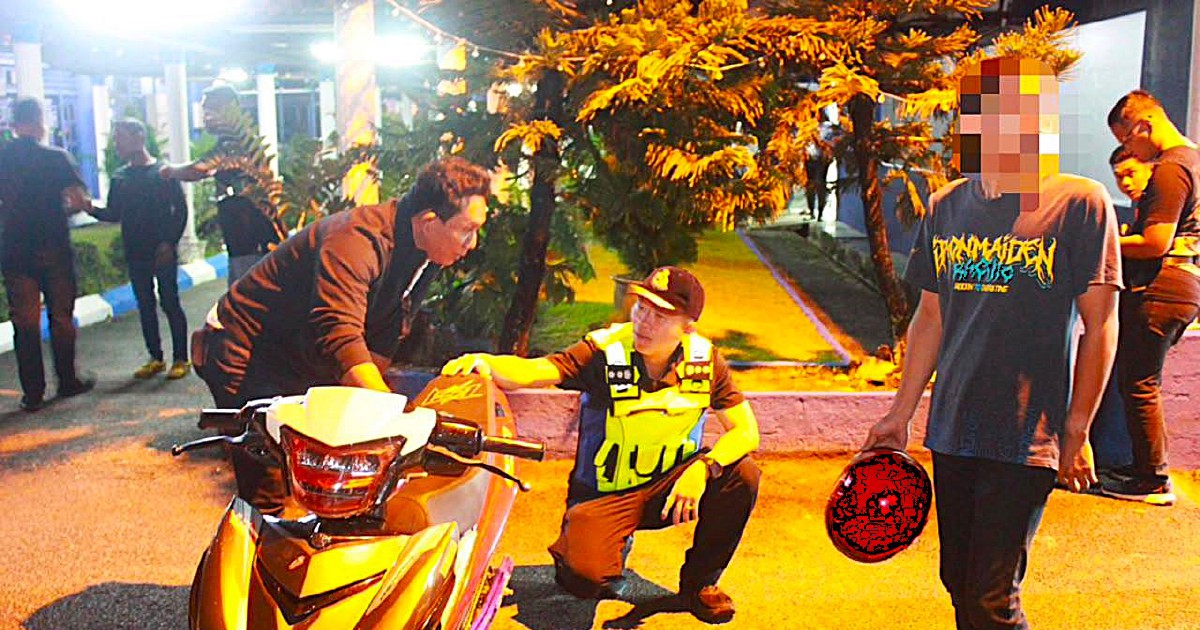
Authorities in Klang have stepped up their crackdown on illegal street racing, with police confiscating seven motorcycles and initiating formal investigations against at least one rider accused of reckless and hazardous driving during a targeted operation conducted in the early hours of the morning.
The enforcement action reflects a broader strategy by traffic and police authorities across Malaysia to address the persistent menace of street racing, a phenomenon that has drawn considerable public concern and multiple complaints from residents in urban and semi-urban areas. Klang, straddling the boundary between Selangor's industrial heartland and increasingly developed residential zones, has emerged as a particular flashpoint for such activities, with young riders frequently commandeering public roads for high-speed displays during late-night and early-morning hours.
Illegal street racing continues to pose significant safety hazards not only to the participants themselves but to other road users and pedestrians who navigate shared streets. These impromptu racing events often occur on busy thoroughfares where morning traffic is beginning to build, creating dangerous collision scenarios. The confiscation of motorcycles serves as both a deterrent and a tangible consequence for riders engaged in these activities, representing a substantial financial loss that extends beyond the immediate penalties and fines riders may face.
The investigation into the identified rider for reckless and dangerous driving opens the possibility of more serious legal consequences, including potential prosecution under relevant sections of Malaysian traffic and criminal law. Convictions for such offences can result in substantial fines, licence suspension or revocation, and in aggravated cases, imprisonment. This escalation in enforcement sends a clear message that authorities are moving beyond warnings toward active prosecution of street racing participants.
Special operations targeting street racing typically concentrate on known hotspots during hours when such activities are most prevalent. The early-morning timing of this Klang operation suggests that police intelligence has identified specific locations and time windows where illegal racing congregates. This intelligence-driven approach to enforcement is significantly more effective than random patrols, allowing authorities to deploy limited resources with greater precision and impact.
The prevalence of street racing in Malaysia reflects broader demographic and social trends. Many participants are young motorcyclists seeking peer recognition and adrenaline gratification in an environment where legitimate outlets for recreational riding may be limited. Some riders view modified motorcycles as status symbols, and street racing provides a venue for showcasing both machine and operator capabilities. Understanding these motivations has prompted some jurisdictions to explore complementary approaches, including licensed track days and riding schools that offer legal alternatives for performance riding.
Motorcycle confiscation carries significant economic weight that extends to families and the broader community. In Malaysia, motorcycles often serve as essential transportation for lower-income households, meaning seized bikes represent not merely recreational equipment but potential livelihood tools. This reality sometimes generates friction between enforcement objectives and community relations, though authorities maintain that deterrence and public safety must take precedence.
The timing and geographic concentration of street racing operations also intersect with urban development patterns. Klang's mix of industrial zones, rapidly developing residential areas, and major transportation corridors creates environments where racing can occur relatively easily, with multiple escape routes and varied surface conditions appealing to experienced riders seeking challenging conditions. This geographic vulnerability makes Klang a recurring focus for enforcement operations.
Beyond immediate enforcement, addressing street racing requires sustained community engagement and coordinated effort across multiple stakeholders. Traffic police, local authorities, community leaders, and motorcycle clubs have roles to play in creating environments where illegal racing becomes less attractive and more risky. Some jurisdictions have successfully reduced street racing incidents through community policing initiatives that build relationships with young riders and offer mentorship alongside enforcement.
The investigation into the identified rider's conduct also serves an evidence-gathering function that may inform future operations. Documentation of street racing patterns, typical participant profiles, preferred locations and times, and environmental factors contributing to these activities helps authorities refine their operational strategies and resource allocation. This data-driven approach to policing has increasingly proven more effective than conventional enforcement alone.
Looking forward, the seven seized motorcycles will likely enter police custody pending case resolution. Depending on the outcomes of investigations and any resulting legal proceedings, bikes may be returned to owners if charges are dismissed, auctioned if owners fail to claim them, or transferred to relevant government agencies for official use. This process, while necessary, also underscores the lasting consequences that illegal street racing carries for participants.
The Klang operation contributes to a pattern of intensified enforcement against illegal street racing across Malaysian urban centres. As road safety concerns mount and public complaints escalate, authorities from Kuala Lumpur to Penang have similarly launched special operations. This coordinated approach suggests a nationwide commitment to controlling street racing, though sustained success will depend on consistent enforcement and complementary preventive measures addressing the underlying appeal of such dangerous activities among young riders.

