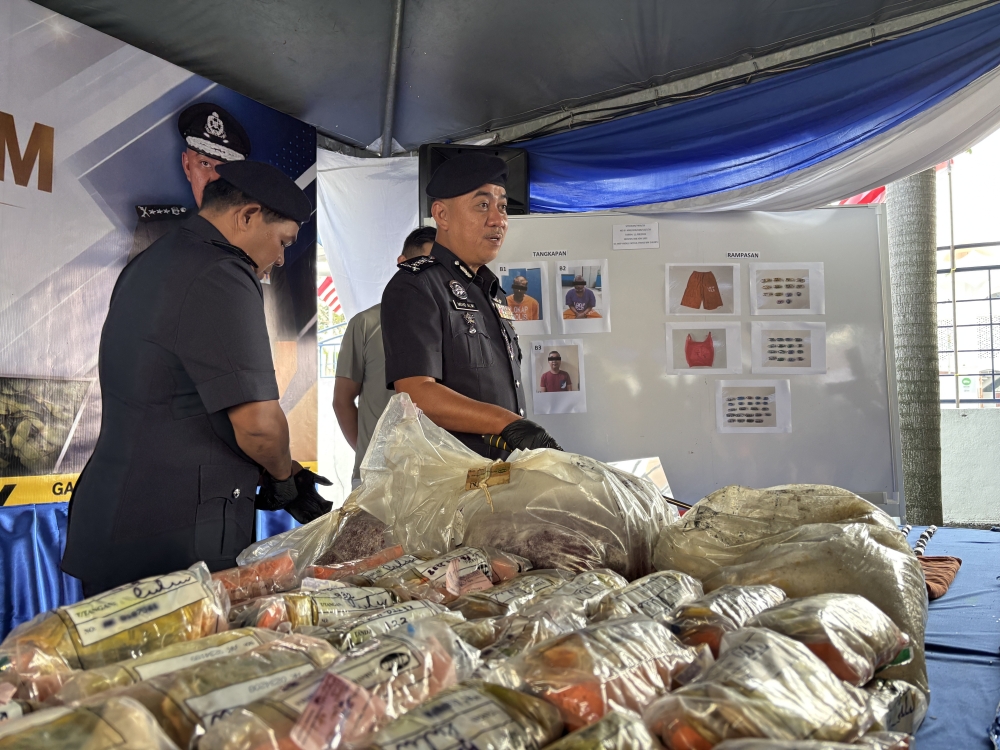
Three men, including an active-duty police constable, have been taken into custody after law enforcement discovered drugs valued at RM18,534 concealed within a police cell at the Lumut station in Perak. The seizure, which includes methamphetamine, heroin and cannabis, highlights an alarming vulnerability in institutional security and points to potential complicity within the force itself.
The discovery emerged during a routine inspection at the Lumut police facility, where officers uncovered the narcotic materials stashed in a holding cell. The presence of such a significant drug cache in a secure law enforcement location represents a serious breach of protocol and raises troubling questions about how contraband reached the inside of a police station. The involvement of a serving constable in the alleged incident compounds concerns about the integrity of operations at the facility.
The methamphetamine component of the haul represents the bulk of the seizure by value, reflecting the continued prevalence of crystal meth across Malaysian drug markets. This particular substance remains one of the most frequently trafficked drugs in the region, with production networks operating across Southeast Asia. The presence of heroin alongside methamphetamine suggests a coordinated supply operation designed to serve multiple user demographics within the local market.
For Malaysian police, such incidents carry considerable institutional weight. The Royal Malaysia Police force has invested substantially in anti-narcotics operations and maintains dedicated drug enforcement units across states including Perak. Yet the discovery of drugs inside a police station itself undermines public confidence in these efforts and raises uncomfortable questions about whether preventive measures are sufficiently robust. Internal security protocols that should prevent officers from bringing contraband into secure facilities have clearly failed in this instance.
The alleged participation of a police constable suggests the possibility of an internal trafficking network or at minimum a severe lapse in judgment by a serving officer. Police constables occupy frontline positions within the force and may have enhanced access to secure areas compared to civilians. Should the allegations prove substantiated, they would indicate either that an officer deliberately facilitated the smuggling operation or that security at the Lumut station is inadequate to detect such activity. Either scenario carries implications for operations across other police facilities in the region.
Such incidents are not unprecedented in Malaysian law enforcement. Previous cases have exposed networks within the police force involved in drug trafficking, extortion and other crimes. These revelations have typically prompted internal investigations and calls for strengthened vetting procedures, though effectiveness of such measures remains debated among observers. The current case will likely generate similar demands for institutional reform, particularly regarding background checks, surveillance within police stations and disciplinary frameworks for officers suspected of misconduct.
The geographical location of the seizure adds context as well. Lumut, located in Perak, sits within a state that has experienced significant drug-related activity. The proximity to the Strait of Malacca, a vital shipping channel, has made the region vulnerable to trafficking operations moving contraband between Thailand, Malaysia and beyond. Local police stations thus face particular pressure from organised crime networks seeking to exploit transit routes through the area.
The value of the seized drugs—RM18,534—indicates a distribution-level operation rather than simple possession for personal use. This quantity of methamphetamine, heroin and cannabis would typically be destined for street-level sale across multiple transactions. The profit margin on such volumes, when successfully distributed, would substantially reward anyone facilitating their passage through law enforcement checkpoints. This financial incentive structure may explain why the alleged trafficking operation targeted the police station itself.
Investigations into the incident will likely examine how the drugs entered the facility, who had access to the specific cell, and whether surveillance footage exists documenting the relevant timeframe. Authorities may also scrutinise communications between the three arrested individuals to establish their respective roles. The detention of a serving officer means the case will fall under both standard criminal procedures and police disciplinary frameworks, with the latter potentially resulting in dismissal pending criminal trial outcomes.
The arrest of the three men represents an immediate enforcement success, yet the underlying security failure reflects broader challenges in combating institutional corruption within drug enforcement agencies across Southeast Asia. Police forces in the region face persistent pressure from organised crime syndicates offering substantial bribes to officers for facilitating drug movements. Without comprehensive internal control systems, technological safeguards and credible accountability mechanisms, similar breaches are likely to recur.
For Malaysian readers and policymakers, the case underscores the necessity of treating police institutional integrity as a drug enforcement priority equivalent to street-level interdiction. Agencies tasked with controlling narcotics cannot effectively do so if elements within their own ranks actively facilitate trafficking. The Lumut case will demand transparent investigation, meaningful disciplinary action against any culpable officers, and systematic review of security protocols across police facilities holding detainees.

