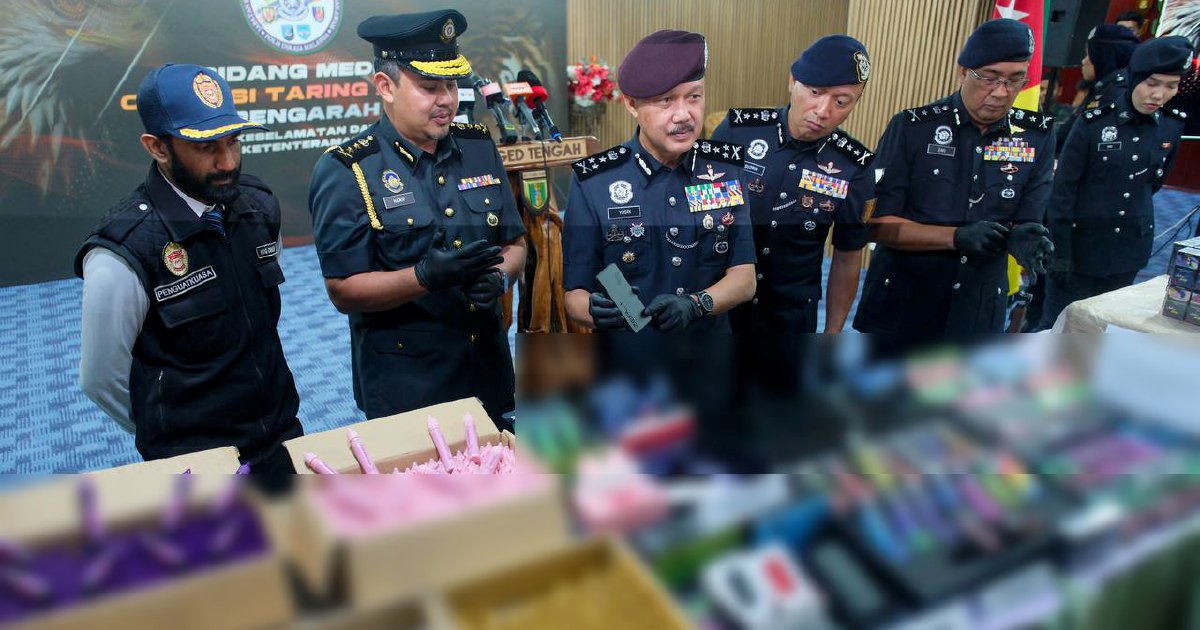
A major blow has been struck against organised smuggling networks in the Klang Valley region, with law enforcement officials executing coordinated operations that resulted in the recovery of illicit vaping products and duty-unpaid cigarettes valued at RM15.5 million. The enforcement actions, carried out in Selangor during late last month, represent a substantial disruption to the distribution chains that have increasingly infiltrated Malaysia's market for contraband tobacco and nicotine products, signalling the growing sophistication and scale of illegal trade in these commodities across the country.
The seized haul underscores the persistent challenge posed by smuggling syndicates that operate across Southeast Asian borders, exploiting porous supply routes and weak enforcement in certain jurisdictions to channel bootleg goods into Malaysian communities. The magnitude of the RM15.5 million seizure indicates that these operations are not sporadic or small-scale endeavours but represent organised commercial enterprises with significant capital investment and logistical capacity. For Malaysian readers, this operation exemplifies how contraband products that appear cheap on the street are part of broader criminal ecosystems that destabilise legitimate markets and contribute to underground economy structures.
The two-pronged operation deployed across Selangor demonstrates the police's intensified focus on dismantling smuggling infrastructure at the distribution node rather than merely intercepting goods at borders. By targeting storage facilities and distribution hubs in the densely populated Selangor region—Malaysia's most populous state and economic heartland—authorities have moved to interrupt the final stages of the supply chain where products are stockpiled before being dispersed to retailers across the peninsula. This tactical approach reflects a shift toward attacking the networks' operational backbone rather than engaging in reactive enforcement at points of sale.
The confiscation of vaping products alongside cigarettes reveals the diversified portfolio of illicit nicotine goods now flowing through Malaysian smuggling channels. While illicit cigarettes have long dominated contraband trade due to substantial duty differentials between Malaysia and neighbouring countries, the inclusion of significant quantities of vape merchandise indicates expanding criminal interest in the faster-growing alternative nicotine market. This convergence presents regulatory authorities with compounded challenges, as it requires coordination across multiple enforcement agencies with jurisdiction over different product categories and different legal frameworks governing their importation and sale.
For Malaysian taxpayers and legitimate businesses, the implications are substantial. Every ringgit of duty evaded on smuggled cigarettes and vapes represents foregone government revenue that might otherwise fund public services, from healthcare to education. Additionally, the presence of large quantities of illicit goods in the market undercuts legitimate retailers, distorting competition and creating unfair advantages for sellers willing to traffic in contraband. Small shopkeepers operating within regulatory frameworks find themselves competing against the artificially low prices of smuggled merchandise, effectively penalising their compliance.
The operations also highlight vulnerabilities in Malaysia's supply chain security and border control mechanisms. The ability to accumulate RM15.5 million worth of contraband goods within Selangor suggests that smuggling networks possess reliable channels for moving large volumes across regional borders, likely involving corruption of customs officials or exploitation of gaps in monitoring procedures. The sophistication required to establish secure storage, manage inventory, and orchestrate distribution to retailers points toward organised crime entities with established relationships and operational discipline. Addressing this challenge requires not only tactical police operations but also strategic reforms to customs procedures, port security, and cross-border intelligence sharing with regional partners.
The timing and scale of these enforcement actions also reflect broader regional trends in contraband trade. Southeast Asia has emerged as a critical corridor for illicit goods trafficking, with Malaysia positioned as both a transit point and end-market due to its relatively affluent consumer base and geographic accessibility from production centres in regional countries. Criminal networks operating across the region have professionalised their operations, employing compartmentalised structures and advanced logistics to move goods while minimising detection risks. A single seizure of RM15.5 million, while significant, likely represents only a fraction of the total contraband volume successfully reaching consumers.
The police operation also underscores the resource-intensive nature of effective enforcement against organised smuggling. Conducting surveillance, identifying storage locations, executing simultaneous raids, and documenting evidence chains require coordination between multiple police units, substantial intelligence work, and investigative capacity. For Malaysian law enforcement to sustain pressure against smuggling syndicates, these operations must be institutionalised rather than sporadic responses to intelligence opportunities. Consistent, well-resourced enforcement creates uncertainty and increased costs for smugglers, gradually degrading the economic viability of their operations.
Looking forward, the challenge for Malaysian authorities extends beyond arrests and seizures to disrupting the financial flows that sustain smuggling enterprises. Criminal syndicates operate because profit margins remain attractive despite enforcement risks. Targeting money laundering networks, disrupting distribution relationships, and raising operational costs through consistent enforcement can create disincentives for participation in the trade. This requires cooperation between anti-smuggling units, financial intelligence teams, and tax authorities working toward shared objectives.
For consumers, the seizure serves as a reminder that cheap contraband products carry hidden social costs extending far beyond price differentials. Illicit vapes and cigarettes often lack quality controls, may contain hazardous additives, and contribute no tax revenue toward health services. The prevalence of smuggled goods also complicates public health messaging around tobacco and nicotine products, as authorities must address not only consumption patterns but also the underground market facilitating unrestricted access to these commodities without regulatory oversight.
The Selangor operations represent tangible progress in combating an entrenched smuggling challenge, yet they also highlight the ongoing struggle between enforcement agencies and adaptive criminal networks operating across regional borders. Sustained success will require maintained pressure, strategic intelligence development, and regional cooperation frameworks that prevent smugglers from simply shifting operations to alternate routes or jurisdictions. Until supply-side economics of the smuggling trade shift materially against criminal operators, these operations will likely remain necessary but insufficient responses to a persistent regional problem.

