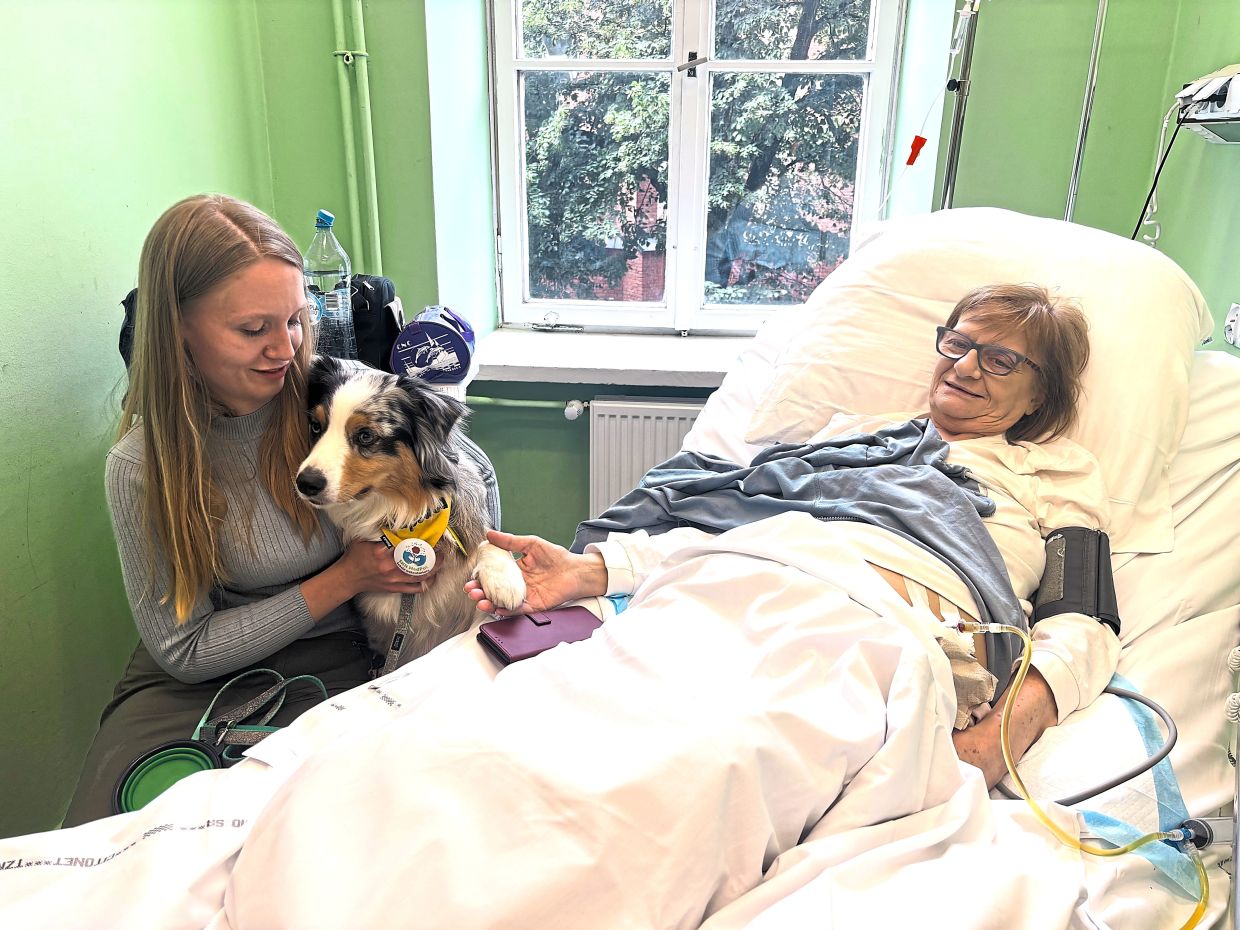
Poland's parliament is considering a landmark proposal that would guarantee terminally ill patients the right to have their pets visit them in hospice and palliative care wards. The initiative, currently being reviewed by the health committee, addresses a gap in Polish healthcare law that has left pet visitation to the discretion of individual institutions rather than establishing it as a patient right. While some clinics already permit such visits, the new legislation would create a uniform legal framework ensuring all hospice patients can maintain these emotionally vital connections during their final days.
The push for the reform emerged from the experiences of Dr Tomasz Dzierzanowski, director of the Palliative Medicine Clinic at the Medical University of Warsaw, who has witnessed firsthand how animal companionship transforms the end-of-life experience. Dzierzanowski introduced the proposal through Katarzyna Piekarska, a member of Prime Minister Donald Tusk's centrist coalition party, after recognising that the emotional and psychological benefits of pet presence had been largely overlooked in Poland's palliative care framework. His work reflects a broader recognition in European healthcare that institutional policies must catch up with clinical reality and patient needs.
The genesis of Dzierzanowski's crusade reveals the profound human dimension underlying healthcare policy. A cancer patient named Waldemar, facing his mortality, expressed not fear for himself but anguish at the prospect of his two cats being separated from him during his final hospitalisation. When Dzierzanowski arranged for the cats to visit the ward, the emotional reunion—witnessed by patients, staff, and the animals themselves—crystallised the doctor's understanding that this issue demanded systematic legal attention rather than remaining dependent on individual clinician goodwill or institutional discretion.
Ewa Lutka-Krawczyk, a 70-year-old gallbladder cancer patient currently in Dzierzanowski's ward, exemplifies the human stakes involved. When she received her diagnosis, her primary concern was not her own prognosis but the fate of Gaja, a shelter dog she rescued three years ago and to whom she has developed profound attachment. Separated from her pet during hospitalisation, Gaja has stopped eating—a visceral illustration of the bond's bidirectional nature. Lutka-Krawczyk faces the prospect of death while tormented by worry for her companion's future, a burden that the proposed legislation aims to alleviate by permitting Gaja to remain present during her final chapter.
Dzierzanowski's advocacy positions pet visitation within a larger diagnosis he has made about contemporary society: an epidemic of loneliness afflicting both elderly and younger patients. Many older individuals have outlived their peer networks, finding themselves isolated despite decades of accumulated relationships. Younger palliative care patients, meanwhile, often lack the deep friendships their predecessors built naturally, having substituted virtual connections and screen-mediated relationships for face-to-face human bonds. In this context, pets represent not frivolous comfort but essential emotional anchors—beings whose presence provides non-negotiable companionship regardless of social circumstance or generational disconnect.
The doctor frames this challenge philosophically: while ideally another human being should be present for those suffering, the modern world increasingly fails to provide this. "We make sure that no patient dies alone," Dzierzanowski states, acknowledging that institutional commitment to presence must sometimes mean accepting that an animal companion fulfils this fundamental human need when human relationships have fractured or never developed. The legislation thus represents not a departure from traditional palliative philosophy but an adaptation to contemporary reality.
Beyond individual patient benefit, Dzierzanowski's clinic has observed that animal visits generate positive externalities throughout the hospice environment. Therapy dogs make regular rounds under the supervision of handlers such as Malgorzata Brzozowska, a medical student who brings Kluska, an Australian shepherd, to provide distraction and comfort. During a recent visit, Kluska's presence visibly lifted the spirits of patients including Wojciech Zelik, a 58-year-old tumour patient who mustered the energy to engage with the animal, appreciating its tactile qualities and watching its performance of tricks. The encounters extend beyond patients: nursing staff, cooks, and other workers caring for the terminally ill also experience measurable stress reduction and emotional uplift from brief interactions with animals.
Brzozowska notes a particularly insightful dimension of animal presence that extends beyond human psychology: the animals themselves register and respond to the emotional climate. When patients interact with their own pets rather than unfamiliar therapy animals, the stress levels of the animals visibly decrease. This phenomenon reflects what Brzozowska interprets as animals' ability to comprehend absence—the dog recognises that its owner, previously always present, has disappeared, and the reunion provides profound reassurance to the animal as much as to the human. The legislation thus addresses a reciprocal wellbeing dynamic rather than a unidirectional human benefit.
Piekarska, the lawmaker advancing the legislation, grounds her support in pragmatic observation: animals are already present in Polish hospitals informally, making legal regulation a matter of formalising and standardising existing practice. "In reality, animals in hospitals are already there anyway," she has noted. "That's why it needs to be regulated in the law." This framing positions the legislation not as revolutionary change but as overdue normalisation—bringing formal policy into alignment with ground-level practice and patient needs that have long exceeded the boundaries of official institutional permission.
The reform carries broader implications for how European healthcare systems conceptualise palliative care itself. The traditional medical model emphasises clinical interventions and symptom management, viewing hospice through a biomedical lens. The Polish proposal, by contrast, treats palliative care as encompassing the full existential and emotional reality of dying—recognising that comfort encompasses not merely the absence of physical pain but the presence of meaningful relationship, whether human or animal. This expanded vision aligns with emerging research in psychosomatic medicine demonstrating measurable physiological benefits from human-animal interaction, including reduced cortisol levels and improved cardiovascular function.
For Malaysian and Southeast Asian healthcare systems contemplating similar reforms, the Polish experience offers valuable precedent. Many regional patients face comparable isolation in hospice settings, exacerbated by rapid urbanisation and changing family structures that limit traditional multigenerational care networks. Pet ownership remains substantial across Malaysia and wider Asia, particularly among urban populations, creating natural demand for policies permitting human-animal bonds to persist through end-of-life care. The regulatory approach pioneered in Warsaw—establishing pet visitation as a legal patient right rather than leaving it to institutional discretion—provides a model for healthcare reformers elsewhere seeking to address loneliness while respecting cultural and clinical complexities.
Dzierzanowski's work ultimately reflects a humanising impulse that transcends national boundaries: the recognition that dignity in dying includes the freedom to be with those—human or animal—to whom we are bound by genuine affection and dependence. As Lutka-Krawczyk awaits Gaja's visit to her Warsaw hospital bed, the pending legislation embodies a simple but profound principle: that as people approach death, the relationships and companionships that have given their lives meaning deserve legal protection and institutional support.

