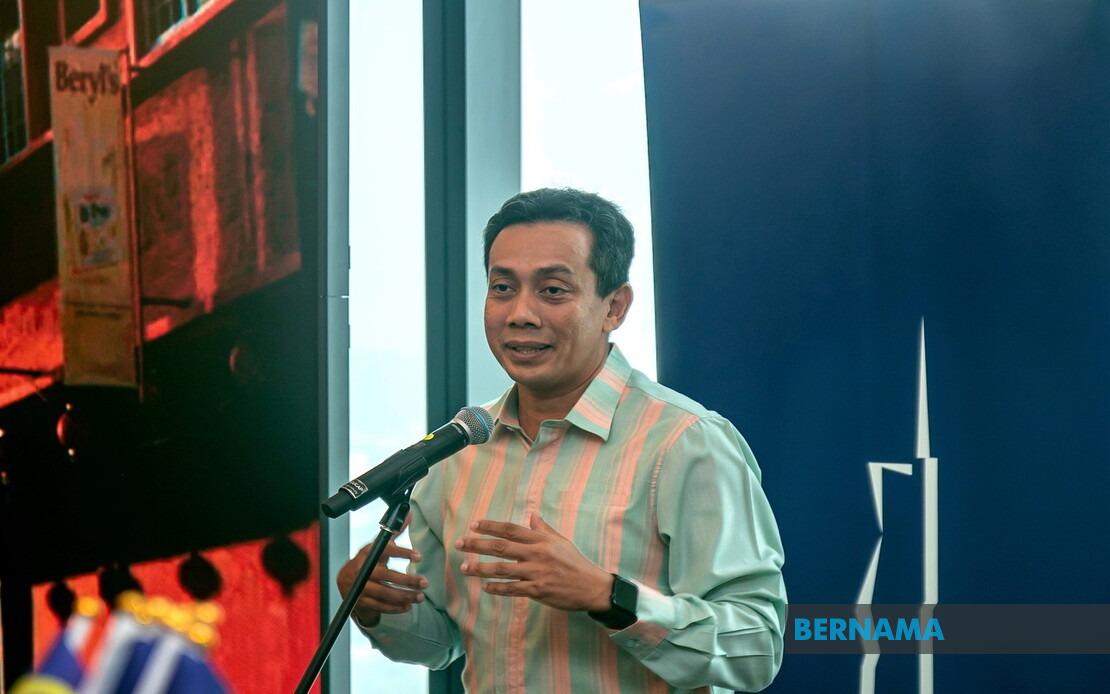
PNB Merdeka Ventures Sdn Bhd (PNBMV) has unveiled its inaugural Merdeka film titled 'GAPAI', a multimedia initiative designed to reconnect a new generation of Malaysians with the nation's independence heritage. The launch comes as the development company seeks to deepen the cultural resonance of Merdeka 118, the iconic precinct built on the sacred grounds where Malaysia declared independence on August 31, 1957.
Datuk Dr Izwan Ibrahim, chief executive officer of PNBMV, emphasised the organisation's broader responsibility as custodian of the nation's most treasured historical asset. Beyond merely preserving archival records and monuments, he articulated a vision where every visitor to the Merdeka 118 Precinct experiences a visceral connection to Malaysia's journey—a reminder of both the nation's founding struggles and its subsequent achievements. This philosophical approach reflects a growing recognition among heritage institutions across Southeast Asia that historical preservation must transcend passive museum experiences and instead foster emotional and intellectual engagement with foundational national narratives.
The timing of the 'GAPAI' launch aligns strategically with Malaysia's annual National Month celebrations. By releasing the film during this period of heightened national consciousness, PNBMV aims to maximise its reach and cultural impact. The film will debut publicly on August 25 across the Merdeka 118 Precinct's official social media channels, leveraging digital platforms to ensure accessibility among younger demographics who increasingly consume historical content through online rather than traditional broadcast mediums.
Integral to the broader commemoration strategy is a comprehensive three-day Merdeka celebration scheduled for August 29-31, executed in collaboration with LOCCO across the Merdeka Stadium and Merdeka Boulevard. This extended programming acknowledges that single-day ceremonies often fail to capture community participation, particularly among working professionals and families with competing commitments. The extended timeframe permits multiple entry points for engagement and allows for thematic variety across the celebration period.
The programming architecture encompasses several interactive components designed to appeal to diverse demographic segments. A Merdeka Community Bazaar will showcase local artisans and cultural practitioners, creating economic opportunities while celebrating indigenous creativity. Concurrently, structured cultural and heritage activities will provide educational content, transforming the precinct into an open-air classroom where history becomes experiential rather than textbook-bound. The inclusion of a Merdeka Flashmob introduces contemporary performance arts, signalling institutional recognition that patriotic expression need not remain confined to traditional ceremonial formats.
The WarisanKL Explorace represents another innovative addition to the programming menu. This structured exploration activity encourages visitors to physically navigate the precinct whilst engaging with heritage narratives, converting passive observation into active discovery. Such gamified approaches to heritage tourism have proven effective in comparable initiatives across regional cities, particularly in sustaining visitor engagement beyond initial novelty interest.
The Merdeka Textile Museum (MTM) will operate throughout the Merdeka weekend period, with extended free public access from August 22 through September 30. This extended access window removes financial barriers to entry and demonstrates institutional commitment to democratising heritage appreciation. Malaysian textile traditions carry profound historical significance, interweaving indigenous weaving techniques, colonial-era trade influences, and postcolonial innovation. By foregrounding textiles within the independence narrative, PNBMV acknowledges often-overlooked dimensions of national history—the economic and cultural contributions of artisanal communities whose labour sustained both pre-colonial polities and the modern nation-state.
The 'GAPAI' initiative arrives at a critical juncture in Malaysia's national discourse. Demographic shifts mean that approximately half the current population was born after 1990, possessing only attenuated intergenerational memories of independence and early nationhood. Simultaneously, rapid globalisation and digital connectivity mean younger Malaysians access international historical narratives more readily than localised accounts. The risk of historical amnesia—where founding national narratives fade from collective consciousness—poses genuine concerns for long-term social cohesion and civic understanding.
PNBMV's strategic pivot toward multimedia storytelling and experiential programming addresses these contemporary realities. Rather than assuming that inherited reverence for independence suffices to transmit historical consciousness, the organisation explicitly recognises that modern audiences require actively produced narrative frameworks. The film medium, in particular, offers accessibility advantages; visual storytelling requires less sustained academic engagement than written historical texts whilst permitting nuanced emotional and thematic development superior to conventional ceremonies.
The broader implications for Malaysian heritage institutions are substantial. PNBMV's approach suggests movement away from the archival model—where institutions curate collections passively—toward what might be termed strategic cultural production. This repositioning acknowledges that heritage ownership entails creative responsibility; custodians must not merely preserve but actively revitalise historical consciousness through contemporary cultural forms. Other Malaysian institutions, from museum foundations to university heritage centres, may find instructive lessons in this methodology.
From a regional perspective, Malaysia's emphasis on intergenerational heritage transmission reflects patterns observable across Southeast Asia, where nations grapple with sustaining independence narratives amid rapid development and transnational cultural flows. PNBMV's 'GAPAI' initiative, despite its local focus, participates in a broader regional conversation about how postcolonial nations maintain historical consciousness whilst remaining engaged with global modernity. The precinct itself, combining archaeological significance with contemporary architectural ambition, symbolises this tension—a monument to a 1957 founding moment anchoring a 21st-century mixed-use development serving present-day urban populations.
Looking forward, the success of the 'GAPAI' campaign will likely be measured not merely by visitor numbers or social media engagement metrics, but by whether the initiative produces sustained institutional relationships between younger Malaysians and independence heritage. The extended museum access window through September suggests PNBMV anticipates ongoing interest beyond the Merdeka month climax, recognising that heritage engagement operates most effectively as sustained cultural practice rather than episodic celebration.

