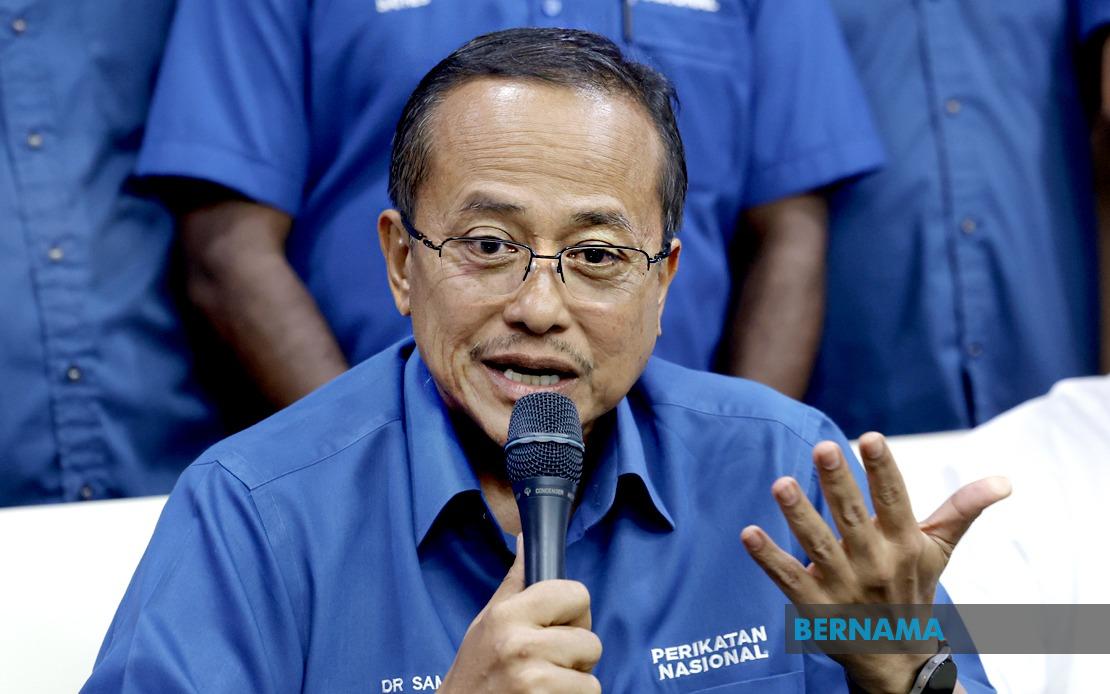
Perikatan Nasional has signalled a significant shift in political positioning by expressing openness to formal negotiations with Barisan Nasional regarding the upcoming Melaka state election. The announcement, made by PN chairman Datuk Seri Dr Ahmad Samsuri Mokhtar at the 23rd Perak PAS Convention in Taiping, reflects a strategic recalibration as the two major coalitions contemplate their electoral strategies in the southern state.
While no substantive talks have yet commenced between PN and BN, Ahmad Samsuri emphasised that the window for productive dialogue remains wide open. The absence of a confirmed dissolution date for the Melaka State Legislative Assembly provides crucial flexibility, allowing both coalitions additional time to explore potential collaboration frameworks. This temporal advantage represents a departure from rushed election scenarios where negotiations are compressed into days rather than weeks.
The PN chairman's public pronouncement carries particular weight given the historical tensions between the two coalitions and their contrasting political trajectories over recent years. PN emerged as an opposition force following the 2022 general election, while BN has maintained a dominant presence in several state governments. Ahmad Samsuri's framing suggests that PN leadership views a strategic partnership as potentially transformative rather than merely opportunistic, positioning cooperation as a pathway to governing rather than perpetual opposition status.
In his address to party delegates, Ahmad Samsuri presented a detailed assessment indicating that a PN-BN coalition could feasibly capture the Melaka state government with approximately 75 per cent probability of electoral success. This statistical projection, while not derived from formal opinion polling, reflects PN's internal analysis of demographic shifts, voter sentiment, and seat mathematics. The specificity of such a figure suggests careful preparation within PN's strategic planning apparatus.
Yet Ahmad Samsuri tempered optimism with measured realism, acknowledging that the pathway toward coalition governance would prove neither straightforward nor without friction. His metaphor of a journey devoid of highways and rest stops carries implications for both parties: successful cooperation will demand sustained tolerance, adaptive negotiation, and principled compromise across multiple contentious issues. The PN chairman's emphasis on this complexity signals awareness that coalition-building involves genuine sacrifice beyond mere transactional vote-counting.
The political calculus underlying this openness reflects broader dynamics shaping Malaysian electoral competition. Melaka's recent governance history demonstrates voter appetite for stable, capable administrations capable of delivering tangible improvements in public services and economic opportunity. A PN-BN combination could potentially offer Melaka electorate a stabilising force compared to protracted political uncertainty or fractured legislative majorities unable to execute coherent policy agendas.
For Barisan Nasional, Ahmad Samsuri's overture presents strategic flexibility at a moment when BN's own electoral prospects remain contested terrain. Coalition governance with PN could expand BN's competitive reach while distributing electoral risk across complementary party structures. Conversely, BN leadership must weigh whether partnership would dilute its brand identity or enlarge its governing capacity in ways that strengthen long-term institutional positioning.
The timing of this announcement carries significance for Malaysian political observers tracking the broader trajectory of coalition politics. Federal-level arrangements remain dominated by Pakatan Harapan's governing coalition, yet state-level experimentation with alternative power-sharing models continues reshaping the competitive landscape. Melaka's electoral outcome could establish precedents influencing similar negotiations in other states where no coalition commands dominant majority status.
Ahmad Samsuri's suggestion that cooperation details remain unresolved acknowledges that substantive negotiations have not yet addressed portfolio distribution, ministerial appointments, legislative committee assignments, or policy prioritisation frameworks. These practical matters typically prove more contentious than the principle of coalition formation itself, often derailing negotiations that commence with broad political declarations.
For Malaysian voters, particularly those in Melaka, this political development signals that their electoral preferences will likely shape coalition configurations rather than predetermined alignments. The emergence of genuine negotiation space between PN and BN indicates that neither coalition commands sufficient confidence in its independent electoral prospects to pursue unilateral strategies. This represents a healthier competitive dynamic than predetermined dominance patterns.
The broader implications extend to Southeast Asia's political economy, where Malaysia's coalition-based parliamentary system continues adapting to fragmented voter preferences and regional political volatility. Melaka's election outcome could influence whether coalition governance becomes the permanent institutional framework for Malaysian politics or represents a transitional phase toward stabilisation around larger, more cohesive political formations.

