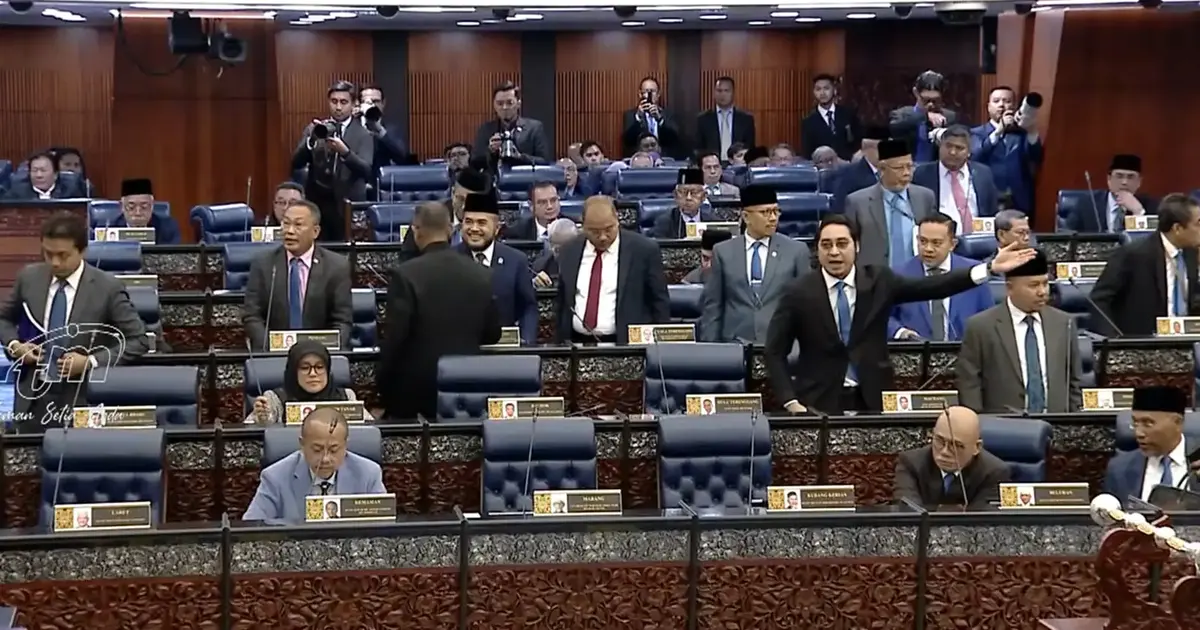
Perikatan Nasional lawmakers staged a walkout from the Dewan Rakyat on Tuesday after the Speaker declined to postpone a special parliamentary sitting focused on matters concerning Tenaga Nasional Berhad, intensifying ongoing tensions within the lower house over procedural protocols and government accountability mechanisms.
The opposition coalition had petitioned the Speaker to reschedule the sitting to accommodate the prime minister's schedule, arguing that his physical presence during proceedings would be integral to addressing substantive concerns raised about the state-owned energy utility. PN's reasoning hinged on the assertion that matters of such national economic significance require the chief executive's direct engagement rather than representation through ministerial deputies or parliamentary secretaries.
The refusal to grant the postponement prompted coordinated action among PN members, who vacated their parliamentary seats in protest. This dramatic gesture underscored the coalition's commitment to their procedural demands and represented a symbolic challenge to the Speaker's authority to manage the sitting's timeline according to what PN deemed insufficient grounds for delay.
However, the walkout was not entirely unified across the broader opposition framework. Bersatu, the Bumiputera Majlis Persekutuan component within PN, declined to participate in the boycott, revealing fractures within the coalition's tactical approach to parliamentary confrontation. This divergence suggests varying calculations among PN constituent parties regarding the political cost-benefit of escalatory measures and the importance of maintaining certain working relationships within parliament.
The incident reflects deeper institutional questions about parliamentary procedure, executive accountability, and the balance between formal scheduling requirements and pragmatic governance considerations. When opposition coalitions challenge the Speaker's decisions on sitting logistics, they implicitly invoke principles about democratic participation and the proper role of elected representatives in scrutinising government bodies.
Tenaga Nasional Berhad's centrality to this dispute carries significant weight for Malaysian readers given the utility's pervasive role in the energy sector and its impact on household electricity costs, industrial competitiveness, and national infrastructure planning. Parliamentary scrutiny of TNB operations touches directly on bread-and-butter economic concerns affecting millions of families and businesses across the country.
The special sitting represented parliament's mechanism for subjecting major government corporations and statutory bodies to legislative oversight, a function that opposition coalitions view as critical to maintaining checks on executive power. PN's insistence on the prime minister's participation suggests the coalition believed the scheduled parliamentary exchanges would necessitate high-level policy clarification rather than routine administrative responses.
From a Southeast Asian perspective, this episode exemplifies recurring patterns in Westminster-derived parliamentary systems across the region, where opposition coalitions frequently contest procedural decisions by speakers and challenge the adequacy of ministerial representation on substantive matters. Malaysia's particular configuration, with its complex federal structure and state-federal dynamics, adds layers to these tensions.
The political environment leading into such confrontations typically involves calculation about media optics, constituency messaging, and broader parliamentary dynamics. When PN walked out, the coalition positioned itself as defending parliamentary prerogatives and demanding serious engagement from the executive on critical economic policy. The decision by Bersatu to refrain from joining amplifies questions about coalition cohesion heading toward potential electoral cycles.
Speaker determinations on procedural matters carry weight extending beyond the immediate parliamentary session. Rulings establish precedent for future special sittings and shape the boundaries of what opposition coalitions perceive as achievable through parliamentary pressure. The Speaker's resistance to the delay request may reflect assessments about the urgency of TNB-related parliamentary business or principles regarding the independence of parliamentary scheduling from executive convenience.
For Malaysian businesses and investors, parliamentary scrutiny of TNB matters carries implications for energy policy certainty and infrastructure investment frameworks. When opposition coalitions prioritise TH-related parliamentary sessions, they signal that energy governance issues rank among substantive national concerns requiring serious legislative attention rather than routine administration.
The walkout, while dramatic, represents conventional if contentious parliamentary tactics. More significant than the gesture itself would be whether the special sitting ultimately proceeds as scheduled, how TNB-related parliamentary questions are ultimately addressed, and whether the procedural conflict influences future patterns of engagement between parliament and the executive on economic governance issues affecting Malaysian households and enterprises.
This incident illustrates how parliamentary procedure, while seemingly technical, carries genuine political substance in Malaysia's democratic framework. The outcome may shape opposition coalition strategy on subsequent parliamentary business and influence calculations about when confrontation versus cooperation better serves legislative objectives.

