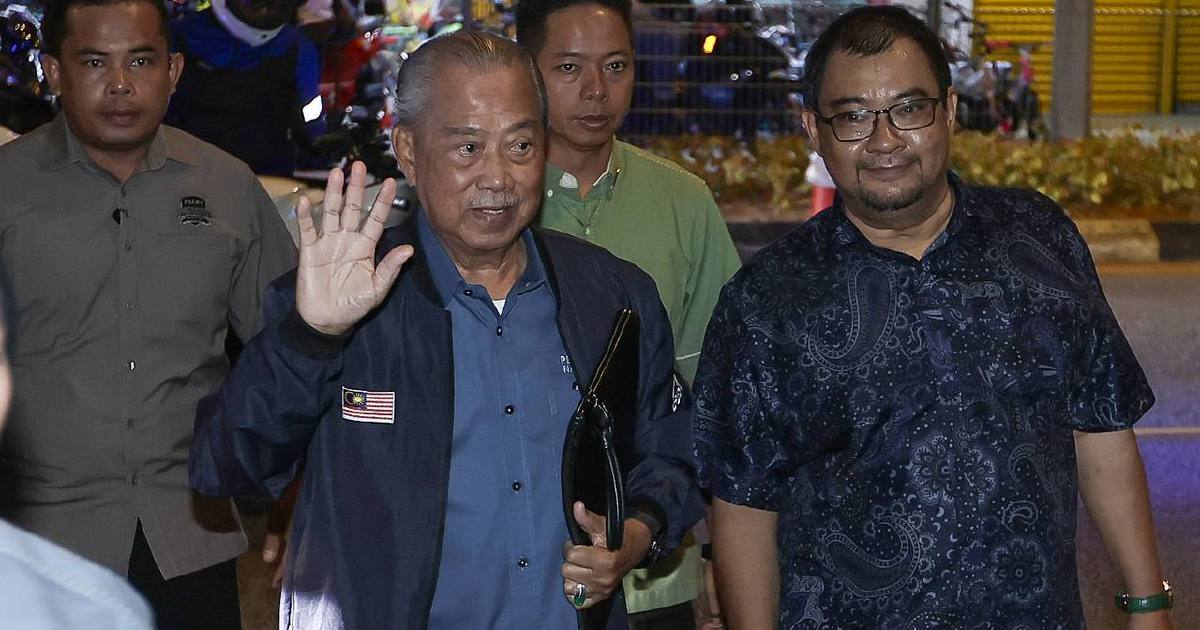
The Perikatan Nasional opposition alliance convened an emergency Supreme Council session in Kuala Lumpur, with party president Muhyiddin Yassin subsequently clarifying that deliberations centred on broader coalition matters rather than the membership status of Bersatu, the bloc's dominant component. The carefully-worded statement underscores growing sensitivity around Bersatu's position within PN, a coalition that has undergone significant structural recalibration since its inception as an electoral vehicle in 2020.
Muhyiddin's public clarification serves multiple audiences. For internal PN consumption, it signals that the Supreme Council remains focused on forward momentum rather than dwelling on intra-coalition friction. For observers tracking the complex dynamics of Malaysian opposition politics, the clarification simultaneously acknowledges that membership questions loom large enough to warrant explicit denial of discussion. This rhetorical manoeuvre—addressing something by denying its discussion—typically indicates the matter commands substantial attention behind closed doors.
The distinction between "coalition matters" and "Bersatu's position" proves analytically crucial for understanding PN's current trajectory. Coalition matters encompass recruitment of potential new members, structural arrangements, policy harmonisation, and electoral strategy—the architecture of opposition unity. Bersatu's membership status, by contrast, touches on the party's own standing and whether conditions attached to its continued participation require examination. That these conversations remained separate suggests deliberate compartmentalisation, perhaps to prevent conversation about new entrants from becoming entangled with questions about existing members.
Bersatu's presence within PN carries particular weight given its historical dominance and the personalities involved. The party commands considerable parliamentary representation and maintains strong organisational machinery in several states. Its leader's relationship with other coalition partners, however, has periodically generated tensions that surface in public commentary before being managed through formal meetings. An emergency convening at the Supreme Council level indicates substantive issues requiring elevated decision-making authority.
The timing of such an emergency session merits contextual consideration within Malaysia's broader political landscape. Opposition coalitions face persistent pressures as governing parties attempt to engineer defections and court swing voters through legislative incentives. PN's expansion strategy likely addresses competition for parliamentary and state-level influence, as coalition viability ultimately depends on sustainable voter bases and institutional representation. Potential new members represent either geographical strengthening in existing strongholds or strategic expansion into new territories where PN currently holds limited presence.
Muhyiddin's explicit mention that the meeting addressed "potential new membership" signals active recruitment efforts. In Malaysian political culture, expanding coalition membership typically occurs when parties believe they have identified compatible partners whose entry would enhance electoral prospects or institutional stability. The qualification "potential" suggests ongoing negotiation rather than formalised arrangements, implying that recruitment conversations continue at various stages of advancement. Such expansionary thinking reflects confidence in PN's medium-term viability despite periodic challenges.
The strategic silence around Bersatu reflects the delicate equilibrium that opposition coalitions must maintain in Malaysian politics. Open disagreement about fundamental membership matters risks fracture, particularly when media outlets scrutinise every statement for hints of deterioration. By confirming that membership questions did not surface, Muhyiddin provides assurance to both coalition partners and voters that unity remains unquestioned. Simultaneously, the very need to issue such clarification implicitly acknowledges that observers reasonably anticipated such discussions might occur.
For regional Southeast Asian perspectives, PN's management challenges illustrate broader opposition coalition dynamics across the region. When diverse political interests cluster into electoral blocs to challenge incumbents, internal tensions inevitably emerge between organisations with distinct constituencies, ideological leanings, and leadership ambitions. The ability to contain such tensions through institutional mechanisms—in this case, compartmentalised discussion agendas—partly determines whether opposition coalitions maintain structural integrity through electoral cycles.
Muhyiddin's characterisation also reveals how Malaysian opposition politics increasingly relies on nuanced communications that distinguish between different categories of discussion. The Supreme Council's focus on abstract "coalition matters" permits both advancement of coalition interests and deferral of potentially divisive membership conversations. This representational practice enables parties to claim dynamism and decisiveness while preserving flexibility around sensitive internal questions. For Malaysian readers tracking opposition politics, such careful framing offers insight into how coalition management operates beyond public transparency.
The broader implications for Malaysian opposition viability remain consequential. PN's ability to function as a cohesive bloc depends partly on convincing both internal constituencies and external observers that the coalition pursues shared objectives despite occasional friction. Emergency sessions signal both urgency and seriousness, yet their outcomes must convince stakeholders that decisions serve collective interests. Whether potential new membership ultimately materialises, and how Bersatu's role within PN evolves, will substantially shape opposition electoral fortunes in forthcoming contests.