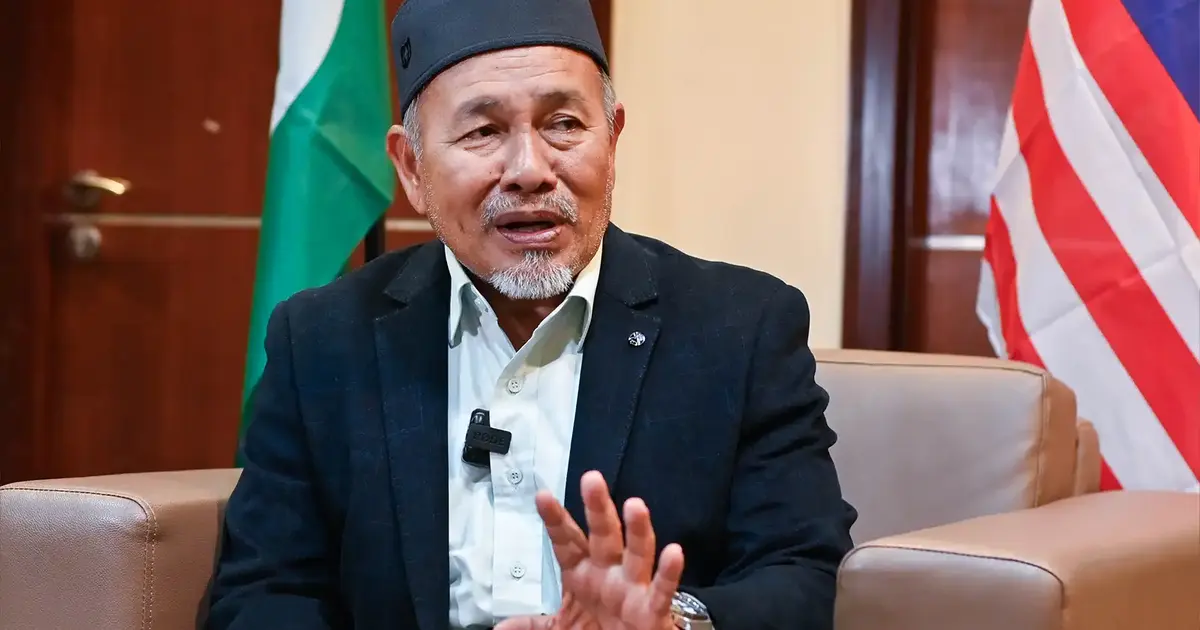
PAS deputy president Tuan Ibrahim Tuan Man has adopted a relaxed stance regarding the prospect of seat allocation conflicts between Perikatan Nasional and Barisan Nasional in the upcoming Melaka state election, suggesting that any disagreements can be smoothed over through constructive dialogue. His measured response reflects an attempt to project unity within the coalition even as formal negotiations over constituency divisions remain unfinished, underscoring the delicate political choreography required to maintain stability in crucial electoral contests.
Although the two major coalition blocs have not yet commenced substantive discussions about parliamentary seat distribution for the Melaka polls, the PAS leader expressed sufficient confidence to indicate that friction arising from competing territorial claims could be managed without derailing the broader alliance. This apparent sang-froid masks the underlying complexity of coalition politics in Malaysia, where seat negotiations often prove contentious and risk reopening old divisions between constituent parties.
The Melaka state election represents a significant test for both coalitions in a politically pivotal region where federal dynamics translate directly into local outcomes. The state has historically served as a barometer for national sentiment, making the conduct and outcome of negotiations particularly consequential. PN's apparent willingness to downplay seat-clash concerns suggests confidence in its relative electoral strength or a pragmatic assessment that public displays of coalition harmony benefit all participants more than transparent haggling.
Tuan Ibrahim's confidence may also reflect lessons learned from previous coalition negotiations, where preliminary tensions dissolved once substantive talks commenced. The Malaysian political landscape has matured in recent years regarding coalition management, with parties increasingly recognising that public bickering over seat allocations damages credibility with voters and emboldens opponents. The PAS leadership's diplomatic language serves multiple audiences simultaneously: reassuring PN partners of commitment to unity, signalling to BN that PN approaches negotiations reasonably, and projecting an image of competent governance to the Melaka electorate.
For Malaysian voters and regional observers, the PN-BN seat-sharing arrangement carries broader implications beyond Melaka. The coalition's ability to negotiate smoothly reflects the maturity of Malaysia's political system and the relative stability of its governing arrangements. Conversely, visible friction could indicate underlying fractures that might widen during subsequent electoral contests, particularly in Kuala Lumpur and Putrajaya or other state-level competitions.
The absence of formal seat talks at the time of Tuan Ibrahim's statement suggests a deliberate sequencing strategy, where political leaders allow sufficient time for internal consultations and grassroots sentiment to crystallise before entering binding negotiations. This approach permits flexibility and permits each coalition partner to position itself optimally with its respective voter bases before making concrete commitments on seat allocations.
PN's composition and recent political trajectory inform the context for these Melaka negotiations. The coalition represents a distinctive force in Malaysian politics, bringing together parties with distinct ideological foundations and regional strongholds. PN's performance in previous elections and its relationship with BN—oscillating between competition and cooperation depending on electoral mathematics—shapes expectations for how seat negotiations will unfold.
The broader political environment also influences seat-allocation discussions. National economic conditions, recent policy decisions, and the popularity trajectories of federal and state leaders all affect which constituencies either coalition most desperately wants to contest and which they might be willing to concede. Tuan Ibrahim's optimistic tone suggests that PN's internal assessment indicates sufficient opportunities for growth without requiring wholesale territorial redistribution from BN.
For Melaka specifically, state-level considerations predominate. The composition of the state assembly, recent governance record, and voter priorities in municipal and state elections differ from federal politics, sometimes allowing constituencies to be allocated based on localised party strength rather than national hierarchies. This complexity occasionally facilitates compromise, as parties may be content with different outcomes at state and federal levels.
The timing of Tuan Ibrahim's remarks—made before formal negotiations commenced—demonstrates political communication strategy. By establishing an optimistic framework before discussions begin, PN positions itself as the reasonable, solution-oriented coalition partner. Should negotiations subsequently encounter difficulties, PN can claim that external factors (demanding BN positions, unrealistic expectations) necessitated harder bargaining, rather than internal coalition weakness.
Regional observers and Southeast Asian political analysts increasingly recognise Malaysian coalition dynamics as exemplifying how multi-party democracies manage competing interests while maintaining governmental stability. The PN-BN negotiations in Melaka illustrate both the challenges and practical mechanisms through which such balancing acts occur, offering lessons applicable across the region where coalition politics have become standard rather than exceptional.
The ultimate resolution of seat allocations will reveal whether Tuan Ibrahim's confidence proved justified or represented optimistic overstatement. Either outcome carries implications for coalition cohesion leading into subsequent electoral contests and for the broader political direction of Malaysian governance. For now, the public messaging emphasises harmony and procedural confidence, even as quiet negotiations likely proceed through established party channels.

