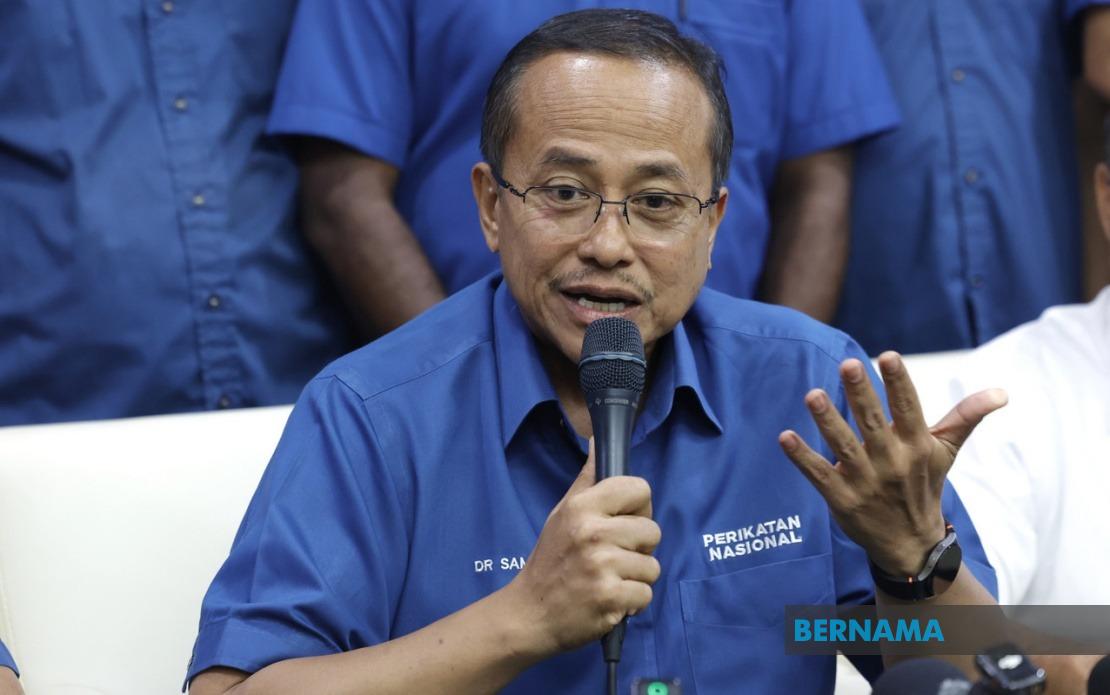
Perikatan Nasional has moved forward with formal seat allocation arrangements for the 16th Negeri Sembilan state election, marking a decisive step in the coalition's electoral strategy for the state. During a special session held in Seremban on July 16, the PN Supreme Council gave approval to the distribution of seats among its constituent parties—PAS, Gerakan, Wawasan, and MIPP—signalling the coalition's unified approach to the upcoming contest.
PN chairman Datuk Seri Dr Ahmad Samsuri Mokhtar announced that all candidates representing the alliance will contest under the Perikatan Nasional logo rather than their individual party emblems. This move represents a significant consolidation of the coalition's brand identity and reflects an attempt to present a unified front to voters in Negeri Sembilan. The decision underscores PN's intention to campaign on shared policy platforms rather than allow fragmentation along party lines, a strategy increasingly adopted by Malaysian political coalitions seeking to maximise electoral appeal.
Dr Ahmad Samsuri emphasised that the coalition's participation in the Negeri Sembilan contest centres on advancing public welfare, accelerating development initiatives across the state, and reinforcing social cohesion among the diverse communities that constitute Negeri Sembilan's electorate. These stated objectives reflect the coalition's positioning as a stability-oriented force capable of managing Malaysia's multicultural fabric—a messaging approach that carries particular weight in states with significant Indian and non-Malay populations.
The PN chairman also clarified the internal consultation processes that preceded the Supreme Council's decision, asserting that all preliminary negotiations with potential coalition partners had been conducted under his direct oversight and with his explicit approval. This clarification appears designed to establish clear chain-of-command authority within PN's leadership structure and preempt any suggestions of irregular or unauthorised dealings that might undermine the coalition's credibility.
However, the announcement comes against a backdrop of considerable tension within what was traditionally the PN alliance structure. Bersatu president Tan Sri Muhyiddin Yassin publicly declared that his party had not been included in the seat allocation discussions for Negeri Sembilan and had received no meaningful engagement regarding potential cooperation arrangements with Barisan Nasional. This exclusion represents a significant rupture within PN's original configuration, where Bersatu played a foundational role following the 2018 general election.
The factional split is not merely procedural but reflects deeper strategic divergences within what was once Malaysia's most dynamic political realignment. Muhyiddin's complaint that Bersatu was sidelined from coalition negotiations suggests ongoing friction over decision-making authority and resource distribution within PN's upper echelons. The absence of Bersatu from seat allocation talks represents a concrete manifestation of the gradual erosion of unity that has characterised PN since its formation.
In response to this isolation, Bersatu opted to pursue an independent candidacy strategy, announcing its intention to field candidates under its own party insignia rather than accept a subordinate role within the PN framework. This decision effectively transforms the Negeri Sembilan contest into a three-way contest between PN (minus Bersatu), Bersatu operating independently, and presumably Barisan Nasional—complicating the electoral calculus significantly. Such fragmentation typically benefits whichever coalition can consolidate the largest voter blocs while opposition support becomes dispersed.
For Malaysian observers and political analysts, the Negeri Sembilan election serves as an important bellwether for PN's cohesion and electoral viability heading into potential future national contests. The coalition's ability to campaign under a unified logo whilst managing the defection of one of its original architects will test both its organisational discipline and its messaging sophistication. The state election becomes a crucible in which PN must demonstrate that it remains a coherent political force despite internal fracturing.
The implications for Negeri Sembilan voters are equally significant. The proliferation of coalition structures—PN, Bersatu independent, and BN—fragments the political landscape and may influence turnout patterns and strategic voting calculations. Voters in constituencies with tight three-way contests between PN candidates, Bersatu candidates, and BN representatives will face unprecedented complexity in assessing which opposition voices can realistically challenge incumbent governance structures.
The electoral dynamics also carry broader implications for Malaysian federalism. Negeri Sembilan, with its relatively compact electorate and historical role as a bellwether for national political trends, offers early indicators of voter sentiment regarding coalition politics, political realignment, and the sustainability of PN as a major political force. The election results may signal whether Malaysian voters prefer consolidated coalitional structures or remain open to alternatives when internal tensions generate factional splits.
The decision to proceed with PN's Negeri Sembilan campaign under these circumstances reflects leadership confidence that the coalition can weather the Bersatu defection and maintain sufficient electoral coherence to challenge BN's traditional dominance in the state. Whether this confidence proves justified will become apparent when candidates are formally announced and campaigning commences in earnest across Negeri Sembilan's constituencies.

