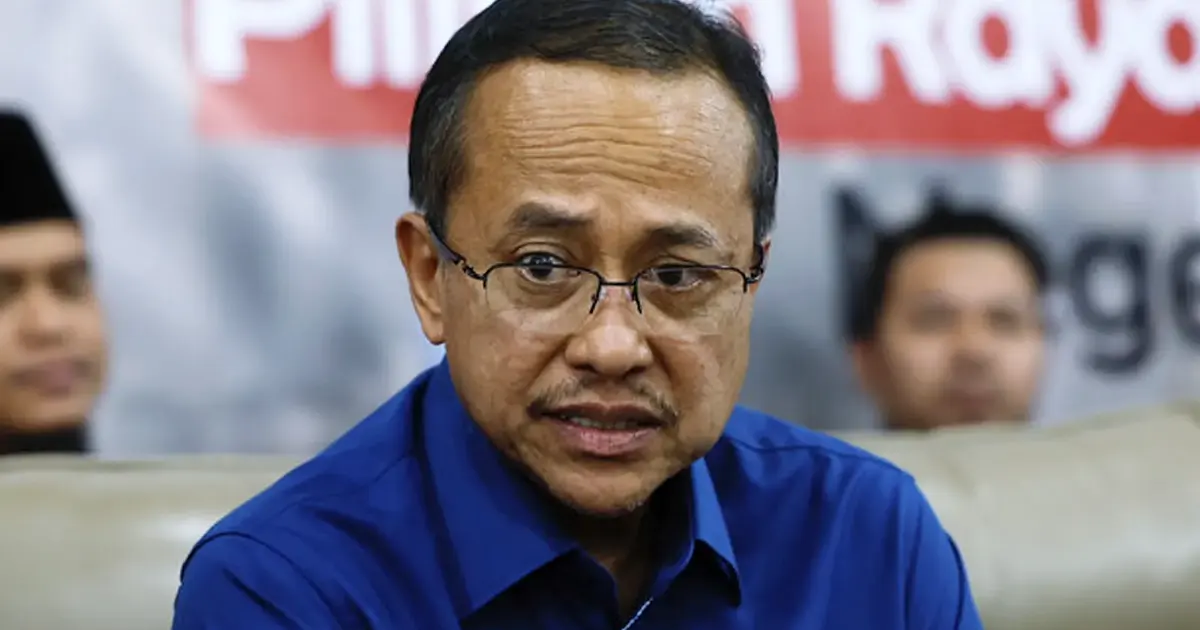
The Perikatan Nasional coalition faces no identity complications despite two of its constituent parties campaigning under the same PN logo, according to coalition chairman Samsuri, who sought to quash rising speculation about potential conflicts within the alliance's electoral strategy. The assertion came as observers noted the unusual phenomenon of both PAS and Bersatu deploying the PN insignia across their campaigns, a development that initially sparked questions about whether the arrangement might cause administrative or procedural difficulties during election periods.
Samsuri's clarification hinged on a fundamental structural arrangement: the two parties operate within distinct electoral territories, with each organisation contesting different constituencies across the country. This geographical separation, he argued, functioned as a natural buffer against any confusion among voters, party machinery, or election officials regarding which entity represented local voters or held campaign responsibility for particular areas. The logic suggests that because PAS and Bersatu do not directly compete for the same parliamentary or state seats, the shared branding creates no practical complications requiring resolution.
The PN coalition, formed as an alternative political bloc in Malaysia's competitive multiparty landscape, comprises multiple partners with varying ideological orientations and regional strongholds. PAS, rooted primarily in East Coast states and certain northern regions with significant Islamic conservative constituencies, brings its own political machinery and voter base. Bersatu, meanwhile, draws support from different demographic and geographic areas, particularly maintaining influence in certain urban centres and previously governing states. This natural division of electoral labour has historically allowed coalition partners to pursue separate candidate lists without triggering internal disputes over representation.
The broader context of Malaysian electoral politics reveals that multi-party coalitions routinely employ shared symbols or branding to project unity and political coherence to voters, particularly during periods when the electorate is reassessing political alignments. Perikatan Nasional itself emerged from realignment following significant political upheaval in 2020, crystallising around certain policy positions and leadership arrangements that distinguished it from the ruling coalition at that time. The use of shared logos by constituent parties serves partly to reinforce the notion of collaborative governance and unified policy direction.
Yet the dual branding arrangement also reflects the realities of Malaysian coalition politics, where constituent parties must maintain distinct institutional identities to satisfy their respective membership bases and maintain internal party structures. PAS members expect party hierarchy and decisions to reflect Islamic-oriented governance principles, while Bersatu members expect input aligned with their party's specific historical narrative and leadership vision. Permitting independent logo usage would undermine coalition cohesion, yet forcing uniform branding might dilute individual party identity to an unacceptable degree for membership.
Samsuri's statement essentially argued that pragmatic geography renders the shared logo arrangement workable, though observers might question whether this rationale fully addresses all potential complications. Electoral administration, campaign finance accountability, and voter education campaigns could theoretically become more complex when multiple parties share identical visual identification. Voters might wonder which party genuinely holds local office or bears responsibility for constituency development, particularly in areas where PAS and Bersatu maintain presence or historical political activity.
The coalition chairman's confidence in the arrangement also suggests internal coordination mechanisms exist to prevent parties from campaigning against each other or creating electoral conflicts despite shared branding. This implies regular coalition meetings, seat allocation procedures, and communication channels that function effectively enough to prevent the worst-case scenario where the two parties inadvertently contest identical constituencies under the same logo. Such coordination assumes continuing political alignment and willingness to subordinate individual party interests to broader coalition objectives.
From a Malaysian electoral perspective, this arrangement represents an evolution in how regional coalitions manage multiple organisational identities within unified campaign frameworks. Unlike the Barisan Nasional or Pakatan Harapan models, where coalition partners maintained distinct logos while emphasising collective branding, the PN approach tests whether parties can achieve operational efficiency through shared insignia while maintaining institutional separation. Success depends substantially on whether electoral commissioners, party administrators, and voters accept the distinction between organisational unity and geographic differentiation.
For Southeast Asian political analysts, the PN coalition's logo-sharing arrangement offers insights into how multiparty alliances navigate identity politics and institutional complexity in democratic systems with fluid electoral alignments. Whether the coalition sustains this arrangement through subsequent election cycles may indicate whether the model proves durable or whether constituent parties eventually reassert distinct branding to reinforce independent political personalities.
Samsuri's assurance ultimately rests on the assumption that seat divisions function as reliable safeguards against confusion or conflict. This arrangement may hold during campaign periods characterised by clear electoral calendars and designated contest periods. However, the long-term viability of shared branding across geographically separated parties may ultimately depend less on Samsuri's current confidence and more on whether PAS and Bersatu continue viewing the PN coalition as mutually beneficial for their respective political trajectories and voter expansion goals.

