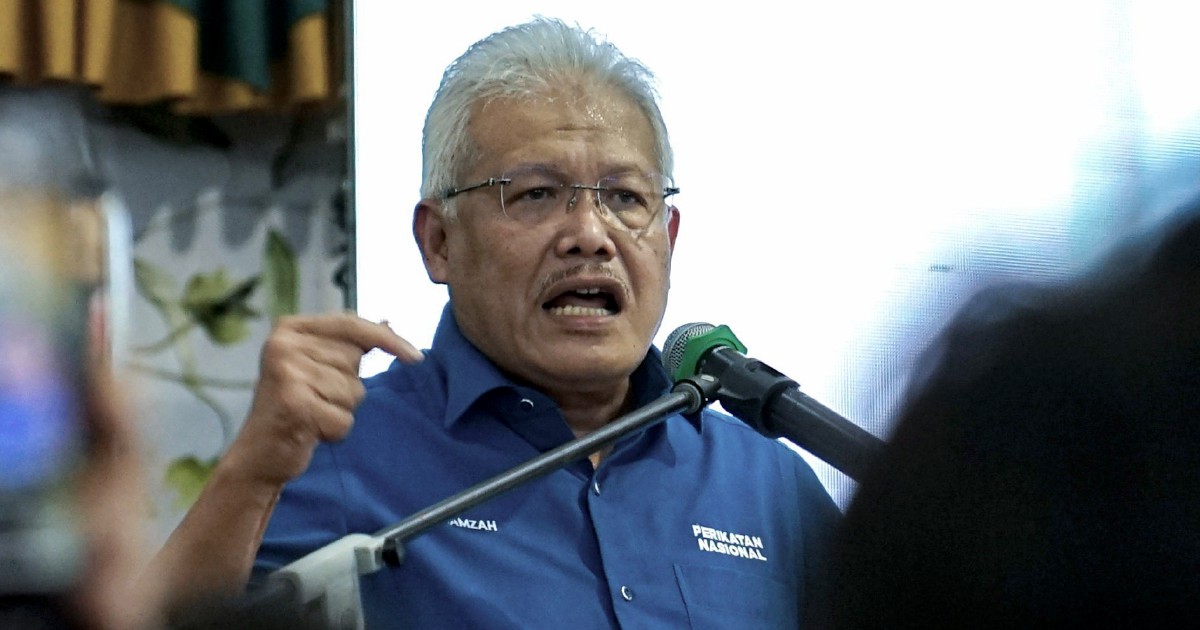
Perikatan Nasional (PN) and Barisan Nasional (BN) have forged a unified electoral alliance for the Negri Sembilan state election, formally adopting the acronym "PBN" to encapsulate their collaborative arrangement. The terminology, unveiled in Tampin, signals the two coalitions' joint strategy to contest the state polls under a singular political brand, representing a noteworthy consolidation of political forces in one of Malaysia's traditionally competitive heartland states.
The creation of the "PBN" branding reflects an evolving political landscape in Malaysia where historically rival coalitions have increasingly found common ground. Rather than contesting separately and potentially fragmenting the opposition or centre-right vote, both PN and BN have determined that an explicitly coordinated campaign framework serves their mutual interests. This represents a pragmatic departure from the adversarial positioning that characterised their relationship during the 2022 general election and subsequent state contests.
Negri Sembilan has historically occupied significance in Malaysian electoral politics as a state where shifting coalitions can demonstrate broader trends. The decision to present a unified front rather than multiple competing banners suggests both PN and BN leadership believe consolidation strengthens their competitive position relative to other political forces vying for state control. The explicit naming of the alliance removes ambiguity about the extent of cooperation and signals to voters that the partnership transcends ad hoc seat-sharing arrangements into a fully integrated campaign.
The acronym "PBN" ingeniously combines the initials of both parent coalitions, creating a neutral-sounding designation that prevents either partner from appearing subordinate to the other. Such symbolic considerations matter significantly in Malaysian politics, where perceptions of dominance or hierarchy within alliances can influence internal cohesion and voter messaging. By literally blending their names into a new brand, PN and BN demonstrate apparent commitment to genuine parity in their electoral partnership.
For Perikatan Nasional, this alliance represents a significant strategic decision. As the newer coalition that substantially restructured Malaysian politics following the 2020 Sheraton Move and its aftermath, PN has oscillated between positioning itself as a reformist alternative and a pragmatic governing coalition. The Negri Sembilan arrangement demonstrates PN's willingness to collaborate with BN's traditional machinery and network rather than simply attempting to outcompete it, suggesting a maturation of PN's political strategy toward sustainability rather than pure electoral disruption.
Barisan Nasional, meanwhile, continues its post-2018 rehabilitation through selective alliances that rebuild its electoral credibility without requiring comprehensive internal restructuring. By partnering with PN in Negri Sembilan rather than contesting independently, BN acknowledges that its traditional dominance requires reinvigoration through coalition partners who retain grassroots energy and reformist credentials that BN itself has struggled to project since the Pakatan Harapan transition.
The timing of this alliance announcement carries implications for Malaysia's wider political fragmentation. With Federal Territories elections, Terengganu contests, and other state-level dynamics creating a patchwork of different coalitional arrangements across Malaysia, the Negri Sembilan "PBN" setup demonstrates that electoral mathematics increasingly dictate flexible partnerships rather than rigid nationwide coalition structures. Voters across different states may encounter substantially different political alignments depending on local calculations.
This development also suggests that the fundamental realignment initiated during the 2023 general election—where PN achieved unprecedented parliamentary seats and challenged BN-UMNO dominance—continues evolving beyond simple competition toward coexistence. Rather than one coalition definitively dominating Malaysian politics, the country appears to be settling into a system where multiple significant coalition arrangements compete regionally and locally according to context-specific strategies.
For Negri Sembilan specifically, the "PBN" arrangement concentrates substantial political resources and institutional advantages into a single campaign framework. State voters will encounter a unified messaging apparatus rather than competing pitches from PN and BN candidates, potentially streamlining the electoral choice landscape. Whether this consolidation translates into enhanced governing effectiveness should the alliance prevail will constitute an important test of whether such pragmatic partnerships produce substantive advantages beyond improved electoral positioning.
The adoption of "PBN" also reflects broader Malaysian political maturation toward issue-based rather than identity-based coalition formation. Rather than coalitions driven primarily by ethnic or religious affiliation, increasingly they reflect strategic calculations about electoral competitiveness and governing capacity. This suggests future Malaysian state and federal elections may feature more fluid, strategically-determined alliances than the historically more rigid factional alignments that long characterised Malaysian politics.

