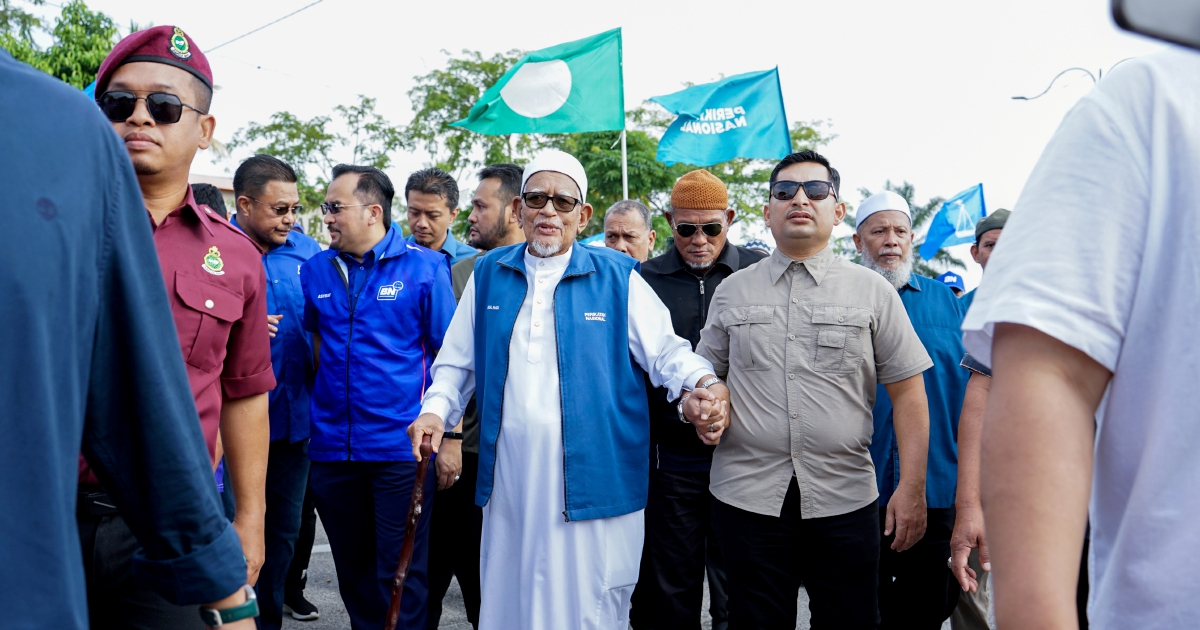
The prospect of unified opposition to dominant coalition forces in the Melaka election appears to hinge on ongoing negotiations between Perikatan Nasional and Barisan Nasional over how seats will be divided, according to remarks made by PAS president Tan Sri Abdul Hadi Awang. The negotiations underscore the complex political dynamics shaping state-level contests in Malaysia, where coalition partners must balance electoral strategy with factional interests and regional political considerations.
Hadi's confirmation of active seat discussions indicates that both political blocs view the Melaka election as significant enough to warrant serious compromise on candidate selection and territorial allocation. The timing of these negotiations reflects the unpredictable nature of Malaysian politics, where coalition configurations can shift based on electoral calculations and the distribution of winnable seats. For Melaka specifically, which has experienced considerable political volatility in recent years, the outcome of seat negotiations may determine whether the state experiences another period of governmental instability or relative consolidation of power.
The involvement of PAS in these discussions is particularly noteworthy, as the party has positioned itself as a bridge between different political constituencies. The party's willingness to engage in seat allocation talks with Barisan Nasional demonstrates a pragmatic approach to electoral mathematics, even as both coalitions maintain separate identities and party structures. This arrangement reflects how Malaysian state elections often require parties to make localized agreements that differ from national-level positioning.
Barisan Nasional's participation in these negotiations reveals the traditional coalition's continued efforts to maintain electoral relevance in key states. Once dominant across Malaysia, Barisan Nasional has faced significant challenges to its political hegemony in recent elections, making seat-sharing arrangements with other non-opposition blocs strategically important for preserving its presence in state assemblies. The Melaka discussions appear to be part of a broader pattern where coalition building has become essential for all major political forces seeking legislative majorities.
From a Malaysian political perspective, such negotiations typically involve complex trade-offs between national party leadership and local branch organizations. Melaka constituencies carry varying levels of electoral difficulty, with some seats considered safe for particular parties and others being highly contested territory where different parties believe they can secure victory. The allocation process therefore requires detailed analysis of voting patterns, demographic shifts, and the respective organizational strengths of participating parties in different districts.
The broader implications for Malaysia's political landscape extend beyond Melaka itself. How successfully Perikatan Nasional and Barisan Nasional navigate these seat negotiations will influence perceptions of coalition stability and the viability of different political alignments in future elections. Successful coordination could demonstrate that pragmatic power-sharing between non-ruling coalition parties remains possible, while breakdown in negotiations might suggest deeper fractures in Malaysian coalition politics.
Regionally, observers across Southeast Asia monitor Malaysian state elections closely as indicators of broader political trends and the sustainability of different governing models. The Melaka election, whenever it occurs, will provide insights into voter preferences, the relative strength of different parties in crucial constituencies, and whether Malaysian coalition politics continues to evolve toward less stable, more fluid arrangements or toward more durable power-sharing frameworks.
The Southeast Asian context is relevant because Malaysia's complex multi-ethnic politics and coalition-based governance have attracted considerable international academic and policy attention. The negotiation processes underlying state elections in Malaysia offer practical lessons about how diverse societies manage electoral competition while maintaining inclusive governance structures. How local parties like PAS balance their ideological commitments with pragmatic seat-sharing arrangements reflects broader questions about the flexibility of political movements in plural societies.
For Melaka specifically, the ongoing negotiations occur against a backdrop of recent electoral history that has produced considerable governmental instability. The state has experienced multiple changes in administration over recent years, reflecting shifting coalitional alignments and disputes over resource allocation and administrative priorities. A successful seat allocation agreement between Perikatan Nasional and Barisan Nasional could potentially reduce this instability by establishing clearer power-sharing arrangements and reducing uncertainty about which parties will contest particular constituencies.
The practical mechanics of seat negotiations in Malaysian elections typically involve detailed discussions between party leadership, local branch representatives, and sometimes state-level mediators. These discussions must balance competing interests: national party strategies, regional political considerations, individual politician preferences, and grassroots party member expectations. Hadi's public acknowledgement of ongoing negotiations signals that both coalitions view a settlement as achievable, though disagreements over specific seat allocations frequently prove contentious in practice.
Looking forward, the success or failure of these Melaka negotiations may establish precedents for seat-sharing arrangements in other states where election timing remains uncertain. Malaysian state elections typically occur at irregular intervals, with dissolution decisions made by sitting governments based on their assessment of electoral prospects. The results in Melaka could therefore influence how other state governments approach potential seat-sharing discussions with coalition partners in subsequent electoral contests.

