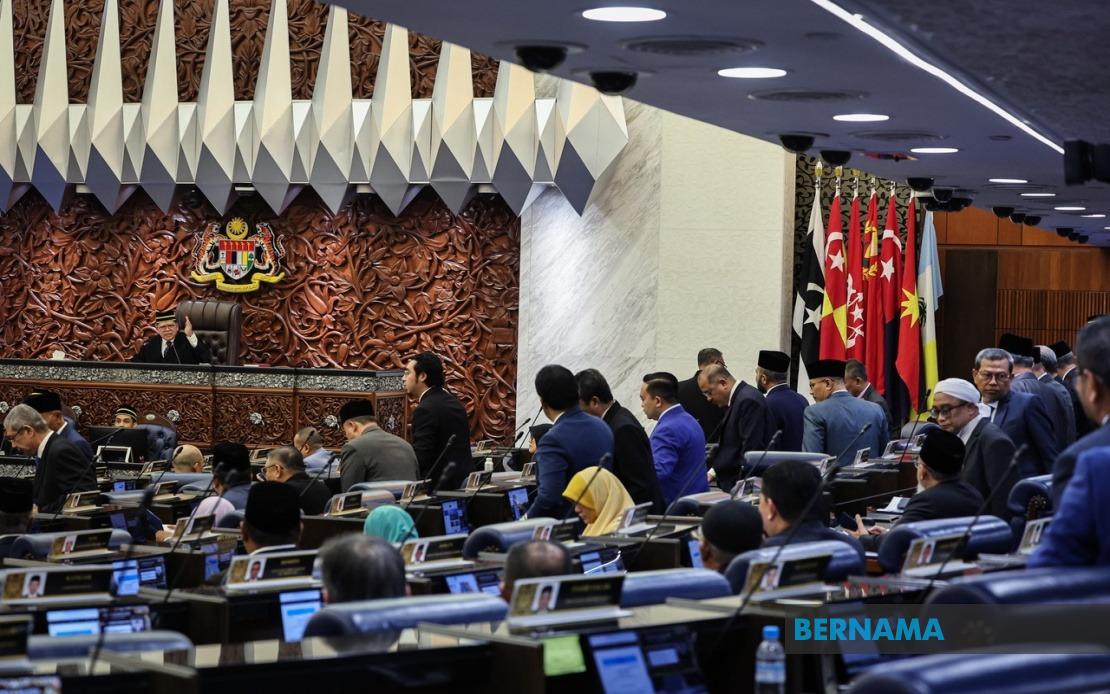
Parliament's special sitting on the Royal Commission of Inquiry findings into Lembaga Tabung Haji encountered significant disruption when Perikatan Nasional opposition MPs, including party leader Hamzah Zainudin, walked out during the government's presentation of the 211-page report. The boycott has drawn sharp rebuke from Tengku Datuk Seri Zafrul Tengku Abdul Aziz, the Prime Minister's Senior Political Adviser, who contended that the absence of Ismail Sabri from the chamber should not serve as justification for legislators to abandon their parliamentary duties.
The RCI report, released publicly on July 29 after Cabinet approval, examines Tabung Haji's management and operational activities spanning 2014 to 2020. The special parliamentary sitting represented a rare opportunity for the 222-member Dewan Rakyat to scrutinise the findings and engage in substantive debate about what Tengku Zafrul characterised as one of the most consequential issues affecting the Muslim and Malay economic interests in the nation's contemporary history. The report's tabling by Minister in the Prime Minister's Department (Religious Affairs) Dr Zulkifli Hasan aimed to bring transparency to matters affecting millions of ordinary Malaysians whose retirement savings are held within the hajj fund.
Tengku Zafrul's social media intervention sought to reframe the parliamentary boycott as fundamentally misguided. He argued that the deliberation constituted a discussion about Muslim savings and financial stewardship rather than a personality-driven political theatre centred on the Prime Minister. By walking out, he suggested, opposition MPs had abandoned their constituents' interests at a critical juncture when parliament could have examined governance failures, demanded accountability, and questioned policy decisions affecting vulnerable populations. His message underscored a disconnect between the political theatre of walkouts and the substantive representation that elected officials ostensibly owe their voters.
The adviser's criticism extended to the mechanics of parliamentary opposition. Rather than boycott proceedings, Tengku Zafrul encouraged MPs to utilise the forum's legitimate avenues for accountability: asking probing questions, engaging in evidence-based debate, and launching factual critiques of government performance. He acknowledged that disagreement between the executive and legislature forms a healthy component of democratic governance, yet cautioned against conflating legitimate dissent with apparent indifference. His statement reflected frustration with what he perceived as performative politics overshadowing substantive parliamentary business.
The Tabung Haji controversy represents a uniquely sensitive intersection in Malaysian politics. The fund holds savings accumulated by approximately 800,000 registered pilgrims undertaking the Islamic obligation of hajj, making it effectively custodian of billions of ringgit belonging to everyday Malaysians from diverse economic backgrounds. When governance lapses occur within such institutions, the consequences ripple through middle and lower-income households dependent on these funds for their retirement security. The RCI's investigation into operational and management deficiencies thus carries implications extending far beyond partisan political advantage.
Perikatan Nasional's walkout strategy reflected broader opposition positioning against the unity government coalition. Beyond Hamzah Zainudin, those departing the chamber included PN chief whip Datuk Seri Takiyuddin Hassan and party chairman Datuk Seri Dr Samsuri Mokhtar. The coordinated nature of the withdrawal suggested deliberate political calculation rather than spontaneous protest. By staging a visible absence during government presentation of a report critical of past administration, PN signalled rejection of the proceedings' legitimacy whilst the walkout simultaneously prevented the opposition from mounting direct rebuttals and counter-arguments within the parliamentary record.
For Malaysian stakeholders observing parliamentary dynamics, the episode illuminates persistent tensions within Southeast Asia's longest-serving democracy. The unity government arrangement, established to provide political stability following years of coalition fragmentation, continues encountering resistance from opposition blocs questioning its legitimacy. Yet institutional frameworks exist precisely to channel such disagreements into constructive debate rather than symbolic walkouts. When major opposition parties boycott parliamentary sittings, they forfeit opportunities to represent their supporters' interests and document their positions in official parliamentary records.
Tengku Zafrul's intervention also contextualises the philosophical question underlying parliamentary engagement: whether lawmakers bear primary obligation to their political party's strategic positioning or their constituents' material welfare. The Tabung Haji report investigation addressed concrete governance failures, operational irregularities, and management decisions that directly impacted millions of ordinary Malaysians. From this perspective, parliamentary engagement represented not optional political theatre but essential scrutiny of institutions handling citizens' financial security.
The Prime Minister's absence from the special sitting, which prompted initial opposition claims of disrespect toward parliament, itself merited examination. However, Tengku Zafrul's argument held that Ismail Sabri's non-attendance provided no valid excuse for opposition MPs to similarly withdraw from their legislative responsibilities. Parliamentary institutions function through distributed responsibility, with backbenchers, committee members, and opposition spokespersons collectively maintaining institutional scrutiny independent of executive presence.
Looking forward, the TH RCI debate episode raises questions about parliament's effectiveness as an accountability mechanism in Malaysian governance. If major opposition parties routinely boycott substantive policy debates, parliament's capacity to function as genuine forum for legislative scrutiny diminishes considerably. Meanwhile, ordinary Malaysians holding Tabung Haji savings remain dependent on government and opposition legislators to collectively ensure institutional performance meets acceptable standards. The walkout thus represented not merely procedural disruption but potentially a missed opportunity for comprehensive parliamentary examination of matters affecting millions of hajj pilgrims and their families navigating retirement planning within Malaysia's economic ecosystem.
The coming weeks will reveal whether opposition parties reconsider their parliamentary engagement strategy or intensify their boycott posture toward government initiatives. For Malaysian citizens invested in both democratic accountability and institutional performance, the Tabung Haji investigation's parliamentary phase demonstrated how political theatre can overshadow substantive governance discussions, ultimately diminishing parliament's role as guardian of public interest.

