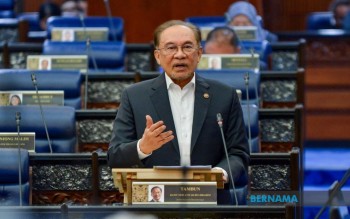
Prime Minister Datuk Seri Anwar Ibrahim has drawn a firm line on accountability in Malaysia's retirement fund investments, declaring that the government will not tolerate any hint of corruption or fraud in the Retirement Fund (Incorporated), or KWAP's, significant stake in eFishery, an aquaculture technology start-up. His unequivocal stance comes as the Malaysian Anti-Corruption Commission (MACC) conducts a thorough examination of the entire investment process, signalling heightened scrutiny of how Malaysia's institutional investors deploy public retirement savings in emerging technology ventures.
Speaking during question time at the Dewan Negara, Anwar, who holds the dual portfolios of Prime Minister and Finance Minister, sought to reassure the public that despite preliminary findings indicating no irregularities, the government remains committed to comprehensive oversight. The distinction between preliminary assessments and full institutional investigation is significant—it reflects the government's recognition that initial audits may not capture all dimensions of complex investment decisions involving technology start-ups and emerging sectors. By explicitly mandating MACC involvement, Anwar is expanding the scope beyond routine corporate compliance to include examination of the investment panel's decision-making processes and the board's subsequent approval mechanisms.
The eFishery investment has attracted scrutiny partly because aquaculture technology represents a relatively new frontier for Malaysian institutional capital deployment. As a developing sector with limited track records, such investments carry elevated risks compared to conventional asset classes. The involvement of KWAP, a fund managing retirement savings for millions of Malaysian public sector employees, heightens public concern about fiduciary responsibility and due diligence standards. The government's visible commitment to investigation addresses legitimate questions about how institutional investors evaluate emerging technology companies, particularly when substantial public funds are at stake.
Anwar's meeting with KWAP management underscores a hierarchical approach to accountability. By directly engaging with fund leadership and explicitly demanding full cooperation, the Prime Minister signals that evasion or obstruction will not be tolerated. This personal intervention, coming from the highest executive office, sends a clear message to the investment community that transparency and cooperation with anti-corruption authorities are non-negotiable conditions for managing public retirement funds. Such direct pressure from the top is often necessary to ensure institutional compliance with investigation protocols.
The broader context involves Senator Mohd Hasbie Muda's inquiry about how Malaysia's retirement funds—specifically KWAP and the Employees Provident Fund (KWSP)—can deliver competitive returns amid volatile global geopolitical conditions. This question reflects real concerns facing Malaysian retirees, whose pension security depends on fund performance in an increasingly uncertain international environment. The tension between seeking higher yields through innovative investments and maintaining prudent risk management has created pressure on institutional investors to pursue unconventional opportunities, sometimes at the expense of rigorous due diligence.
Senator Wan Martina Wan Yusoff's supplementary question probed deeper into the government's broader investment transformation strategy—specifically which companies receive institutional capital and what safeguards protect public money. This line of questioning reveals growing parliamentary oversight of retirement fund management, suggesting that previous investment decisions may not have satisfied all stakeholders regarding transparency and governance. The implication is that Malaysia's investment ecosystem requires clearer criteria for evaluating emerging technology companies and stronger institutional frameworks for protecting retirement savings.
The MACC investigation will likely examine several critical dimensions: the investment panel's evaluation methodology, financial projections and assumptions used in the decision, conflict-of-interest disclosures among decision-makers, comparative analysis of alternative investment opportunities, board documentation and deliberation records, and post-investment monitoring mechanisms. Each element represents a potential vulnerability in the investment chain where corruption or fraud could occur or be concealed. By explicitly authorising MACC scrutiny of these areas, Anwar is effectively conducting a system-wide audit of KWAP's governance practices, not merely investigating the eFishery deal itself.
The government's response also reflects international best practices in pension fund governance. Countries with strong institutional frameworks typically maintain arm's-length relationships between political authorities and fund management while ensuring clear accountability mechanisms when public resources are deployed. Anwar's approach attempts to balance these principles—avoiding direct political interference in day-to-day investment decisions while maintaining ultimate governmental responsibility for protecting public retirement savings. This calibration is particularly important in Malaysia, where public trust in institutional governance remains sensitive to perceptions of political favouritism or corruption.
For Malaysian retirees and workers contributing to KWAP and KWSP, these assurances carry material significance. Retirement fund performance directly affects pension income, and mismanagement or fraudulent investments represent serious threats to financial security in retirement. The government's visible commitment to investigation and accountability attempts to restore confidence that institutional capital is deployed competently and honestly. However, the mere fact that investigation is necessary suggests that initial approval processes may have contained gaps in scrutiny or oversight.
The eFishery case illuminates broader challenges facing Southeast Asian economies attempting to develop innovation ecosystems while maintaining institutional integrity. Emerging technology companies require patient capital and tolerance for risk, yet public funds cannot absorb losses recklessly. This tension necessitates robust governance frameworks that balance innovation encouragement with prudential oversight. Malaysia's experience with this investment, along with the resulting investigation, will likely inform how other ASEAN nations approach public retirement fund investments in technology ventures.
Looking forward, the MACC investigation findings could reshape how Malaysian institutional investors evaluate emerging companies and may establish new governance benchmarks across the region. If irregularities are discovered, the accountability measures taken will signal seriousness about protecting public assets. Conversely, if the investigation confirms appropriate procedures were followed, it may provide useful reassurance to retirees and policymakers. Either way, the transparent investigation process itself—regardless of outcomes—demonstrates governmental commitment to accountability that extends beyond merely responding to public pressure to include systematic examination of institutional decision-making structures.

