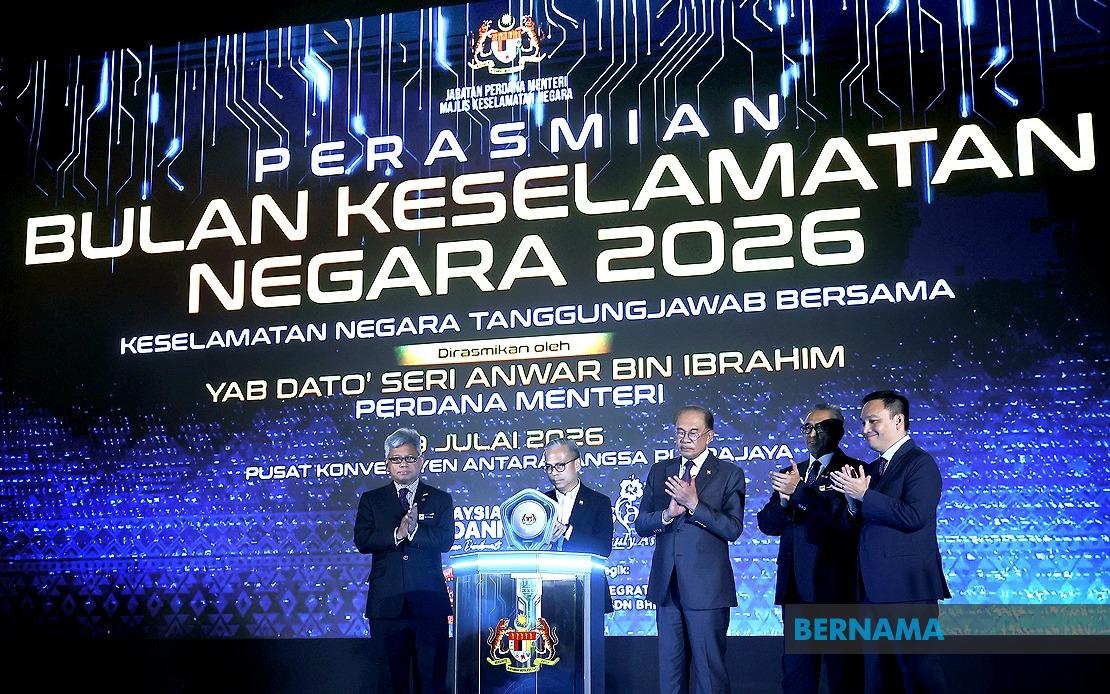
Prime Minister Datuk Seri Anwar Ibrahim has issued a forthright warning against the continued exploitation of state, racial and religious divisions in Malaysian politics, contending that such tactics undermine national cohesion at a time when the country confronts increasingly sophisticated security challenges. Speaking at the launch of National Security Month 2026 in Putrajaya, Anwar articulated frustration with what he characterised as outdated political contestation, arguing that preoccupation with identity-based narratives and regional grievances diverts governmental and public attention from more substantive threats to national stability and prosperity.
The Prime Minister's remarks, delivered in his capacity as Finance Minister during an event organised by the National Security Council, reflect growing concern within the federal administration that domestic political divisions risk leaving Malaysia vulnerable to emerging security vulnerabilities. Anwar's observation that parliamentary debates continue to rehash longstanding identity issues—centring on race, religion and state-level sentiment—suggests frustration with what he views as a failure of political maturity among members of parliament and party leaders across the spectrum.
Anwar's intervention highlights a significant strategic pivot within Malaysia's security discourse. Rather than viewing national security through a conventional lens of military readiness or border protection, he has positioned technological and digital threats as paramount concerns demanding immediate and sustained attention from policymakers and bureaucrats. This reframing implicitly argues that Malaysia's capacity to respond to sophisticated cyber attacks, information warfare, and emerging technological disruptions depends critically on maintaining political and social stability—a stability that divisive identity-based mobilisation actively undermines.
The remarks carry particular weight given Anwar's dual responsibilities as both Prime Minister and Finance Minister, roles that position him at the apex of both political and economic decision-making. His emphasis on the need for proactive rather than reactive governmental responses to security challenges signals an expectation that departmental leadership, intelligence agencies, and ministerial staff must fundamentally alter their institutional culture and approach to risk management. The implicit critique of what he termed "routine bureaucracy" suggests that conventional administrative processes are insufficient to address the velocity and complexity of contemporary security threats.
Communications Minister Datuk Fahmi Fadzil, Chief Secretary to the Government Tan Sri Shamsul Azri Abu Bakar, and National Security Council director-general Datuk Raja Nurshirwan Zainal Abidin's attendance underscored the high-level commitment to this security initiative and signalled alignment within the senior civil service with Anwar's assessment. The presence of these figures at the launch demonstrated that Malaysia's security establishment recognises the scope of contemporary threats and the necessity for coordinated governmental response across institutional boundaries.
For Malaysian citizens and businesses, Anwar's warning carries implications extending beyond the rhetorical. If validated by credible evidence of emerging cyber threats, inadequate digital infrastructure, or vulnerabilities in critical systems, his remarks suggest that the government intends to prioritise investment and institutional reform in these domains. This could manifest through enhanced cybersecurity regulations, greater scrutiny of digital governance frameworks, and potentially new requirements for public and private sector organisations to comply with elevated security standards.
The Prime Minister's intervention also speaks to regional dynamics within Southeast Asia. As neighbouring countries grapple with similar tensions between maintaining political stability and addressing technological vulnerability, Malaysia's articulation of this challenge may influence how other ASEAN states frame their own security priorities. The suggestion that internal divisions weaken national resilience to external threats resonates across the region, particularly in countries where communal tensions or nationalist sentiment remain politically volatile.
Anwar's insistence that leaders across government must rapidly develop competency in understanding emerging technologies reflects an awareness that technical literacy among senior decision-makers remains inconsistent. The comment that officials must "quickly understand emerging technologies and new security challenges" implies that Malaysia's government apparatus currently operates with incomplete knowledge of the threats it faces, a recognition that demands urgent remediation through training, external expertise, and institutional restructuring.
The National Security Month 2026 programme itself represents an effort to elevate public consciousness about security vulnerabilities and mobilise collective responsibility for national resilience. By framing this initiative at a moment of explicit concern about divisive politics, Anwar signals that the government is attempting to reorient Malaysian discourse toward a unifying security agenda—one that transcends traditional identity cleavages and appeals instead to shared interest in protecting national interests from technological and digital threats.
Whether such exhortations prove effective in reshaping political behaviour and public discourse remains uncertain. Malaysian political culture has deep roots in identity-based contestation, and appeals for consensus on security issues face skepticism from opposition figures and community leaders who view such rhetoric as potential cover for centralising governmental power. Nevertheless, Anwar's explicit linking of divisive politics to security vulnerability represents a deliberate attempt to establish that parochial political interests and national security constitute competing rather than complementary objectives.

