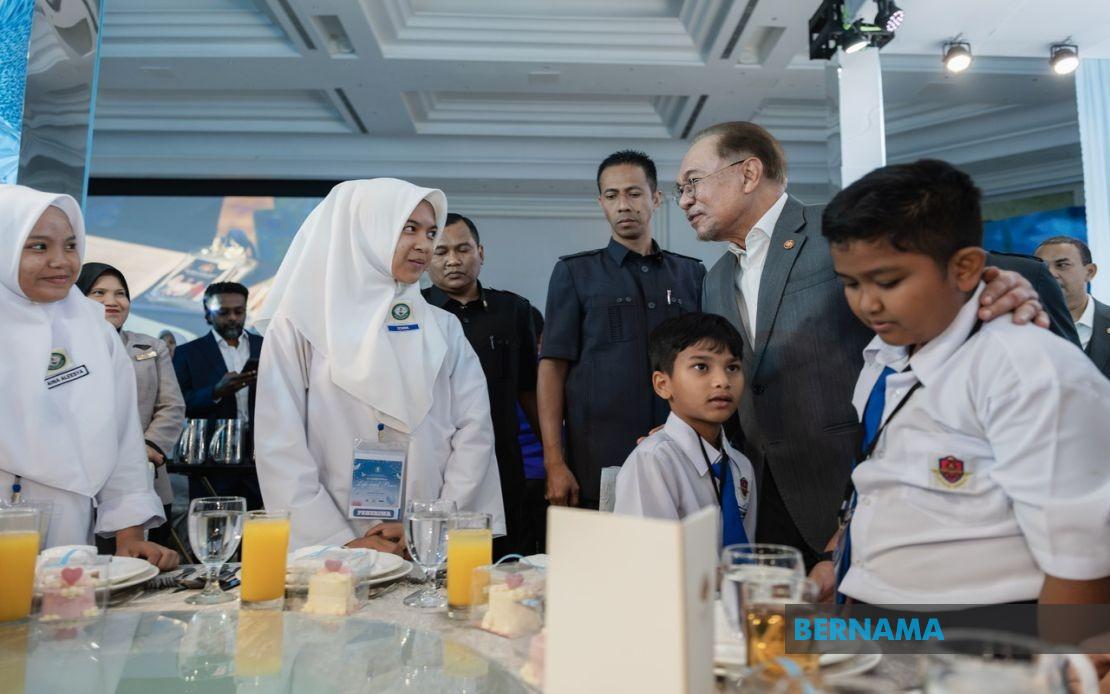
Prime Minister Datuk Seri Anwar Ibrahim has called for a more balanced approach to childhood development, arguing that schools must nurture ethical character alongside intellectual growth. At the "Celebration of Life and Peace" event held today in Kuala Lumpur and Putrajaya, he emphasised to an audience of 700 pupils from 47 participating schools that intelligence without moral grounding serves little purpose in building a cohesive society.
Anwar's remarks zeroed in on a critical gap in contemporary education discourse. While Malaysian schools have long prioritised academic metrics as measures of success, the Prime Minister pointedly questioned the value of scholastic achievement when detached from ethical conduct. He framed the question directly to the young listeners present, asking them to reflect on the true purpose of formal education beyond examination results and institutional rankings. His intervention touches upon a growing concern among educators and policymakers about the psychological and social costs of an overly competitive academic environment.
The bullying problem in Malaysian schools remains a significant challenge facing the education system. Anwar explicitly named this as a behaviour that threatens not only the immediate wellbeing of victims but also the long-term trajectory of perpetrators themselves. By framing bullying as ultimately self-destructive rather than merely harmful to others, the Prime Minister attempted to reframe the issue in terms that might resonate with young people—that such conduct jeopardises their own futures and their standing in society. This approach recognises that many adolescents need motivation rooted in self-interest to modify problematic behaviour.
Anwar made a direct appeal to the children in attendance, positioning himself as a concerned elder figure and asking them to make personal commitments regarding academic diligence, respect for educators, and filial piety. This rhetorical strategy—framing his appeal as a request rather than a demand—reflects evolving perspectives on youth engagement and motivation. The Prime Minister's willingness to speak directly to young people rather than only to authority figures signals an acknowledgement that children themselves are stakeholders in the social contract that governs school environments and community safety.
The event itself served as a practical demonstration of the values Anwar articulated. Organised by the ERM Foundation, it brought together hundreds of schoolchildren to mark their birthdays collectively, transforming what might typically be individual or family celebrations into a communal occasion. The foundation's founder, Xin'er, explicitly contextualised the gathering as an opportunity to affirm the dignity and worth of every child, particularly those whose circumstances might otherwise prevent them from experiencing birthday celebrations. This framing underscores an inclusive vision of childhood and belonging that extends beyond academic performance metrics.
Xin'er's remarks added another dimension to the day's messaging by introducing the concept of structural inequality in childhood experiences. Her observation that many children lack access to meaningful birthday celebrations due to illness or economic hardship reflects the socioeconomic disparities that shape early development across Malaysia. By bringing disadvantaged children into a supportive community setting, the foundation demonstrates practical commitment to the values of kindness and solidarity that Anwar advocated verbally. This alignment between principle and action carries particular weight in the Malaysian context, where socioeconomic divides often correlate with educational outcomes and social mobility.
The distribution of RM500 cash assistance to each participating child represents not merely a material benefit but a symbolic affirmation of investment in young people. In a country where household income remains a significant determinant of educational access and extracurricular opportunities, such direct financial support can meaningfully expand possibilities for economically disadvantaged students. The accompanying feast and entertainment programme similarly acknowledged that wholesome development encompasses not only academic instruction but also joy, community participation, and creative expression.
Anwar's attendance, together with his wife Datuk Seri Dr Wan Azizah Wan Ismail and his political secretary Datuk Azman Abidin, elevated the event's significance beyond a charitable initiative to a statement of governmental priority. The visible presence of Malaysia's leading political figures at a children's celebration sends a message about what the administration values and prioritises. For an audience of young Malaysians, such visibility translates into recognition that their wellbeing and moral development constitute matters of national concern rather than purely private or institutional responsibility.
The timing and scope of this intervention reflects broader anxieties within Malaysian society about the trajectory of youth development. With rising reports of cyberbullying, school violence, and mental health crises among adolescents, policymakers across political and social sectors have begun examining whether existing educational frameworks adequately address the psychological and emotional needs of students. Anwar's public statements acknowledge these concerns and position government as willing to engage in dialogue about holistic child development rather than remaining focused exclusively on economic competitiveness and examination results.
The emphasis on respect for teachers and parental love that Anwar articulated also carries resonance within Malaysian cultural contexts where intergenerational hierarchy and filial duty traditionally constitute core social values. By grounding his appeal in these established cultural frameworks, he frames the rejection of bullying and the cultivation of kindness not as external impositions or Western influences but as continuous with Malaysia's own traditions of social harmony and respect for authority. This cultural localisation strengthens the persuasive power of his message within diverse Malaysian communities.
Moving forward, the implications of Anwar's statements extend beyond the immediate context of a single event. His public endorsement of character development as equivalent in importance to academic achievement could influence educational policy conversations, school curricula decisions, and resource allocation within the Ministry of Education. Whether this rhetorical emphasis translates into substantive curricular reforms, teacher training initiatives, or anti-bullying programmes remains to be seen, but the Prime Minister's visibility on this issue establishes it as a matter requiring executive attention.
The challenge facing Malaysian education stakeholders now involves operationalising the values that Anwar articulated. Moving from aspirational statements to embedded institutional practices requires sustained commitment from parents, educators, school administrators, and policymakers. The participation of multiple government officials and the ERM Foundation's organisational capacity suggest that at least some infrastructure exists to translate these principles into concrete programmes. However, scaling such initiatives across Malaysia's diverse school system, from urban metropolitan centres to rural communities, will require systematic planning and resource commitment beyond episodic celebratory events.

