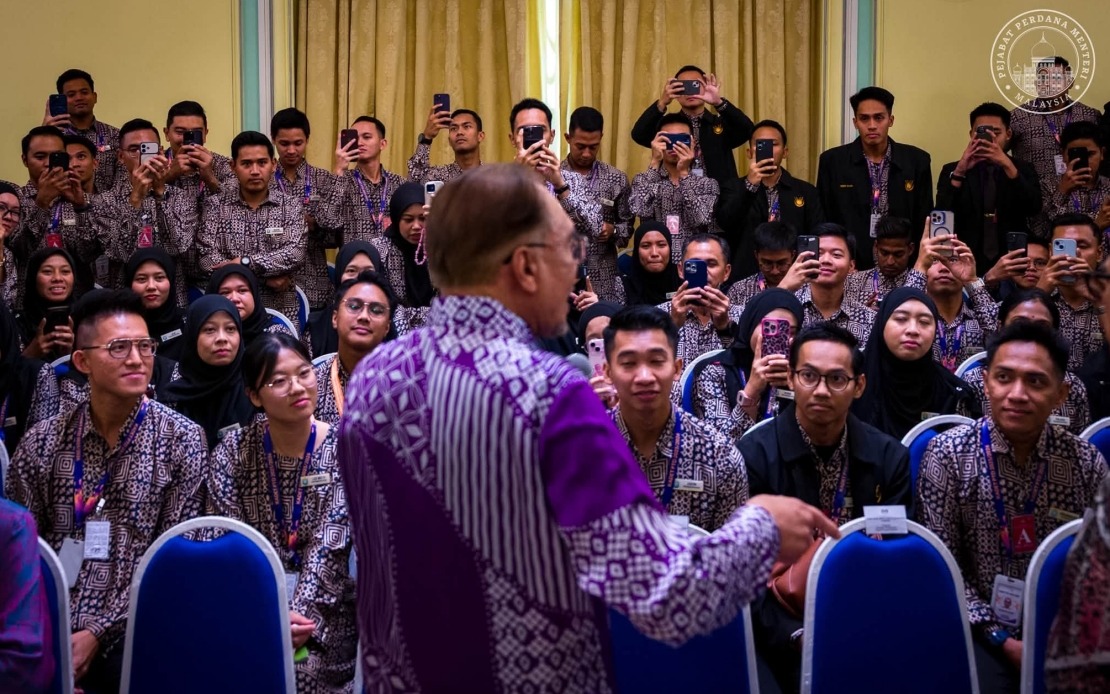
Prime Minister Datuk Seri Anwar Ibrahim has delivered a pointed message to Malaysia's administrative elite, insisting that those serving in the civil service must combine steadfast ethical principles with a willingness to adapt to changing circumstances. Speaking during an engagement with cadets from the Administrative and Diplomatic Service undergoing advanced training in public management, Anwar outlined what he views as the essential qualities required of modern government workers. The encounter, held at his Putrajaya office on July 16, underscored the administration's intent to reshape bureaucratic culture as part of broader governance reforms.
The Prime Minister's remarks centred on the proposition that public service represents far more than a career path or administrative function. Instead, he characterised it as a calling that demands practitioners place collective wellbeing and national advancement ahead of personal or departmental interests. This framing reflects a persistent challenge facing Malaysia's bureaucracy: reconciling institutional inertia with the need for responsive, citizen-centric governance. Anwar's emphasis on this tension suggests growing frustration within the government about resistance to reform within traditionally conservative administrative structures.
Integrity constitutes the foundational pillar of Anwar's vision for the civil service. In contexts where public institutions face recurring scrutiny over corruption, accountability gaps, and mismanagement, the Prime Minister's repeated stress on ethical conduct signals both aspiration and acknowledgement of systemic vulnerabilities. For Malaysia, where scandals involving public officials have periodically shaken confidence in state institutions, reinforcing integrity standards among rising administrative cohorts serves both practical and symbolic purposes. It announces to the public that leadership takes ethical renewal seriously, while simultaneously establishing performance benchmarks for upcoming career civil servants who will shape departmental cultures in coming decades.
Equally significant is Anwar's insistence that efficiency must accompany integrity in civil service operations. Malaysian government agencies have long grappled with perceptions of sluggish decision-making, cumbersome procedural requirements, and ineffective resource deployment. By coupling efficiency with ethical conduct, the Prime Minister rejects a false choice sometimes present in bureaucratic discourse—the notion that proper oversight necessarily produces slowness, or that speed demands corner-cutting. Instead, he proposes that well-trained, principled administrators can simultaneously operate with both rigour and responsiveness, delivering services that respect both rule of law and citizen expectations for timely outcomes.
The concept of embracing change represents perhaps the most challenging element of Anwar's message, particularly within a civil service shaped by decades of hierarchical tradition and established procedures. Malaysian government institutions have historically resisted organisational transformation, partly reflecting cultural preferences for stability and partly reflecting vested interests in maintaining existing power structures. By targeting PTD cadets—the cream of administrative recruitment who will occupy senior positions within two decades—Anwar attempts to embed change-readiness into leadership DNA before institutional consolidation occurs. This generational approach recognises that structural transformation often requires turnover at the top to overcome institutional resistance.
The timing of these remarks carries additional weight within Malaysia's contemporary political context. The government has prioritised administrative reform as central to its broader agenda of institutional renewal and anti-corruption efforts. Anwar's direct engagement with rising administrative leaders signals that such reform remains an executive priority rather than a rhetorical commitment. By meeting with PTD cadets in his capacity as Prime Minister, he elevates the importance of their professional development and signals that their generation will be expected to function as change agents within their respective ministries and agencies.
For Malaysian observers and civil service professionals, Anwar's intervention raises important questions about implementation mechanisms. Articulating values such as integrity and change-readiness differs substantially from institutionalising them through reformed recruitment processes, revised performance incentives, and modified organisational structures. The Postgraduate Diploma in Public Management programme itself represents one avenue for embedding such principles through formal training, yet real transformation requires alignment across multiple institutional systems—from personnel evaluation frameworks to budget allocation mechanisms to interagency coordination protocols.
The regional dimension of these reforms warrants consideration as well. Across Southeast Asia, governments grapple with similar bureaucratic challenges: balancing stability with adaptation, maintaining ethical standards amid competing pressures, and fostering professional public services capable of delivering on development ambitions. Malaysia's specific approach to these challenges, particularly under the current administration, offers instructive lessons for neighbouring states similarly attempting administrative modernisation. The emphasis on principled leadership resonates with concerns throughout the region about governance quality and public sector effectiveness.
Looking forward, the substance of Anwar's message to administrative cadets will be tested through concrete policy outcomes and institutional behaviour. Civil servants will ultimately judge the government's commitment to change and integrity through lived experience—observing whether resources flow to those championing reform, whether ethical breaches face consistent consequences regardless of political connection, and whether efficiency gains result in improved service delivery rather than simply accelerating existing dysfunction. The cadets themselves, as they progress through their careers, will either embody and propagate these principles or gradually accommodate themselves to existing institutional cultures and power dynamics, as previous cohorts have often done.

