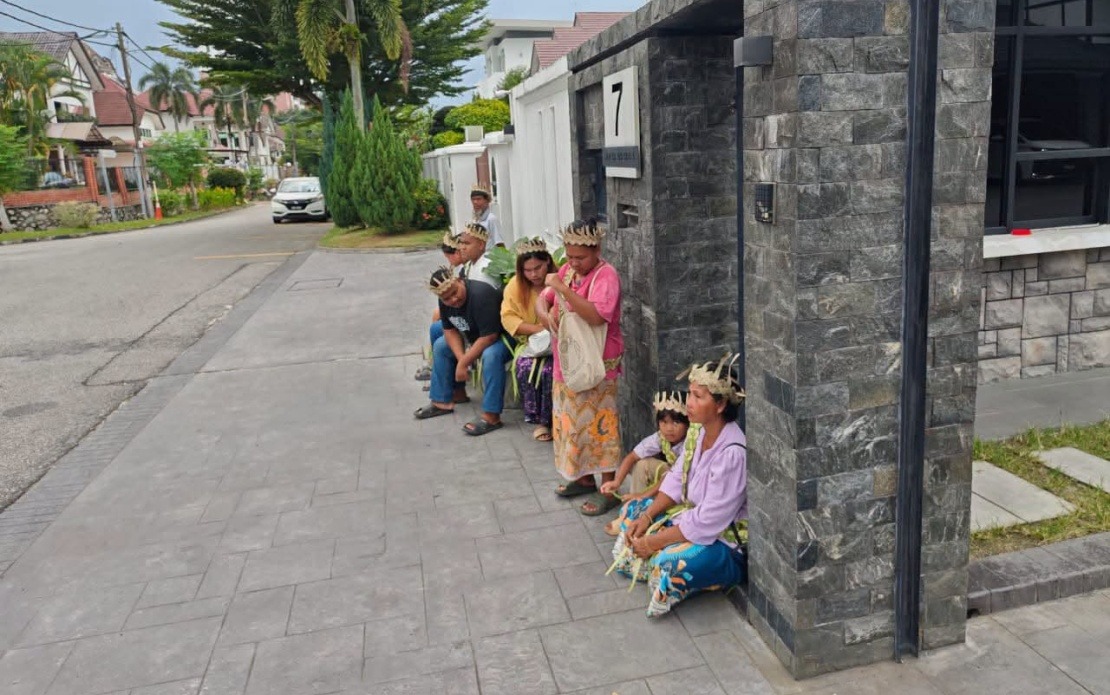
Prime Minister Datuk Seri Anwar Ibrahim has pledged to escalate the land ownership dispute affecting the Orang Asli community of Kampung Sungai Cot, Maran, Pahang to the state government for urgent resolution. The commitment emerged following direct engagement with representatives from the indigenous settlement, who visited his residence to apprise him of their grievances. The Prime Minister acknowledged both the complexity of the land dispute and the parallel concerns about detention of community members, signalling that the federal government is treating the matter as a priority requiring high-level intervention.
In remarks posted on his social media account, Anwar confirmed that he had conducted telephone discussions with the Orang Asli representatives after their in-person meeting. He underscored his understanding of the multifaceted challenges confronting the community, which extend beyond the core land rights issue to encompass the detention of three residents from the village. This acknowledgement reflects growing political pressure surrounding indigenous land disputes, a perennial source of tension in Malaysia's rural regions where customary land claims often clash with state authorities' administrative determinations.
On the matter of detention, Anwar disclosed that he had received confirmation from law enforcement that the three previously detained Orang Asli individuals had been released. The timing of this release—disclosed in the Prime Minister's public statement—suggests coordination between federal and enforcement agencies, potentially indicating intervention at the highest levels of government to de-escalate the situation. For the Orang Asli community, such developments carry significant implications, as police detention has historically been a contentious point in indigenous rights discourse in Malaysia, often sparking accusations of heavy-handedness when applied to land protests.
The Prime Minister's intervention carries particular significance given the political sensitivity surrounding indigenous affairs in Pahang, a state with substantial Orang Asli populations scattered across its interior regions. The Maran district, where Kampung Sungai Cot is located, encompasses territories historically inhabited and relied upon by indigenous groups, making land disputes in this area emblematic of broader conflicts between state development priorities and indigenous land tenure systems. Anwar's commitment to engage the state government directly signals a federal override of local-level deadlock and reflects the government's recognition that such disputes require coordinated resolution across administrative levels.
The Prime Minister explicitly cautioned all stakeholders against exploiting the Kampung Sungai Cot situation for political advantage, a warning that reveals awareness of how indigenous issues have occasionally been weaponised in local and state political contestation. His call for restraint and adherence to lawful processes represents an attempt to frame the dispute within a governance paradigm rather than allowing it to devolve into a flashpoint for political mobilisation. This rhetorical positioning seeks to depoliticise the matter while simultaneously elevating it to a level where solutions can be crafted through institutional channels rather than confrontation.
The emphasis on fair, prudent, and legally compliant solutions reflects the tension inherent in addressing Orang Asli land claims within Malaysia's formal legal architecture. The Orang Asli, constituting less than one percent of Malaysia's population, operate within a distinct legal framework that includes the Orang Asli Act of 1954, which provides for reservations but has historically been administered in ways that restrict indigenous land rights rather than secure them. Anwar's invocation of legal frameworks thus implicitly acknowledges that any durable solution must navigate this complex institutional landscape, where customary claims must be reconciled with statutory provisions and state administrative prerogatives.
For indigenous communities across Southeast Asia, the Prime Minister's public engagement on the Kampung Sungai Cot matter carries resonance beyond Pahang's boundaries. The region has witnessed intensifying conflicts over forest lands, development projects, and resource extraction, with indigenous groups increasingly mobilising for recognition of land rights. Malaysia's handling of cases such as this one shapes perceptions of the federal government's commitment to indigenous welfare and influences the strategic calculations of activist networks and community organisations operating across the region.
The meeting between Anwar and the Orang Asli representatives also underscores a shift in how indigenous grievances are being channelled within Malaysia's political system. Direct access to the Prime Minister's residence, followed by public acknowledgement of their concerns, represents a departure from earlier periods when such issues were often confined to lower administrative echelons or adjudicated through technical bureaucratic processes. This elevation of indigenous concerns to the apex of executive authority suggests that political competition may be creating incentives for competing leaders to demonstrate responsiveness to marginalised communities.
Moving forward, the outcome of Anwar's promised engagement with the Pahang state government will be scrutinised by indigenous advocacy networks and civil society organisations monitoring Malaysia's record on indigenous rights. The resolution will likely set precedents for how similar disputes are addressed, particularly regarding the balance struck between development objectives and indigenous land tenure security. Should the federal intervention result in tangible protection of indigenous land claims or fair compensation mechanisms, it could establish a more robust template for addressing Orang Asli grievances nationally. Conversely, if the process stalls or delivers outcomes perceived as favourable to development interests over indigenous rights, it may further entrench scepticism about the efficacy of institutional channels for addressing indigenous land disputes.

