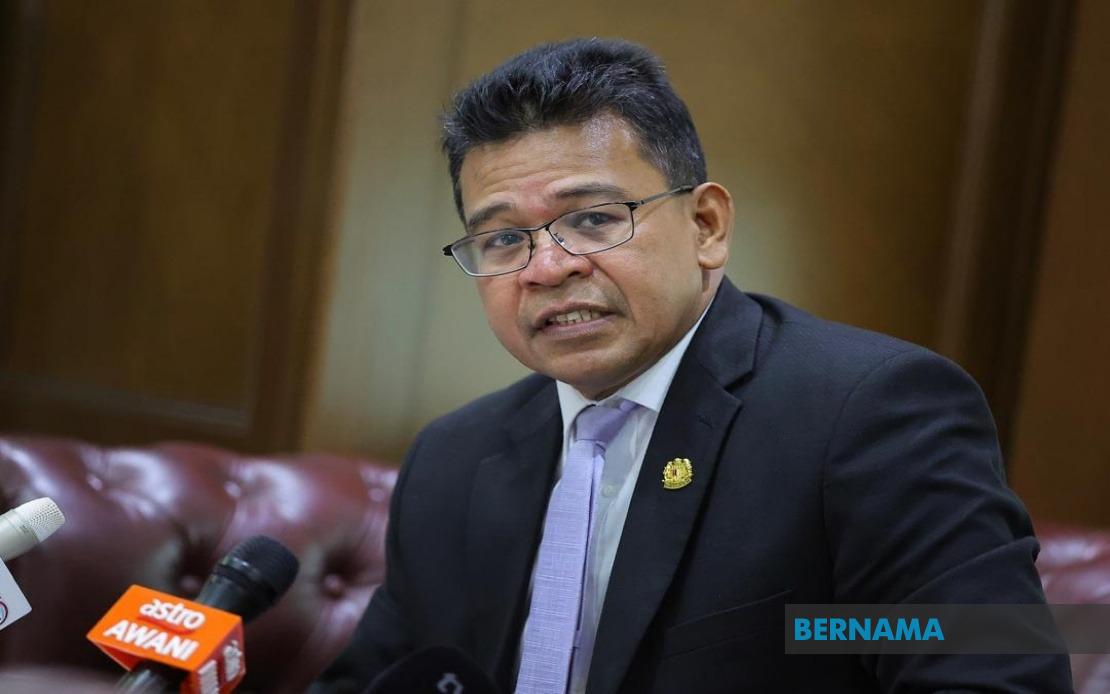
Prime Minister Datuk Seri Anwar Ibrahim will undertake a two-day working visit to Brunei beginning tomorrow, August 21, to participate in the 27th Annual Leaders' Consultation (ALC-27), Malaysia's most significant bilateral engagement mechanism with its smaller neighbour. The visit underscores the continued importance both nations place on their relationship, which has been formally cultivated since 1984 and remains one of Southeast Asia's more stable cross-border partnerships.
According to Malaysian High Commissioner to Brunei Datuk Mohd Aini Atan, the annual leaders' consultation represents the apex of bilateral diplomacy between the two countries. This institutional framework allows the heads of government to take stock of cooperative progress, address emerging challenges, and chart the direction of relations across multiple sectors. The consultation format reflects how Malaysia and Brunei, despite their vastly different sizes and economic profiles, maintain channels for substantive dialogue at the highest political level.
During the two-day engagement, Anwar and Sultan Hassanal Bolkiah will review the trajectory of Malaysia-Brunei relations and examine ongoing cooperation initiatives. Beyond bilateral matters, both leaders are expected to discuss wider regional and international questions of shared concern, ranging from maritime security and economic integration within ASEAN to responses to global developments affecting Southeast Asia's strategic interests. Such broad-ranging consultations demonstrate how bilateral forums increasingly serve as venues for regional policy coordination.
A significant outcome of the visit will be the signing of a Memorandum of Understanding on disaster management cooperation between the two nations' relevant ministries. This reflects growing recognition across Southeast Asia that transboundary challenges such as natural disasters, environmental degradation, and public health emergencies require coordinated responses. For Malaysia and Brunei, situated in a region prone to flooding, typhoons, and haze episodes, formalising disaster management protocols carries practical importance for protecting citizens and minimising economic disruption.
Anwar's delegation reflects the political weight Malaysia attaches to the engagement, comprising Foreign Minister Datuk Seri Mohamad Hasan alongside the chief ministers of Sarawak and Sabah, Tan Sri Abang Johari Tun Openg and Datuk Seri Hajiji Noor respectively. The inclusion of both East Malaysian leaders signals that the consultation addresses not only federal concerns but also matters affecting Malaysia's states with direct exposure to Brunei, particularly in maritime boundaries, resource management, and sub-regional development. Minister of Investment, Trade and Industry Datuk Seri Johari Abdul Ghani's presence indicates that economic and commercial dimensions will feature prominently in discussions.
Preceding the main consultation, Foreign Minister Mohamad Hasan will co-chair the 27th Malaysia-Brunei Exchange of Letters (EOL-27) Implementation Meeting on August 21 with Brunei's Second Minister of Foreign Affairs, Datuk Seri Setia Erywan Mohd Yusof. This preparatory session allows technical officials and senior diplomats to review progress on existing bilateral agreements and identify any implementation bottlenecks. The EOL mechanism effectively functions as the working-level engine driving the broader strategic consultation, ensuring that commitments made by leaders translate into concrete outcomes.
Trade figures illustrate the economic dimension underpinning the relationship, though they also reveal asymmetries characteristic of Malaysia-Brunei commerce. In 2025, total bilateral trade reached RM5.86 billion (USD 1.37 billion), with Malaysian exports to Brunei valued at RM4.20 billion (USD 0.98 billion) substantially exceeding imports from Brunei at RM1.66 billion (USD 0.39 billion). This reflects Brunei's reliance on Malaysian manufactured goods, agricultural products, and services, while Malaysia imports primarily energy resources and petroleum-derived products from its neighbour. For the first half of 2026, bilateral trade totalled RM2.38 billion (USD 0.6 billion), suggesting the relationship remains economically robust despite global trade uncertainties.
The consultation also provides an opportunity to address long-standing issues affecting both nations, including maritime boundary demarcation in the South China Sea, management of shared river systems, and cooperation on regional security matters. Malaysia and Brunei both maintain interests in maintaining freedom of navigation and upholding international law in contested waters, positioning them as natural partners in advocating for rules-based approaches to regional disputes. Additionally, as ASEAN members, both nations work together within the bloc to advance collective positions on economic integration, climate action, and dialogue with major powers.
From a Malaysian perspective, the Brunei visit reflects the government's commitment to deepening ties with immediate neighbours as a cornerstone of its foreign policy. This approach emphasises that robust sub-regional relationships create stable foundations for wider regional engagement and provide platforms for addressing transnational challenges. The inclusion of Sarawak and Sabah leaders indicates that Malaysia views its relationship with Brunei as particularly relevant to East Malaysian interests, whether concerning maritime development, border administration, or resource cooperation in the Sulu and Celebes Seas region.
Beyond the formal agenda, the consultation serves a confidence-building function in an era of shifting regional alignments and great power competition. By maintaining regular, institutionalised engagement at the highest levels, Malaysia and Brunei demonstrate their commitment to predictable bilateral relations and regional stability. For Malaysian policymakers, such consistency is valuable as the country navigates complex relationships with larger powers and manages its ASEAN chairmanship responsibilities. The ALC-27 thus represents both continuity in Malaysia-Brunei relations and an affirmation of shared commitment to regional architecture based on mutual respect and peaceful resolution of differences.

