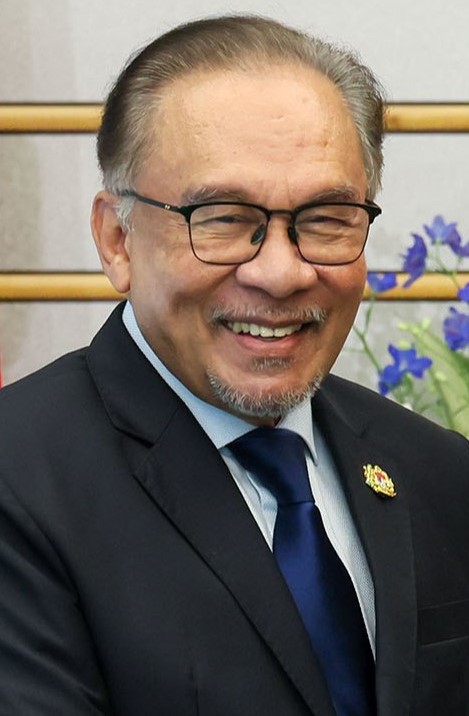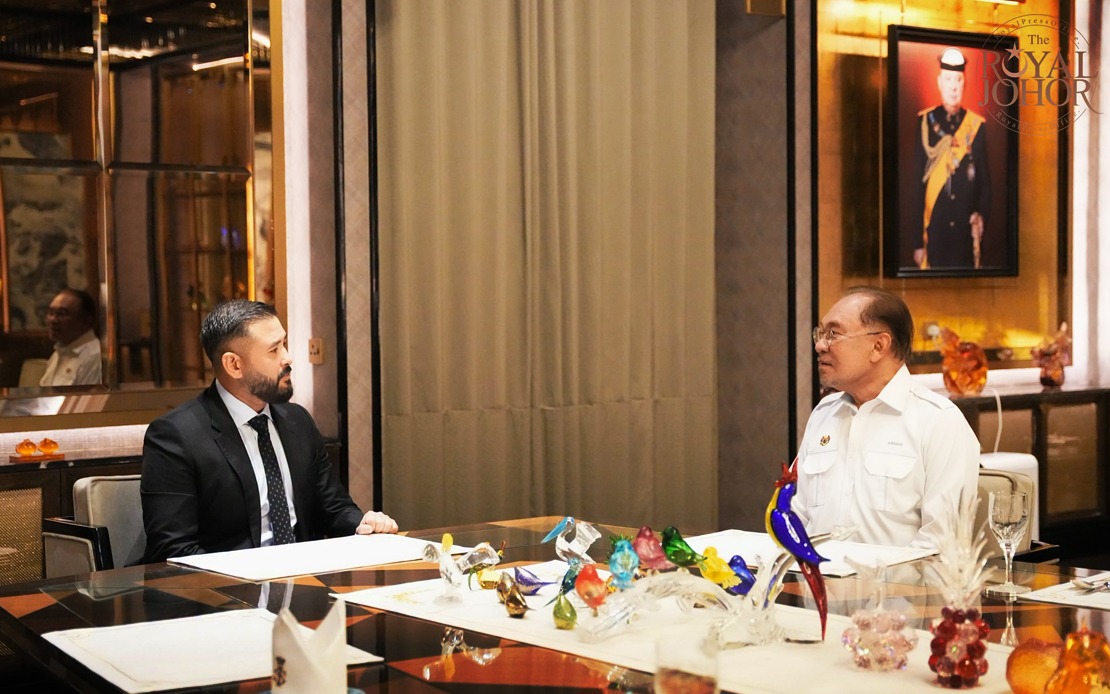
Prime Minister Datuk Seri Anwar Ibrahim has publicly expressed his appreciation to Tunku Mahkota Ismail, the Regent of Johor, for receiving him in a gesture that the premier framed as an important signal about maintaining institutional respect during electoral processes. Speaking at a Pakatan Harapan candidate announcement ceremony in Tangkak on June 22, Anwar positioned the recent audience as evidence of his administration's principled approach to governance and intergovernmental relations.
The timing of Anwar's remarks proved significant, delivered as his coalition prepared to contest the 16th Johor state election. By highlighting his meeting with the Regent, the Prime Minister sought to preempt accusations that his government maintains poor relations with the state's royal institution—a potential liability in Johor, where the Sultan wields substantial influence over both the monarchy and state politics. Such meetings between the federal leadership and state royalty carry symbolic weight in Malaysian politics, often interpreted as indicators of governmental legitimacy and mutual respect.
Anwar used the occasion to deliver a pointed message to rival political factions, implicitly rebuking opponents who he suggested invoke royal names and royal prestige without authorization while simultaneously avoiding substantive policy debate. His criticism targeted what he characterized as selective invocation of monarchical authority by those lacking the courage to engage in direct political contestation. This rhetorical maneuver allowed him to claim the moral high ground by positioning his government as the institution genuinely committed to preserving royal neutrality and dignity.
Central to the Prime Minister's remarks was an emphatic warning against political parties instrumentalizing Malaysia's royal institutions for electoral advantage. Anwar stressed that all parties, particularly political organizations, must refrain from drawing the monarchy into campaign activities or using royal figures to enhance their political standing. This principle addresses a persistent tension in Malaysian politics: the constitutional position of the Malay Rulers as symbols of national unity theoretically independent from partisan competition, yet inevitably subject to political interpretation and occasional exploitation.
The consultation between Anwar and the Johor Regent also served practical purposes beyond symbolism. During their audience, the Prime Minister utilized the opportunity to brief the Regent on federal government initiatives benefiting Johor's residents, thereby demonstrating that the federal administration remains attentive to state-level development priorities. Such briefings allow prime ministers to build personal rapport with state rulers while framing their government's record as one of tangible service delivery. For Johor, which historically has maintained distinct political leanings and a degree of autonomy within the federation, such direct communication between federal and state leadership carries particular importance.
Anwar articulated a broader philosophy regarding his government's relationship with Malaysia's royal institution, one emphasizing consultation, dialogue, and deference to royal counsel regardless of whether such advice aligns with government positions. He described a pattern of respectful disagreement, wherein his administration presents counterarguments to royal observations but ultimately accepts the sultans' guidance in good faith. This stance represents a deliberate contrast to perceptions that previous administrations either ignored or insufficiently engaged with the Malay Rulers on matters of national importance.
The Prime Minister's approach extends to his relationship with His Majesty Sultan Ibrahim, the King of Malaysia. Anwar highlighted that his government maintains an open channel of communication with the Crown, presenting its viewpoints while remaining receptive to royal directives. He suggested that disagreements between the executive and the monarchy need not damage relationships provided both institutions commit to consultation and explanation. This framework theoretically allows governments to pursue their agendas while maintaining the appearance of deference to constitutional monarchy.
Packaging this message required careful positioning, particularly given that Pakatan Harapan operates in a competitive electoral environment where state-level contests remain fiercely contested. By demonstrating cordial relations with the Johor Regent, Anwar signaled that his coalition respects the institutional boundaries separating electoral politics from the established order of hereditary rulers. Such respect carries weight among traditionalist voters who regard the monarchy as a stabilizing force requiring protection from partisan exploitation.
The presence of senior coalition partners at the candidate announcement—including DAP secretary-general Anthony Loke Siew Fook and Amanah president Datuk Seri Mohamad Sabu—reinforced the multiethnic and multi-religious character of the ruling alliance. This coalition composition matters for Johor's electoral mathematics, where diverse constituencies require reassurance that the federal government operates as a inclusive administration rather than one dominated by any single communal interest. The Regent's willingness to meet with Anwar, when amplified through public acknowledgment, could positively influence perceptions among voters concerned about federal governance stability.
For Malaysia's broader political system, Anwar's emphasis on royal consultation reflects institutional adaptation during a period when the monarchy's political role has attracted renewed scrutiny. Multiple constitutional crises in recent years tested the limits of royal authority and executive-monarchy relations. By explicitly committing his government to extensive consultation with the Malay Rulers and framing such dialogue as essential to sound governance, Anwar positions his administration as one that treats the institutional monarchy as a genuine partner in national affairs rather than a ceremonial vestige.
The Johor context adds further complexity, given that state elections historically determine the balance of power within particular regions and occasionally influence federal politics through state-level successes or failures. A government demonstrating harmonious relations with Johor's Sultan and Regent enters that contest with an advantage in legitimacy, particularly among voters who view royal approbation as validation of political fitness. Conversely, opposition parties must work harder to demonstrate comparable regard for institutional norms.
Anwar's public gratitude toward the Johor Regent, ultimately, reflects a calculated effort to merge symbolic politics with substantive governance claims. By highlighting federal-state cooperation and his administration's commitment to consulting the monarchy, the Prime Minister attempts to preempt electoral vulnerabilities while positioning Pakatan Harapan as the guardian of institutional respect and constitutional propriety. Whether such messaging influences voter behavior in Johor's state election will depend substantially on how voters weigh institutional relationships against economic performance, policy delivery, and the local personalities leading competing campaigns.