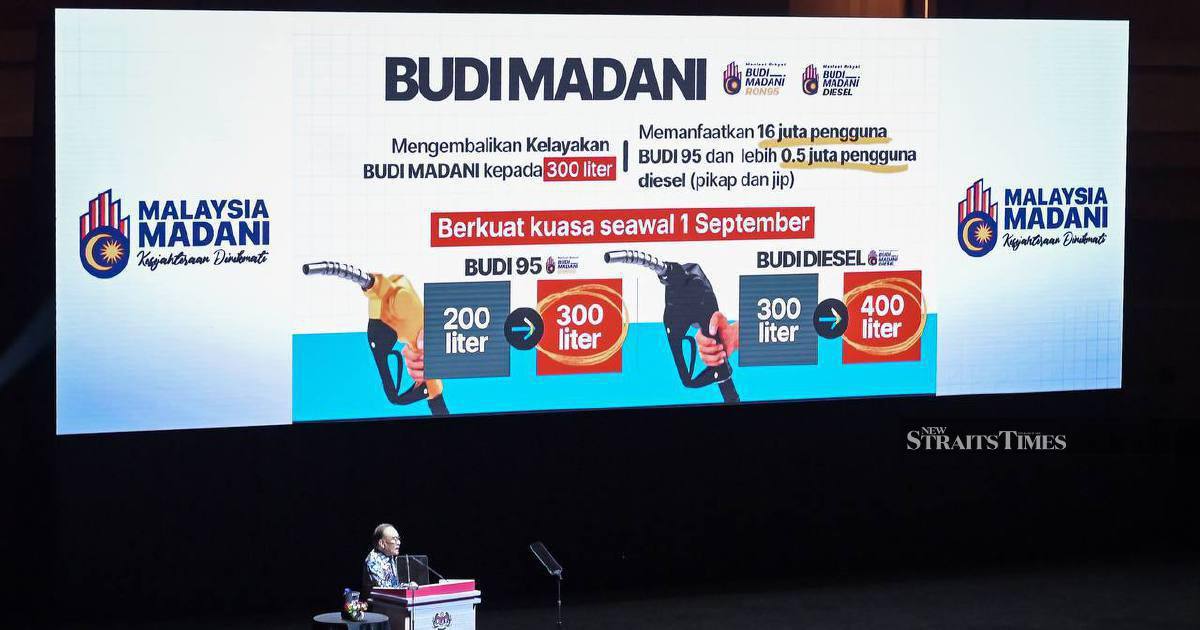
Prime Minister Datuk Seri Anwar Ibrahim has announced a six-point relief package designed to cushion Malaysians against mounting cost-of-living pressures whilst simultaneously supporting business operations and enhancing public service delivery. The announcement, made during the National Day Eve address in Putrajaya, arrives at a critical juncture as households across the nation grapple with inflationary headwinds and businesses face persistent operational challenges. The timing underscores the government's commitment to addressing economic anxieties before the presentation of the 2027 Budget scheduled for October.
Cost-of-living concerns have emerged as one of the most pressing issues confronting ordinary Malaysians, with transportation, food, utilities, and housing consuming an increasingly larger share of household budgets. For many middle and lower-income families, these mounting expenses have squeezed disposable income and forced difficult choices about essential spending. The government's decision to prioritise immediate relief measures reflects recognition that delayed action risks deepening public frustration and widening economic disparities across income groups. By announcing concrete steps before the formal budget process, Anwar signals that the administration is actively listening to citizen grievances and preparing responsive policy interventions.
The package targets multiple stakeholder groups simultaneously, acknowledging that cost-of-living relief cannot be achieved through narrow, single-sector approaches. Rather, addressing affordability pressures requires coordinated action spanning consumer support, business competitiveness, and the quality of public services that households depend upon. This multi-pronged strategy reflects an understanding that household financial stress stems from interconnected sources—rising goods prices, stagnant wages, inadequate public infrastructure, and shrinking business margins that threaten employment stability. Businesses struggling with operational costs may respond by cutting workforce numbers or limiting wage growth, thereby worsening household circumstances.
The announcement's positioning ahead of the budget process carries particular significance for Malaysian policymaking. The 2027 Budget will represent the government's comprehensive fiscal blueprint, incorporating revenue projections, expenditure priorities, and structural reforms. By introducing relief measures now, the government demonstrates interim commitment whilst building momentum toward more substantial interventions that the October budget will formalise. This approach allows time for public consultation, legislative preparation, and detailed implementation planning that more significant fiscal measures require. It also provides citizens with tangible relief whilst longer-term budget negotiations proceed within parliamentary and cabinet frameworks.
For Malaysian businesses, including small and medium enterprises (SMEs) that form the economy's backbone, cost pressures have become increasingly acute. Supply chain disruptions, higher logistics expenses, elevated financing costs, and wage pressures have compressed operating margins and reduced investment capacity. Many business owners have resorted to raising prices, creating a feedback loop that accelerates inflation and intensifies consumer hardship. Government support measures targeting business competitiveness—whether through tax relief, subsidised inputs, or financing assistance—can help break this cycle by enabling enterprises to maintain reasonable prices whilst preserving profitability and employment opportunities.
Public service enhancement forms a crucial element within the broader cost-of-living framework that extends beyond direct household assistance. When schools lack adequate resources, public hospitals face staff shortages, public transport systems prove unreliable, or road infrastructure deteriorates, households must supplement government services with private expenditures. A student whose school lacks sufficient facilities may require expensive tuition; a patient waiting months for public healthcare may resort to private medical services; a commuter facing unpredictable public transport may purchase a private vehicle. Strengthening public services therefore reduces hidden household costs whilst improving overall quality of life and equality of opportunity.
The October budget timeline also reflects Malaysia's fiscal calendar and parliamentary conventions, positioning this preliminary package as a bridge measure. Announcing six immediate actions signals government responsiveness without requiring the comprehensive fiscal reorientation that a major budget rewrite involves. This staged approach allows the government to test policy effectiveness, gather stakeholder feedback, and refine approaches before embedding them into formal budget allocations. It also demonstrates leadership agility and problem-solving orientation during an economically sensitive period.
Regionally, Malaysia's approach carries implications across Southeast Asia, where multiple economies face similar cost-of-living pressures driven by global commodity prices, supply chain realignments, and post-pandemic economic adjustments. Anwar's announcement reflects a broader developing-world challenge: balancing fiscal responsibility with the political imperative to address immediate citizen needs. How the Malaysian government structures these measures—whether through direct transfers, price controls, subsidies, or structural reforms—may influence policy discussions across the region.
The announcement also carries implications for the government's broader economic narrative heading into elections and budget deliberations. By proactively addressing cost-of-living concerns, the administration positions itself as responsive and solution-oriented, potentially bolstering public confidence in its economic stewardship. Conversely, if the six measures prove insufficient or difficult to implement, credibility may suffer. The coming weeks will therefore prove crucial as implementation details emerge and actual impact becomes measurable against public expectations.

