Prime Minister Datuk Seri Anwar Ibrahim is making a swift return to Johor, heading to the Segamat district for a packed schedule of community engagement activities. The visit marks his second appearance in the state within 72 hours and underscores the government's intensified presence in the region ahead of the Johor state election scheduled for July 11. Located roughly 200 kilometres south of Johor Bahru, Segamat represents a critical battleground as the coalition continues to mobilise voters and establish ground-level connections with constituents.
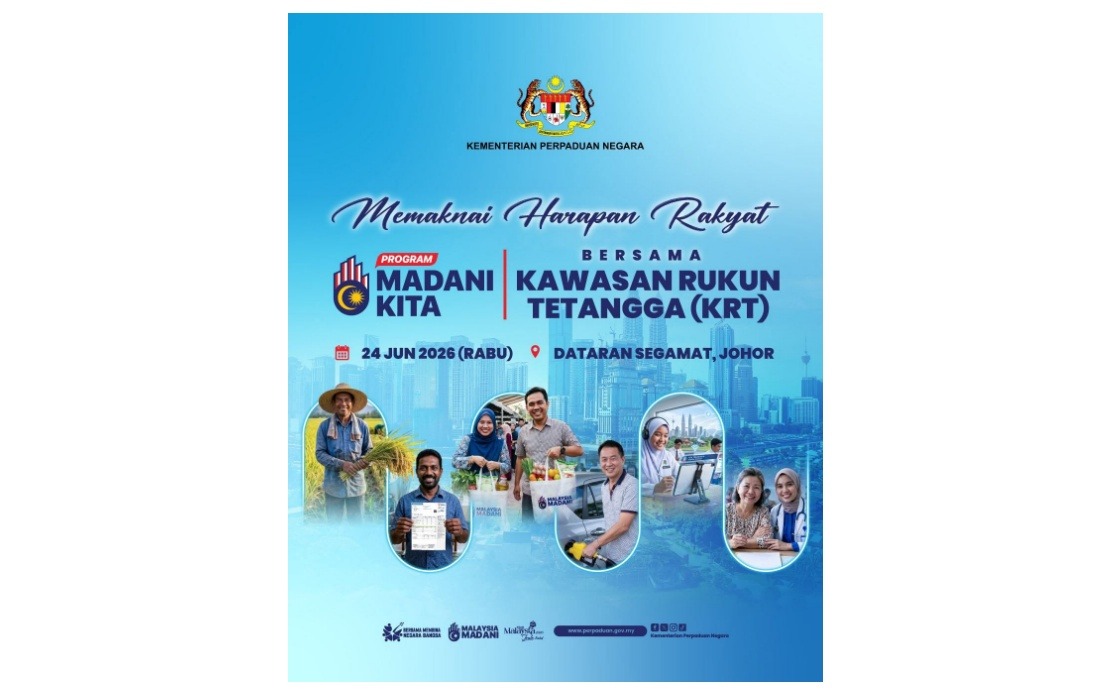
The Prime Minister's itinerary reflects a deliberate two-pronged approach combining formal institutional engagement with informal grassroots interaction. At 5 pm, Anwar will officially launch the MADANI KITA programme in partnership with the local Rukun Tetangga (KRT) at Dataran Segamat. This initiative represents more than ceremonial politics. MADANI KITA functions as a structured framework designed to nurture inter-community relationships, fortify neighbourhood solidarity across ethnic lines, and disseminate government policies directly to residents through trusted local structures. In Malaysia's diverse social landscape, such platforms carry particular significance as they leverage existing community foundations to build broader political consensus.
The launch follows Anwar's previous engagement in Johor just days earlier, when he announced the full Pakatan Harapan slate for the 56 state seats at an event in Bukit Gambir, Tangkak. That declaration revealed the coalition's internal power-sharing arrangements: PKR fields 20 candidates, Amanah 19, and DAP 17. This composition reflects ongoing negotiations within the ruling alliance and signals the relative strengths each component party commands within PH's organisational hierarchy. The geographic spread of these announcements, with the candidate declaration in Tangkak followed by community programming in Segamat, demonstrates a methodical campaign strategy targeting diverse districts and voter demographics.
Beyond the formal MADANI KITA launch, the Prime Minister's agenda includes a more relaxed public engagement. At 6.30 pm, Anwar will participate in the "Jom! Makan Durian" programme at the Yayasan Bazaar site, a casual gathering centred on enjoying local durian, Johor's signature agricultural product. This casual approach carries strategic weight in Malaysian political culture. By participating in informal social settings centred on shared culinary experiences, political leaders demonstrate accessibility and relatability while conducting what amounts to soft campaigning. Such events create opportunities for candid voter conversations in non-confrontational environments, allowing residents to interact with the Prime Minister without the formality of structured political rallies.
The timing of these Segamat activities sits within a compressed electoral calendar. The Election Commission has established June 27 as nomination day, meaning candidates must formally register their candidacies within the week. Early voting has been scheduled for July 7, followed by the general polling day on July 11. This tight timeline compresses the conventional campaign period, requiring political parties to execute mobilisation strategies with heightened intensity. Anwar's personal presence across multiple Johor locations within days reflects the coalition's recognition that leadership visibility directly influences voter perception and turnout, particularly in state elections where local issues and personalities carry outsized importance.
Segamat itself warrants closer examination in the broader Johor political context. The district sits at the intersection of rural and semi-urban interests, encompassing agricultural communities, small manufacturing, and service sectors. Voters here typically exhibit pragmatic orientations toward governance, responding to tangible service delivery rather than ideological appeals. The MADANI KITA focus on strengthening neighbourliness addresses this constituency directly by framing government engagement around improving immediate community welfare and inter-communal harmony. For a coalition government managing diverse stakeholder interests, such messaging provides accessible common ground.
The Prime Minister's sustained focus on Johor reflects the state's strategic importance to national politics. Johor's 56 state assembly seats represent a significant electoral prize, and its direction carries implications for federal coalition stability. A strong performance in the state election would strengthen Anwar's political position and validate PH's governance record among voters. Conversely, underperformance could embolden critics within the coalition and complicate federal-state coordination mechanisms. The state's economic significance as a manufacturing and logistics hub adds another dimension, as voters assess government performance against economic management and employment prospects.
The coalition's candidate distribution across 56 seats reflects careful negotiation between constituent parties. PKR's plurality suggests its positioning as the dominant partner, yet Amanah and DAP's substantial representation signals genuine power-sharing rather than hegemonic control. This balance matters for coalition stability and voter perception of unity. In Johor, where BN retains traditional support networks, the opposition coalition must present itself as a cohesive alternative rather than a fractious alliance. The campaign scheduling and candidate announcements serve both external voter communication and internal coalition management functions.
Community programmes like MADANI KITA and Jom! Makan Durian operate simultaneously as policy implementation and political strategy. While genuinely designed to strengthen neighbourly relations and community bonds, they also create visual narratives of leadership engagement that circulate through social media and community networks. In contemporary Malaysian politics, such dual-purpose events have become standard practice, serving governance objectives while maintaining campaign presence. The informal durian festival, in particular, generates the type of candid imagery and personal interaction moments that resonate across digital platforms and community word-of-mouth networks.
For Malaysian and Southeast Asian observers, this Johor election represents a broader test of coalition governance models. PH's experiment with multi-party collaboration spanning ideological spectrum from centrist PKR to progressive DAP has produced mixed results in recent elections. Johor's outcome may signal whether voters perceive the coalition as stable and effective or unstable and fractious. Given regional trends toward populism and anti-establishment sentiment, how PH performs among Johor's diverse constituencies could offer insights into broader regional electoral dynamics and the viability of centrist coalition strategies in an era of political polarisation.