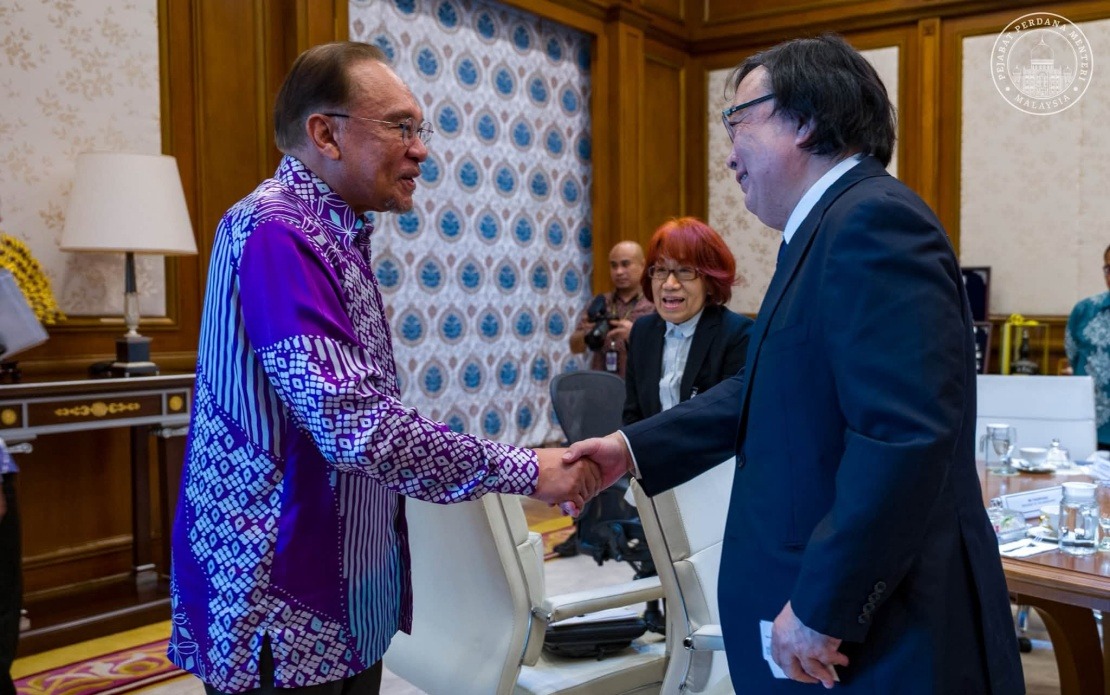
Prime Minister Datuk Seri Anwar Ibrahim received a courtesy visit from Genron NPO President Yasushi Kudo on July 23, marking another step in the deepening dialogue between Malaysia and Japan on regional security and development challenges. The meeting, held in Kuala Lumpur, centred on expanding the Asia Leaders Roundtable as a venue for strategic conversations addressing issues that affect both the Asian region and the wider international community.
The Genron NPO, based in Japan, operates as an independent think tank and non-profit organisation that has established itself as an influential voice in Asian policy discussions. By receiving the organisation's president, Anwar underscored Malaysia's commitment to engaging with intellectual and policy-making circles in Japan beyond formal government channels. This approach reflects a broader Malaysian strategy of nurturing ties with Japanese institutions that help shape Tokyo's regional outlook and strategic priorities.
According to Anwar's account of the meeting shared on Facebook, the discussion reinforced the importance of the Asia Leaders Roundtable as a forum for dialogue. In an era when regional tensions and global uncertainties continue to test stability in Asia, platforms that bring together influential leaders, thinkers and policymakers serve an increasingly vital function. Malaysia's participation in such spaces positions the country as an active participant in shaping the intellectual foundations of regional diplomacy and cooperation.
The Prime Minister took the opportunity to express gratitude for Japan's reception during his official visit to the country in June. This acknowledgment reflects the positive momentum in bilateral relations and suggests that high-level visits between the two nations continue to generate goodwill and strengthen personal connections between leadership circles. Such diplomatic courtesies, while appearing ceremonial, often lay groundwork for more substantive cooperation in trade, defence and technology sectors.
Malaysia's Comprehensive Strategic Partnership with Japan represents one of the most consequential relationships the country maintains in its external affairs. Anwar's emphasis during the meeting on the significance of this partnership indicates that Kuala Lumpur views Japan not merely as a developed economy partner but as a critical anchor for Malaysia's strategic positioning in East Asia. The relationship encompasses trade, investment, defence cooperation and technological exchange, making Japan integral to Malaysia's economic and security considerations.
The invitation extended to Anwar for the Tokyo Conference 2027 signals confidence in his leadership and Malaysia's role in regional discussions. That Kudo also acknowledged Anwar's earlier video message to the 2026 conference suggests an established channel of engagement between Malaysian leadership and the Genron NPO. This continuity indicates that the relationship has moved beyond one-off interactions toward a structured pattern of participation and dialogue.
From a Southeast Asian perspective, Malaysia's deepening engagement with Japanese think tanks and regional forums carries implications for how ASEAN approaches collective action on shared challenges. As a key ASEAN member, Malaysia's bilateral partnerships often serve as barometers for how the bloc can coordinate responses to regional developments. Japan, as a non-ASEAN power with significant stakes in regional stability, benefits from sustained conversation with Malaysian leaders who can bridge discussions between Tokyo and Southeast Asian capitals.
The focus on shared peace, stability and prosperity that Anwar emphasised reflects the conventional language of regional cooperation but carries practical meaning. Japan and Malaysia both depend on secure sea lanes, stable energy supplies and predictable trading arrangements. Both countries also face the challenge of managing great power competition in the region, where larger players vie for influence. Institutional forums like the Asia Leaders Roundtable provide spaces where medium-sized powers can assert relevance and shape the terms of discussion.
Anwar's reception of Kudo also demonstrates Malaysia's openness to engagement with independent policy institutions, a posture that reflects the country's aspiration to be seen as intellectually engaged and open to diverse viewpoints. By welcoming the Genron NPO president, Anwar signals that Malaysia values the insights and platforms offered by non-governmental organisations, distinguishing his administration's approach to diplomacy.
The timing of the visit, occurring months after Anwar's Japan trip, suggests these engagements are not isolated events but part of a sustained relationship-building effort. For Malaysia, maintaining momentum in the Japan relationship serves multiple purposes: it reinforces Malaysia's ties to a major developed economy and technological leader, strengthens cooperation on regional security matters, and provides opportunities for Malaysian voices to be heard in forums that influence broader Asian policy thinking.
Looking forward, the emphasis on continued strengthening of bilateral ties and cooperation with the Genron NPO suggests both countries see value in maintaining these channels. For Malaysia, such partnerships enhance its diplomatic toolkit and allow it to engage with intellectual and policy-making networks that shape Japanese decision-making on regional matters. The willingness to participate in forums like the Asia Leaders Roundtable also positions Malaysia as a constructive actor invested in dialogue-based approaches to regional challenges.

